The Difference Between Human Creativity and Generative AI Creativity

The Difference Between Human Creativity and Generative AI Creativity
Publish Date: 2026-06-07 22:15:00
Source Domain: futuristspeaker.com
Why the most important question isn’t whether AI can create — it’s understanding what it actually creates
Something remarkable happened in early 2026. A massive study pitting the latest AI systems against more than 100,000 human participants on standardized creativity tests found that generative AI can now beat the average human on certain measures of original thinking and idea generation. That headline traveled fast. The alarm bells rang. Think pieces multiplied.
But here is what that headline missed entirely: the most creative humans — the top 10% — still left AI well behind, particularly on richer work like poetry, storytelling, and the kind of meaning-laden expression that tends to define what we actually call great art.
The study did not settle the debate. It opened a much more interesting one.
We are at an inflection point where the question “can AI be creative?” has been effectively answered with a qualified yes. The better question — the one that will shape how we use, value, and think about creativity for the next century — is: what kind of creativity are we actually talking about?
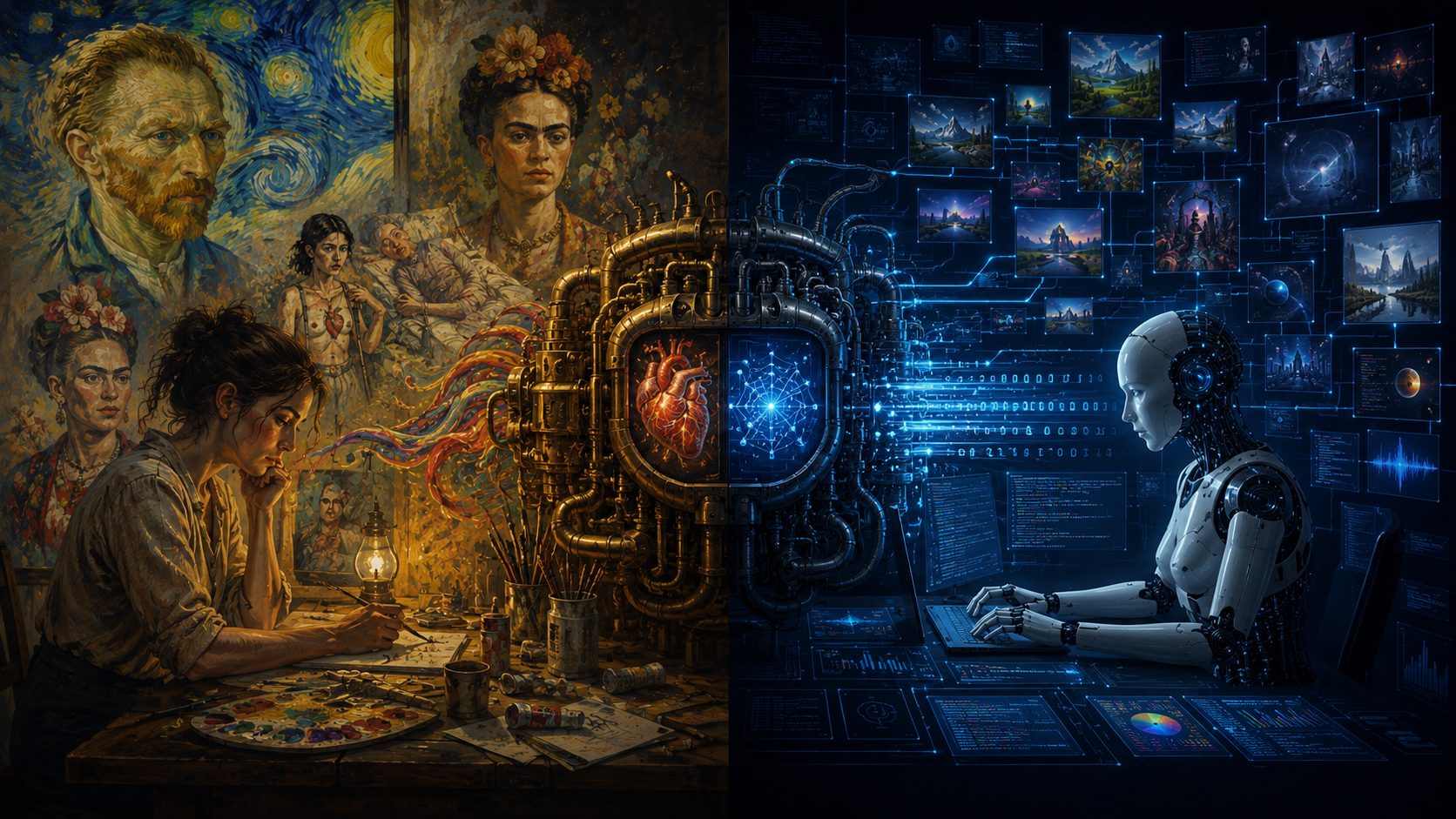
AI creates from patterns. Humans create from experience. The difference is not capability—it is the source of meaning itself.
Two Engines Running on Different Fuel
Human creativity and AI creativity are not two versions of the same process. They are fundamentally different engines, running on completely different fuel.
Human creativity runs on lived experience. On grief, joy, embarrassment, obsession, and the slow accumulation of a life actually being lived. Vincent van Gogh did not paint the way he painted because he processed a dataset of Post-Impressionist techniques. He painted out of emotional and existential turmoil, a desperate need to find beauty inside a life filled with suffering. Frida Kahlo’s self-portraits were not exercises in visual novelty. They were intimate explorations of pain and resilience, processed through a body that had…