UCSC team places second in Embedded Capture the Flag cybersecurity competition
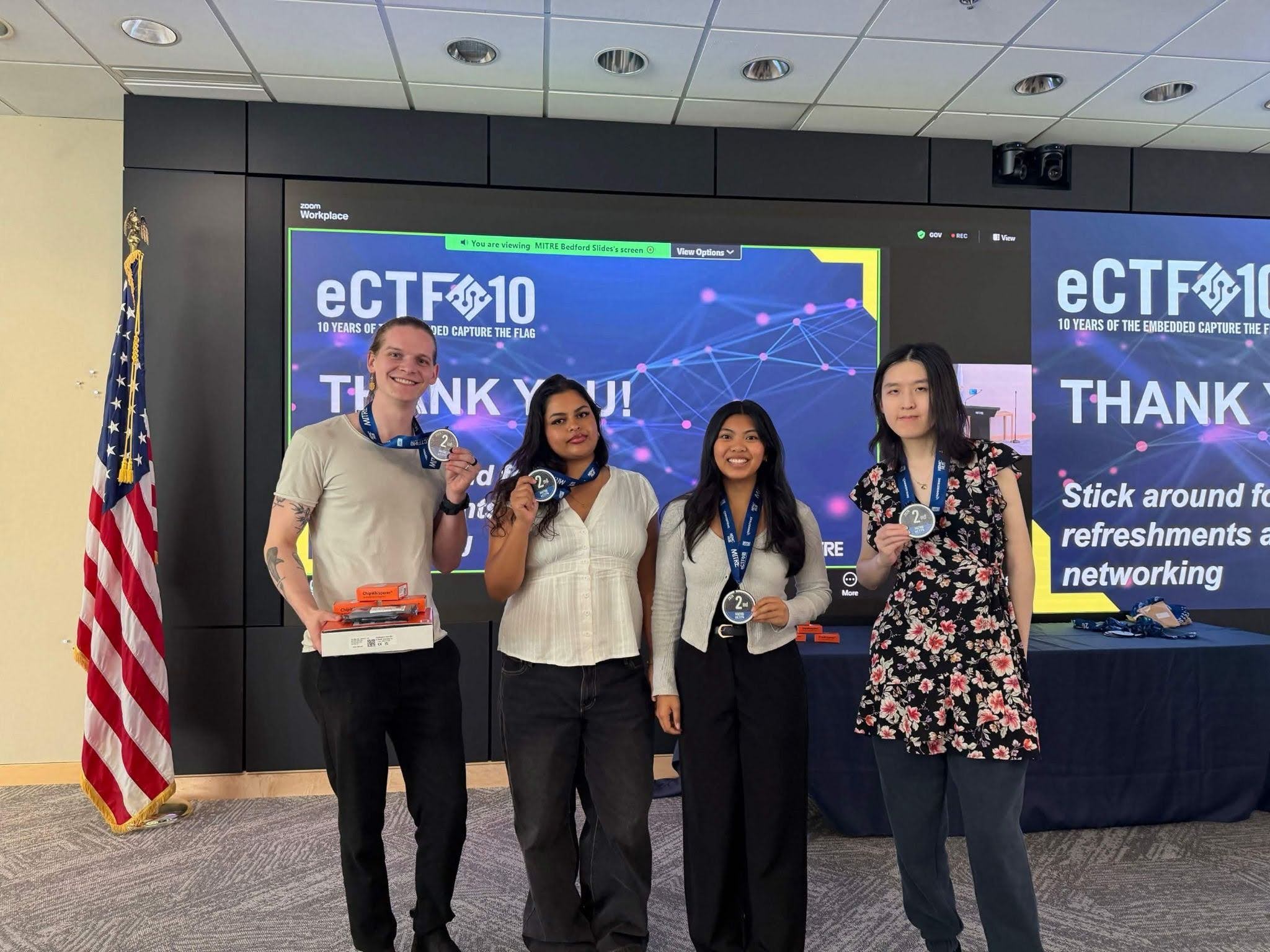
UCSC team places second in Embedded Capture the Flag cybersecurity competition
https://news.ucsc.edu/2026/06/ucssecond-place-embedded-capture-the-flag-cybersecurity-competition/
Publish Date: 2026-06-01 12:37:00
Source Domain: news.ucsc.edu
A team of undergraduate engineering students at the University of California, Santa Cruz, placed second among more than 100 teams at a cybersecurity competition called Embedded Capture the Flag (eCTF) put on by the MITRE Corporation. This year’s challenge was regarded by advisors and competitors as the toughest in the competition’s history, and this result recognizes the campus’s excellence among the cybersecurity community.
The competition mirrors a schoolyard game of capture the flag: you enter enemy territory, steal a flag, and return without getting caught. In the cybersecurity version, a player must hack into a system with real defenses and steal sensitive data, without being detected. The competition focuses on embedded systems—computing systems that exist natively within things like cars or medical devices.
A team of six undergraduate engineering students represented UC Santa Cruz in the competition. They completed the challenge while taking a section of the course CMPM 118, Collaborative Research Experience in Engineering, in which small student teams pursue a research project for a quarter.
Computer engineering undergraduate Astra Tsai led the group, contributing most of the points that led to the team’s second-place finish. She’s no stranger to success in cybersecurity—Tsai has also been the fastest solver overall of the National Security Agency’s Codebreaker Challenge for three years in a row. The team also won the Community Contributor award, recognizing Tsai’s efforts going above and beyond to help other participants and improve the open source tools used for the competition. The team included Andrew Chu, Darlene Harsana, Max Newstead, Aashrima Ruwali, and Virinchi Chintala, with Ph.D. student Sergio Valderrama advising the team.
Th eCTF runs for roughly three months, and it is split into two phases. In the first, the design phase, each team is handed a reference system that functions but is deliberately…