Analysis Shows DFS Cybersecurity Guidance Improves Control Execut
Analysis Shows DFS Cybersecurity Guidance Improves Control Execut
Publish Date: 2026-05-29 14:22:00
Source Domain: natlawreview.com
The Gap DFS Guidance Can’t Overcome
New analysis shows that stronger control execution improves defenses—but does not proportionally reduce cyber risk in today’s heightened threat environment.
DFS guidance reinforces controls that organizations already have—but it doesn’t answer the most important question: how much risk is actually reduced.”
— Charlene Deaver-Vazquez, founder of CyberRiskModels.com.
MOUNT AIRY, NC, UNITED STATES, May 29, 2026 /EINPresswire.com/ — CyberRiskModels.com released a new report analyzing the impact of recent New York Department of Financial Services (DFS) cybersecurity guidance, finding that while the recommendations improve control execution, they do not fully address how risk exposure is changing in a heightened threat environment.
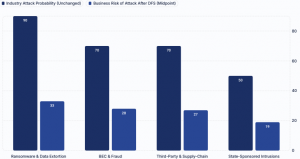
The report, “The Cyber Risk Gap: What DFS Guidance Reduces—and What It Doesn’t,” shows that DFS-aligned actions can strengthen control effectiveness and reduce the probability of certain attack outcomes, but material residual risk remains due to non-linear changes in threat behavior and attack impact.
“DFS guidance reinforces controls that organizations already have—but it doesn’t answer the most important question: how much risk is actually reduced,” said Charlene Deaver-Vazquez, founder of CyberRiskModels.com. “In today’s environment, improving controls does not translate directly to reduced impact.”
The analysis shows that the guidance primarily drives more consistent and disciplined execution of existing controls such as multi-factor authentication, vulnerability management, monitoring, and third-party oversight, rather than introducing new capabilities. This improvement increases resistance to attack impact, but not enough to offset accelerating threat conditions.
A key finding in the report is that cyber risk is increasingly non-linear. Control effectiveness can erode unevenly under pressure, while attack impact expands disproportionately—particularly in…