New “low_latency_layer” brings Reflex and Anti-Lag 2 to AMD and Intel GPUs on Linux
New “low_latency_layer” brings Reflex and Anti-Lag 2 to AMD and Intel GPUs on Linux
Publish Date: 2026-05-18 04:18:00
Source Domain: www.gamingonlinux.com
Linux gets expanded support for Reflex and Anti-Lag tech thanks to a new open source Vulkan layer called “low_latency_layer”. A first initial release is out now for anyone who wants to try it so you can fully enable the likes of AMD Anti-Lag 2 and NVIDIA Reflex 2 across many different games both Native and Windows via Proton.
From the GitHub page:
A C++23 implicit Vulkan layer that reduces click-to-photon latency by implementing both AMD and NVIDIA’s latency reduction technologies.
By providing hardware-agnostic implementations of the VK_NV_low_latency2 and VK_AMD_anti_lag device extensions, this layer brings Reflex and Anti-Lag capabilities to AMD and Intel GPUs. When paired with dxvk-nvapi to forward the relevant calls, it bypasses the need for official driver-level support.
The layer also eliminates a hardware support disparity as considerably more applications support NVIDIA’s Reflex than AMD’s Anti-Lag.
Going by their own benchmarks, the developer said they “suggest the layer performs as well as or better than the proprietary Windows implementations on the same hardware” which is extremely impressive – and goes to show again the power of open source:
Developer comments:
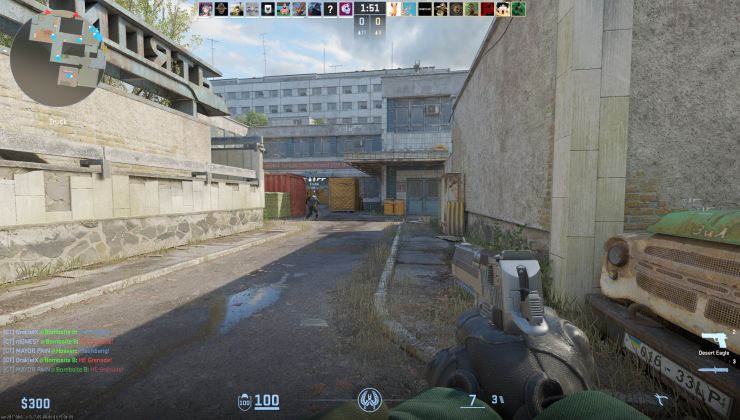
- Unlike THE FINALS, where results were comparable, both technology implementations clearly beat the native Windows numbers in absolute terms.
- Reflex and Anti-Lag 2 again perform identically, consistent with our previous findings.
- CS2’s -vulkan backend was also tested on Windows. It regresses baseline latency relative to the default backend, and AMD’s Anti-Lag 2 does not recover this – it remains slower than Anti-Lag 2 on the default backend.
- Mesa’s Anti-Lag Vulkan layer again appears to be a no-op, matching our findings from THE FINALS.
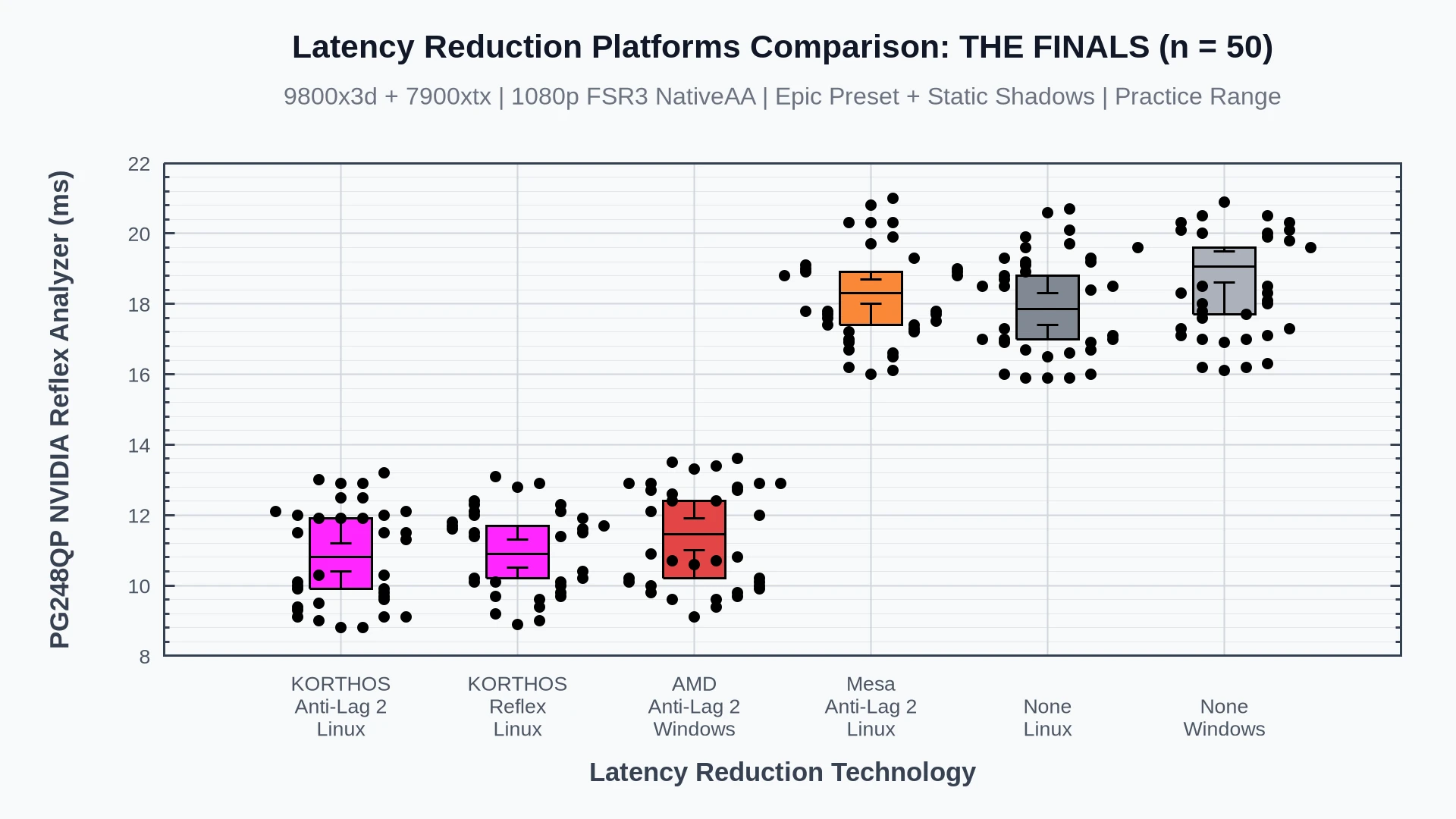
Developer comments:
- We included comparisons against AMD’s proprietary DX12 implementation of Anti-Lag 2 on Windows. The results suggest latency matches or beats native Windows numbers.
- We can directly compare our implementation…