DNA-Based Non-Viral Technologies Market Size to Surpass USD
DNA-Based Non-Viral Technologies Market Size to Surpass USD
https://www.openpr.com/news/4502929/dna-based-non-viral-technologies-market-size-to-surpass-usd
Publish Date: 2026-05-06 05:56:00
Source Domain: www.openpr.com
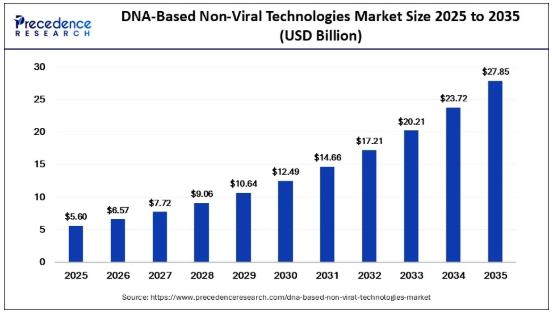
According to Precedence Research, the global DNA-based non-viral technologies market size is projected to rise from USD 6.57 billion in 2026 to approximately USD 27.85 billion by 2035, expanding at a robust CAGR of 17.40% during the forecast period. The market size was valued at USD 5.60 billion in 2025
The rapid shift toward non-viral gene delivery systems is being driven by the growing need for lower immunogenicity, repeat dosing capability, flexible manufacturing, and cost-efficient therapeutic development. Technologies such as lipid nanoparticles, electroporation, polymer-based delivery, and nanoparticle-mediated systems are gaining momentum as viable alternatives to conventional viral vectors.
The market is also benefiting from increasing investments in gene therapy pipelines, rising prevalence of rare genetic disorders, and the growing commercialization of personalized medicine platforms across global healthcare systems.
Where Data Meets Strategic Clarity 📥 View Sample Pages of the Complete Report 👉 https://www.precedenceresearch.com/sample/8374
DNA-Based Non-Viral Technologies Market Size and Forecasts
🔹 Market size in 2025: USD 5.60 Billion
🔹 Market size in 2026: USD 6.57 Billion
🔹 Market size by 2035: USD 27.85 Billion
🔹 CAGR: 17.40% (2026-2035)
🔹 Forecast period: 2026-2035
🔹 Base year: 2025
How is Artificial Intelligence Transforming DNA-Based Non-Viral Technologies?
Artificial intelligence is becoming a strategic enabler across the DNA-based non-viral technologies ecosystem. AI-powered algorithms are increasingly being used to optimize delivery vector design, predict gene expression outcomes, and improve transfection efficiency across different cell types.
Machine learning models are also helping researchers identify ideal nanoparticle formulations, reduce toxicity risks, and shorten therapeutic development timelines. This is particularly valuable for advanced genome editing applications where…