Mapping the Moon: How Geospatial Technology Powers NASA’s Space Exploration
Mapping the Moon: How Geospatial Technology Powers NASA’s Space Exploration
Publish Date: 2026-05-01 11:52:00
Source Domain: www.geoweeknews.com
How NASA’s data visualization team transforms mission data into maps, animations, and 3D scenes that guide exploration from the Moon to Mars
At NASA’s Scientific Visualization Studio (SVS), the work of turning data collected from missions and satellites into something humans can actually understand falls to a team of data visualization developers. For some developers, geospatial technology isn’t just a tool; it’s the foundation of nearly everything they do.
“We turn data from NASA missions into images, animations, and interactive visuals that help explain what NASA is working on in a clear, accurate way,” Kel Elkins, a data visualization developer at NASA’s SVS, explained.
On a daily basis, that means working with geo-referenced datasets, satellite swaths, and orbital trajectories that transform numbers into three-dimensional scenes that reveal patterns invisible in the original data.
Artemis II and the Power of Lunar Mapping
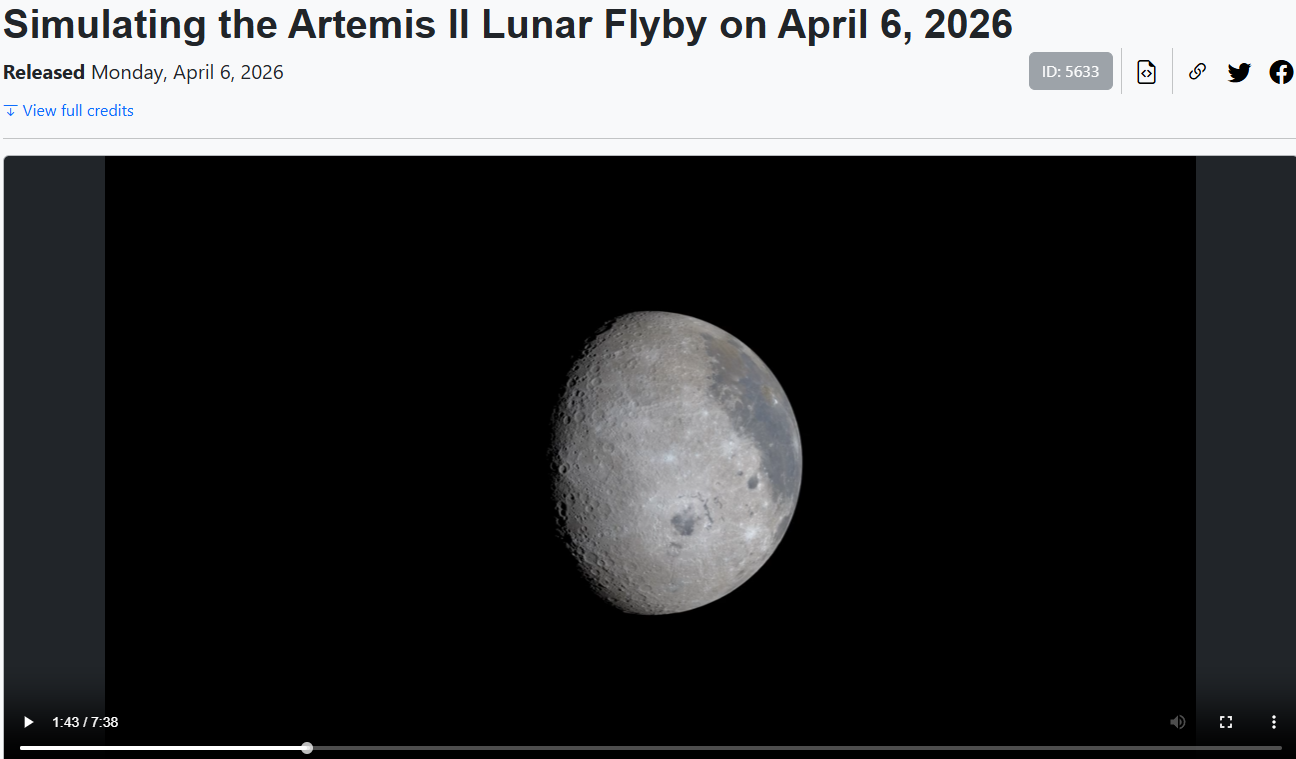
When NASA’s Artemis II mission began taking shape, geospatial data was already doing heavy lifting behind the scenes. Elkins’ colleague Ernie Wright used data from the Lunar Reconnaissance Orbiter (LRO) to generate highly detailed 3D renderings of the Moon. These visualizations gave Artemis II astronauts a realistic preview of what to expect during their lunar flyby.
“Once the trajectory was resolved after the translunar injection burn, he was able to generate a precise estimate of what the astronauts would see, which was used by the Artemis science team to inform observation targets,” Elkins noted.
The contrast with earlier missions is stark. Compared to programs like Apollo, today’s missions benefit from dramatically higher-resolution lunar maps, enabling more precise planning and richer visualization than was ever possible in the past.
Safety, Trajectories, and What’s Out the Window
Geospatial intelligence shapes mission safety in ways that go beyond surface maps. For a crewed mission, knowing exactly where the spacecraft is and how it…


