Archaeologists are turning to artificial intelligence to decipher a 2,000-year-old Roman inscription, and what’s written on the stone could change everything we thought we knew about an ancient lost game
Publish Date: 2026-04-08 16:00:00
Source Domain: www.ecoticias.com
For more than a century, a small carved limestone slab sat in a Dutch museum with an identity crisis. Was it an architectural sketch, a decorative oddity, or something meant for fun?
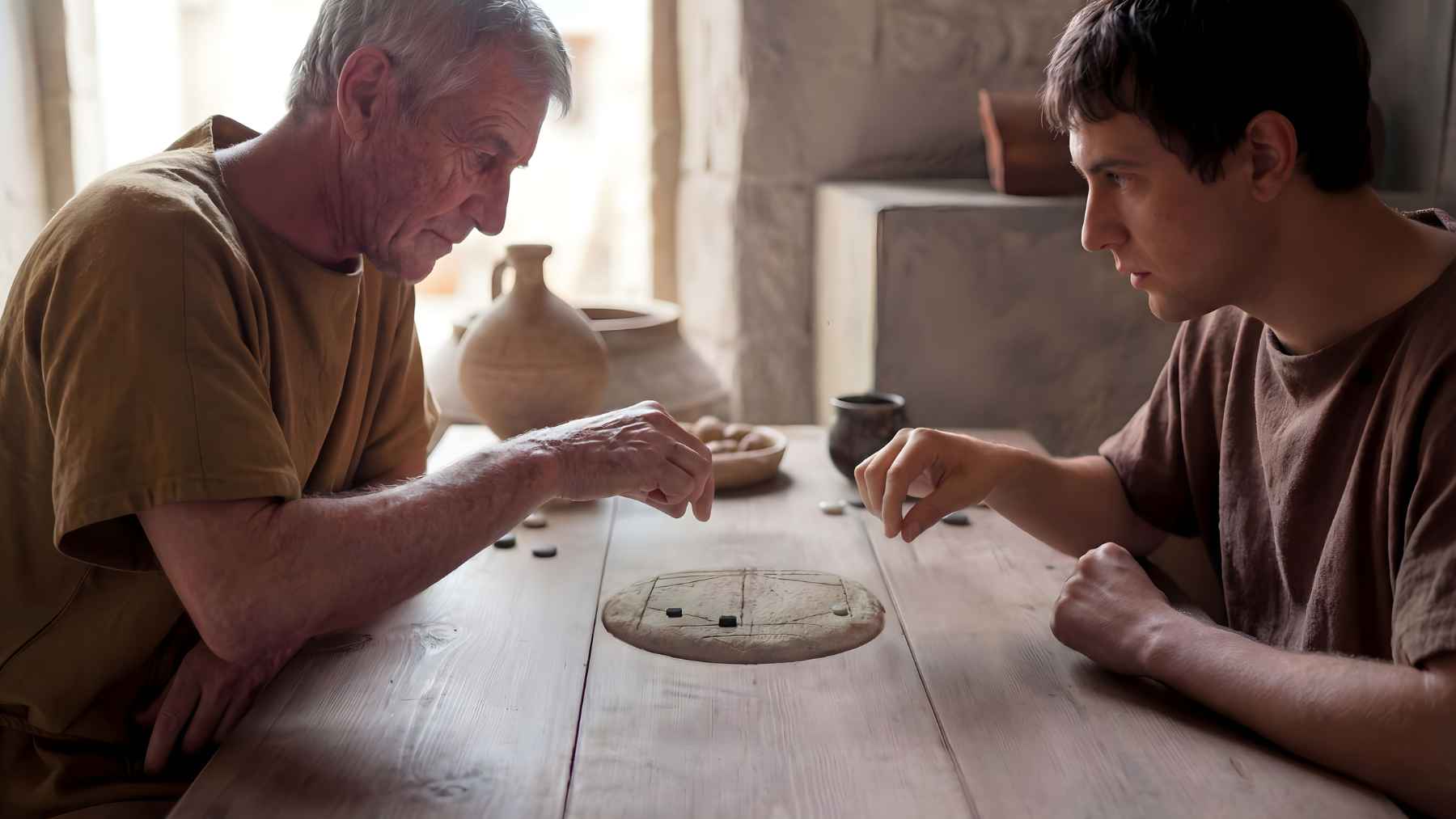
A new study published online February 11, 2026, says the simplest answer was right in front of us. By pairing microscopic wear analysis with thousands of artificial intelligence simulations, researchers argue the stone was most likely a Roman game board, and one that may push a whole category of European board games back into the Roman era.
A museum object that never quite fit
The artifact is known as “Object 04433” at Het Romeins Museum in Heerlen, the Netherlands. It is roughly 8.35 by 5.71 inches and about 2.80 inches thick (212 by 145 by 71 millimeters), weighing about 7.45 pounds (3.38 kilograms).
Its stone is white Jurassic limestone from the Norroy quarries in northeastern France, a material Romans often used for showy architectural pieces because it could mimic marble’s look while being easier to carve. That background is part of what made the object so confusing, since it is small, carefully shaped on every side, and not the kind of rough block you would expect in a wall.
The carved top surface is even stranger. Four diagonals and one straight line form a pattern that does not match the familiar grids of known Roman board games, which is why scholars kept circling the same question for decades.
Scratches that point to play
When archaeologist Walter Crist saw the stone during a museum visit, one detail stood out. The wear was not random, and it was sitting exactly where a player would slide pieces, not where a builder would grab or chisel.
The team used high-resolution surface mapping, including 3D modeling techniques that reveal tiny dips and smoothed zones. Along one diagonal line, they identified a visibly smoother band whose inner edge ran parallel to the carving at roughly 0.63 to 0.71 inches away (16 to 18 millimeters).
A carved…
Source