Night Vision at a Crossroads: When Technology Outpaces the Neurobiology of Close Combat
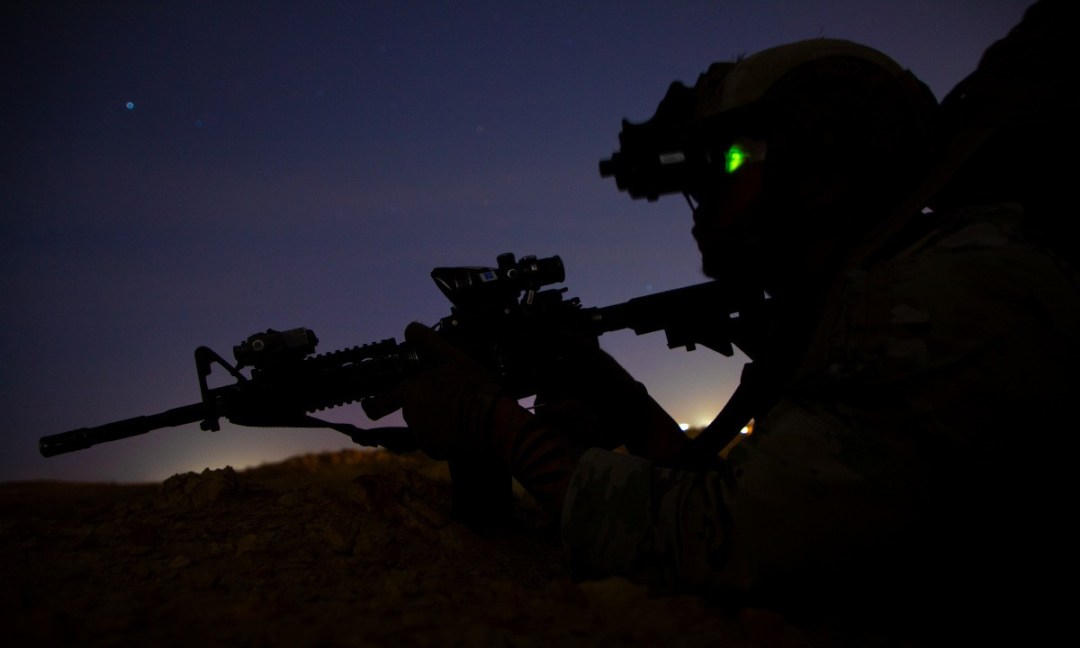
Night Vision at a Crossroads: When Technology Outpaces the Neurobiology of Close Combat
Publish Date: 2026-02-04 10:34:00
Source Domain: mwi.westpoint.edu
A few months ago, during a closed-door seminar involving senior officials in the United States defense community, I raised a concern about the direction of night-vision modernization. I argued that fusion-driven visual systems and digital awareness ecosystems may be advancing faster than the human brain can reliably use them in moments of extreme danger.
What followed was instructive. Several officials noted that they were already hearing similar concerns from elite special operations forces and combat aviators: These systems perform exceptionally well in deliberate, low-stress conditions, but become harder to use at the edge of consciousness, when life-threatening decisions must be made instantly.
The issue is not that the technology is poor. On the contrary, it is extraordinarily sophisticated. The problem is that it is increasingly misaligned with how the human brain functions under the stress of lethal environments.
This is not a marginal technical critique. It is a structural challenge emerging at the intersection of human physiology, combat psychology, and defense modernization. Unless the trajectory changes, Western militaries risk fielding systems that excel in demonstrations and controlled testing, yet underperform in close combat—not because they fail technically, but because they do not align with human biology when it matters most.
The tension between advancing technology and human limits points to a broader design challenge. This can be understood as a problem of augmented performance physiology. In this view, effectiveness depends not on adding capability, but on how systems interact with the human body and brain as our physiological state shifts under stress.
The Promise—and Pressure—of Fusion
Modern soldier visual systems are moving decisively toward fusion. Thermal sensing, low-light intensification, digital overlays, navigation cues, and networked information are increasingly combined into a single visual…


