Fortune Tech: EU’s new Google rules, Wonder IPO, TSMC’s $100B investment
Fortune Tech: EU’s new Google rules, Wonder IPO, TSMC’s $100B investment
Publish Date: 2026-07-17 06:49:00
Source Domain: fortune.com
Good morning. A New York State school district is piloting a humanoid robot teacher made by a company that also makes sex dolls.
Yes, really.
When the school year in Salamanca, New York kicks off in the fall, the ‘bot will join classrooms to support the district’s STEAM curriculum. The humanoid “has been loaded exclusively with district-approved curriculum, instructional strategies, and historical information” about the town, the district says, and will guide students’ learning, “rather than complete the work for them.” (Sounds rad.)
But the robot’s maker comes with an interesting backstory (and a surprisingly complicated corporate structure).
Toronto’s Realbotix has two distinct businesses: its eponymous B2B robotics unit and a B2C subsidiary that focuses on “adult companionship products” doing business as RealDoll. The two units started as completely separate companies that found each other two years ago; a flurry of M&A later, RealDoll’s inventor is Realbotix’s co-founder and COO.
The adult industry: still tech’s earliest adopters, even in the age of AI.
More tech news below; have a wonderful weekend. —Andrew Nusca
Want to send thoughts or suggestions to Fortune Tech? Drop a line here.
EU orders Google to share search data with rivals by 2027
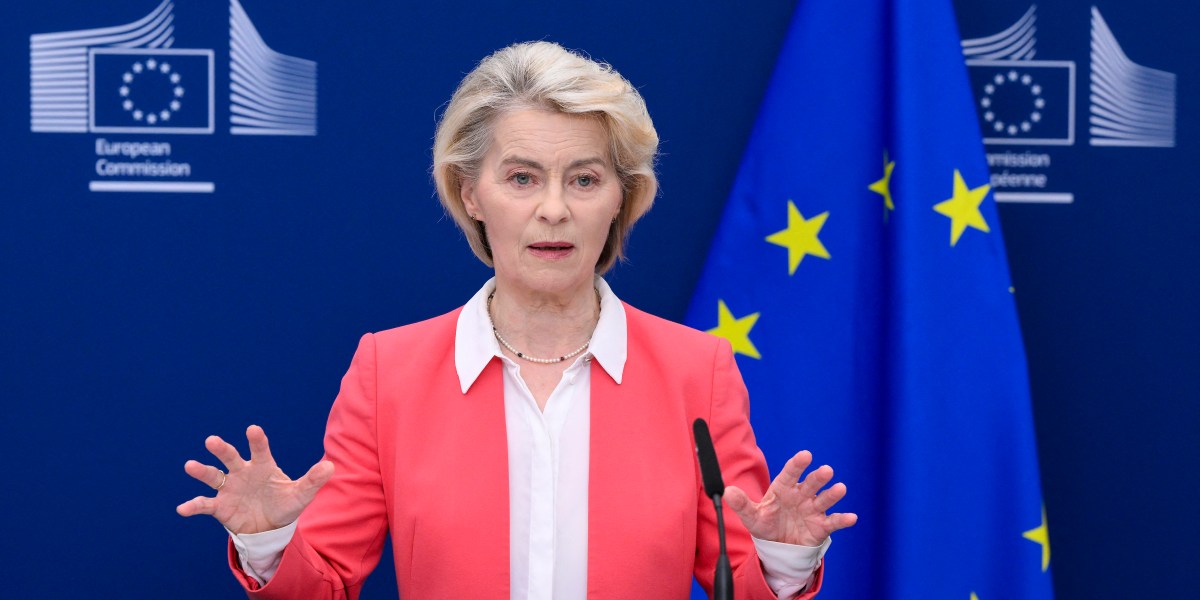
European Commission President Ursula von der Leyen in Brussels on July 13, 2026.
John Thys/AFP/Getty Images
The European Union on Thursday issued two new rules for Google that force the company to open its Android operating system to rivals and share search data with them.
The first rule allows Android phone owners to choose third-party AI assistants over Google’s own if they prefer.
Google currently restricts the access of competing assistants to key parts of the Android OS, making them less capable; this would put them on equal footing with “robust safeguards to ensure that the privacy of users, device integrity and security are protected.”
The second…