Vermeer MT500 Material Transporter: Specs, Automation, and Technology
Vermeer MT500 Material Transporter: Specs, Automation, and Technology
Publish Date: 2026-07-14 09:06:00
Source Domain: www.constructionequipment.com
Solar farms may represent the future of energy, but building them hasn’t exactly been the pinnacle of modern efficiency. For instance, crews still use skid steers and telehandlers to shuttle bundles of steel piles across sprawling jobsites before manually laying each one near its GPS waypoint. It’s slow, labor-intensive work.
“These things can be up to 400 pounds apiece,” explains Ed Savage, product manager at Vermeer. “Using a skid steer or telehandler, crews are just trying to get these piles close to this waypoint, which is a GPS coordinate on a digital map. It’s not always the most accurate way to do it. They get it close. Then, the pile driver crew has to pick it up and then drive it into the ground. For starters, it’s obviously a big safety risk and then it’s a lot of extra manual labor. When they go out there and lay these piles out, they call it ‘shakeout’ — it’s kind of an industry term.”
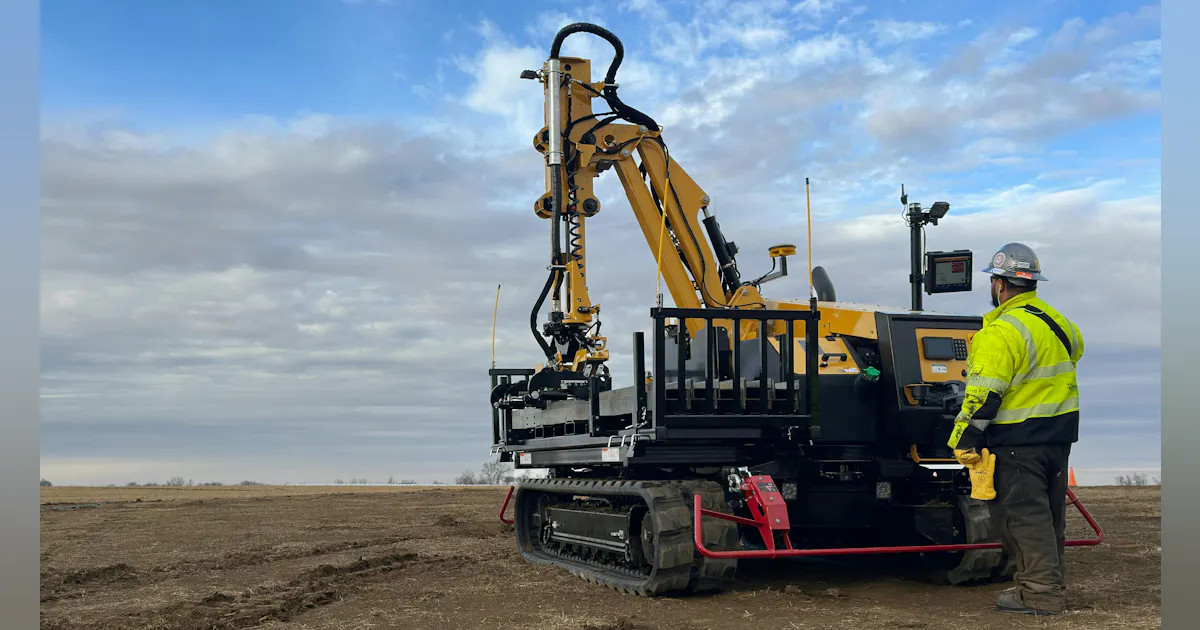
The Vermeer brand has spent more than a decade helping solar contractors pound piles into the ground with its line of four pile drives (the PD5, PD5R, PD10, and PD10R), but now the company wants to fix what happens before the pile driver arrives. The new Vermeer MT500 material transporter automates the pile layout, or shakeout, process on utility-scale solar jobsites. One operator can load the machine with W-beam piles and send them to GPS-defined locations across the solar field. There’s really nothing like this on the market right now.
“Some people have made attempts at it — mainly European manufacturers — because some of our pile driver competitors are European-based,” says Savage. “They’ve tried it but just haven’t commercialized it yet for whatever reason. So, this will be one of the first commercially available ones on the market.”