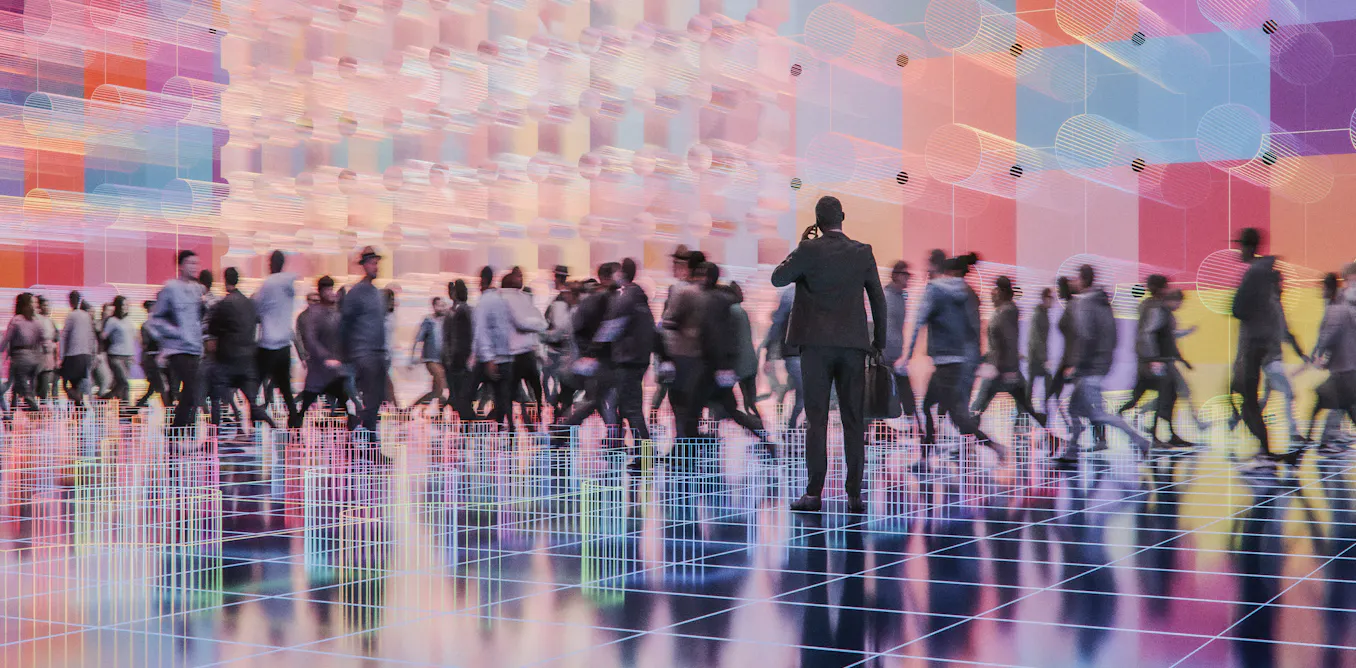
Mass-produced science is coming. What happens to scientists?
Mass-produced science is coming. What happens to scientists?
Publish Date: 2026-07-09 00:00:00
Source Domain: www.thetransmitter.org
Mass-produced does not have to mean low quality. Your favorite clothes, dear reader, are made from mass-produced fabric, and you would not have clothes as nice if all fabric were hand-woven.
Thanks to artificial intelligence (AI), we will soon enter a world in which high-quality scientific research can also be mass-produced, at low cost—not just summaries of what scientists already know but new analyses, new figures and new conclusions, at the request of anyone asking. AI will also enable production of low-quality science in even greater quantities, and discerning between the two will be a key challenge. But if we can solve that problem—if we can find ways to identify reliable and important results within the vast quantities produced—then both the quantity and quality of science produced will be higher than ever before.
Most read
For consumers of science—the public, medical patients, technology users—the effects will be positive. For producers, the effects will be as disruptive as industrial mass production was for artisan fabric makers. The way scientists publish and communicate their work will likely change completely, as will the way they evaluate, fund and promote human researchers. Some current jobs will vanish, and other yet-unnamed roles will take their place.
To get a feeling for what’s coming, consider pure mathematics, in which AI-driven research is most advanced. On 20 May, OpenAI announced that an as-yet-unreleased AI model solved an 80-year-old conjecture in pure mathematics. The AI solution exploited methods from a different mathematical subdiscipline, previously missed by human experts. Human mathematicians judged the solution to be valid and publishable in the top journals of the field.
There is every reason to think that AI will continue improving at pure math: Because mathematical proofs can be checked automatically, AI can be trained by reinforcement learning, without being limited by…