Hannah Montana Linux gets modern remaster after nearly two decades — ‘Sweet niblets,’ new v26 is built on Debian with a re-skin of KDE Plasma
Publish Date: 2026-07-05 10:23:00
Source Domain: www.tomshardware.com
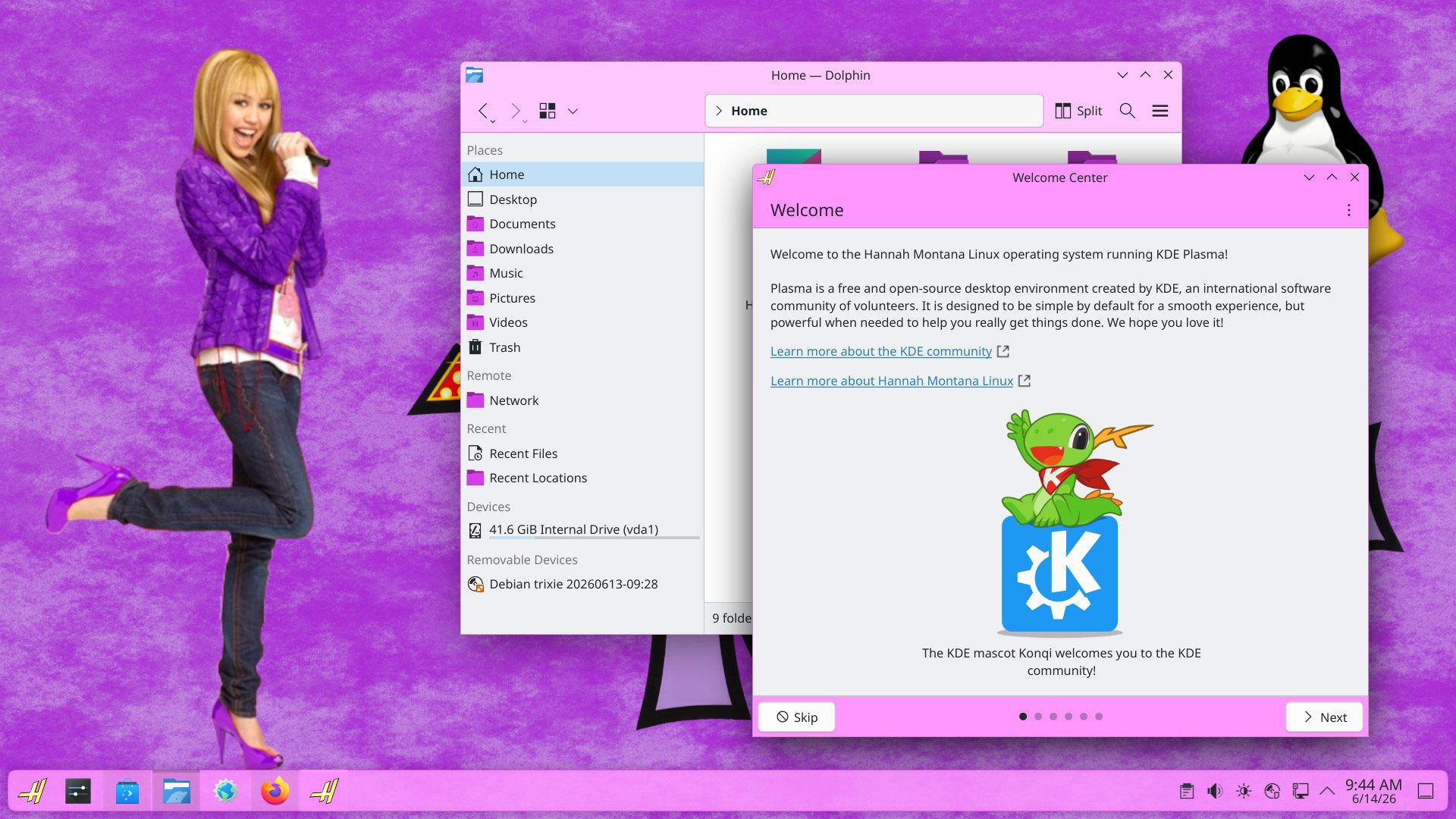
Say whaaaat? Hannah Montana Linux is back. The distro made as a tribute to the noughties Disney Channel sitcom for tweens and teens, featuring the eponymous secret pop star, was basically abandoned in 2009. Now it’s back, with a modern kernel and about 18 years of patches, with the release of the Hannah Montana Linux v26.0 remaster by developer Noah Cagle.
Hannah Montana Linux Is Back – YouTube
Watch On
Little is known about why the original Hannah Montana Linux was developed, released, and almost immediately abandoned. The version available via Archive.org is the only known release, identified as Hannah Montana Linux x86 basic edition 202201. It is still available if you’d like to test out a frozen-in-time HM-themed version of Kubuntu. You can grab it as a 691.7MB download via the link provided. Be warned that it is now “basically unusable,” though, according to Cagle, due to being insecure and for its poor software support.
Fast forward to the present day, and Cagle’s HML26 release solves all the issues with the old distro. Browsing the modern web is possible and safe, finding and installing software is easy, and the dev has even made the terminal look pretty.
Latest Videos From

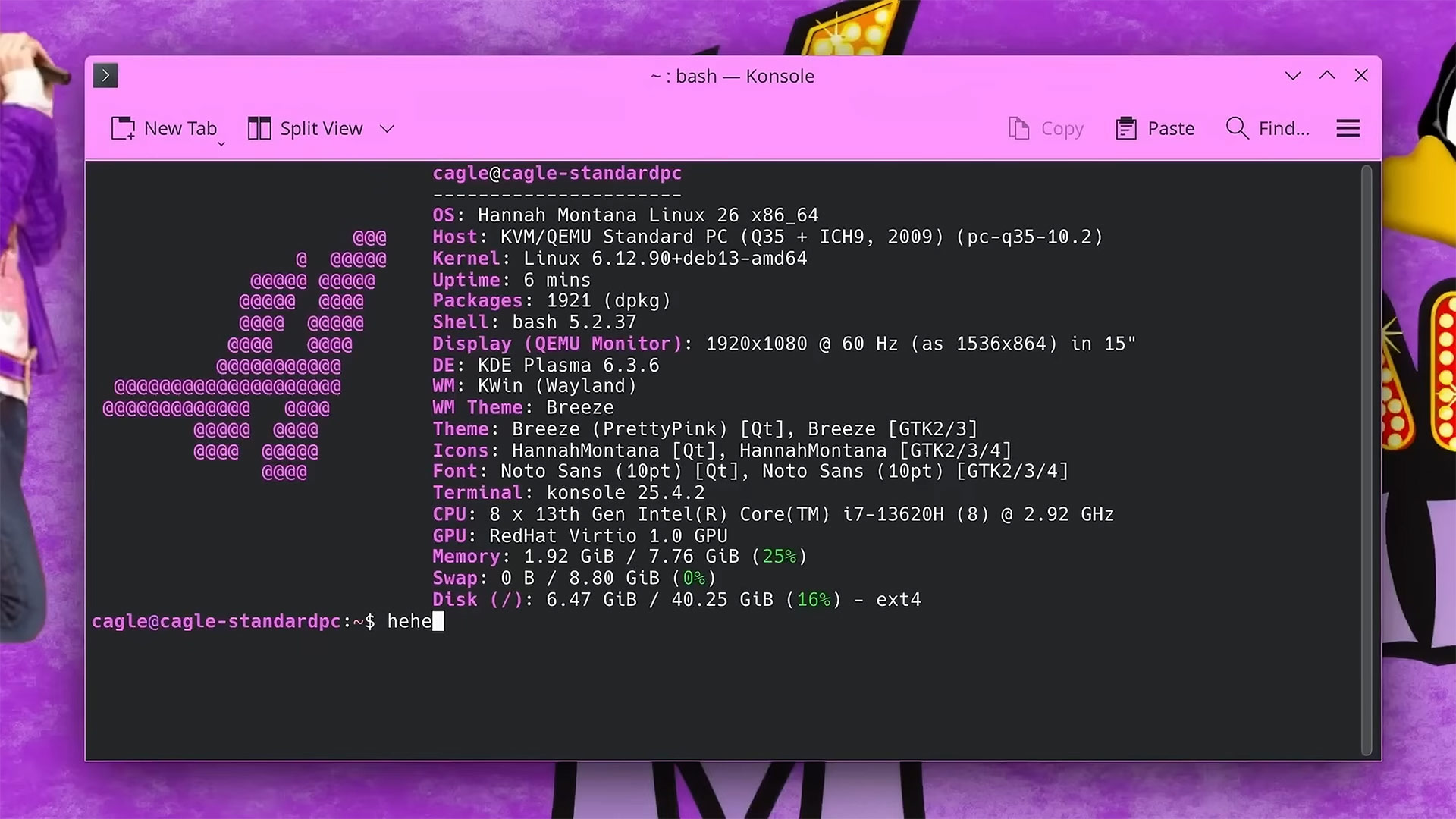
Pretty Terminal (Image credit: Noah Cagle on GitLab)
In the video feature about the release of Hannah Montana Linux v26.0, Cagle provides some insight into how this version of the OS was customized, built, and released. After initially considering the Cubic GUI wizard for creating customized live ISO images of Ubuntu and Debian-based platforms, the developer decided to go with Live Build, an official tool for Debian-based distros.
We then get a walkthrough of using this tool to make a Pretty in Pink version of Debian Linux. Briefly, a lot of the work required to make a distro like HML26 is adding various files and references into a set folder structure, and then building the Linux ISO. Most of the custom imagery and iconography sit in an includes.chroot directory.
…
Source