People can learn to spot AI faces – but the clues are no longer obvious
People can learn to spot AI faces – but the clues are no longer obvious
Publish Date: 2026-06-29 16:26:00
Source Domain: theconversation.com
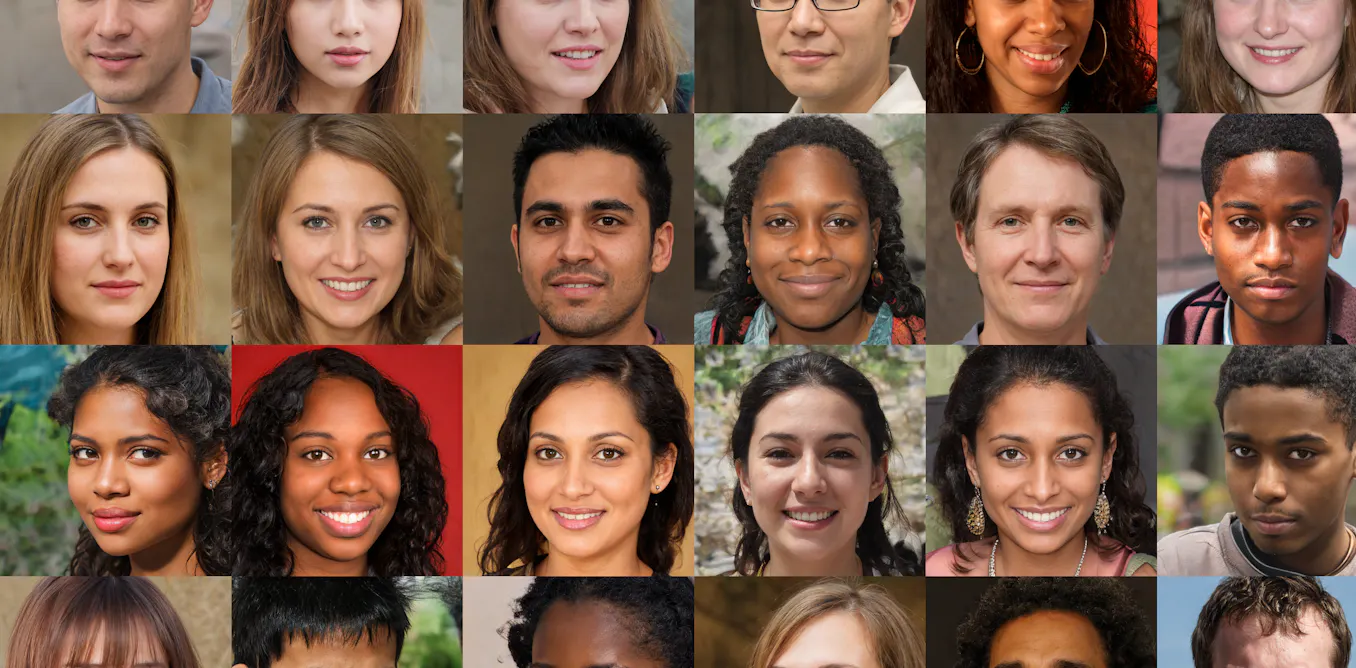
Deepfake faces generated via artificial intelligence (AI) have become so realistic that they routinely fool people, with some research suggesting there may be US$40 billion worth of deepfake-related fraud annually by 2027.
Not only do most people struggle to spot AI faces, but as long ago as 2023 we discovered some AI faces are “hyperreal” – they look more real than actual human faces. We also found people are overconfident they can spot AI faces, with the most confident people making the most errors.
Software-based deepfake detectors do exist, but they can’t really explain the reasons for their detections – and they suffer from serious weaknesses. Some can be fooled simply by converting the image type, such as from png to jpg.
But it turns out most people can learn to spot AI faces with an hour or so of practice. In new research published in PNAS, we show there’s a straightforward way to improve detection of deepfakes, by training people to pick up the tell-tale clues through experience rather than direct instruction.
The difference between human and AI faces
In our early research, we discovered a key difference between AI and human faces. AI faces are hyperaverage.
This means AI faces tend to be more symmetrical, proportional and attractive than human faces. But they’re less expressive and memorable – less likely to stand out in a crowd.
Intriguingly, people can accurately and reliably judge these qualities, but frequently misinterpret the clues. For example, people often think that faces that look a bit odd are AI-generated, when in fact human faces are more likely to have distinctive, unusual features.
Compared to real faces (left), AI faces (right) tend to be more symmetrical, attractive and proportional, but less distinctive, memorable and expressive.
Nightingale / OSF, CC BY
Although most people struggle to decide whether a face is AI or…