The Steam client was hurting PC gaming on Android — Valve’s VR headset accidentally solved it
The Steam client was hurting PC gaming on Android — Valve’s VR headset accidentally solved it
Publish Date: 2026-06-27 20:00:00
Source Domain: www.xda-developers.com
Playing Windows games on an Android phone has gone from being a party trick to a practical reality at some point in the last few years. Most of the credit goes to Winlator and the open-source stack underneath it: namely Wine, Box64, DXVK, and an increasingly mature set of community GPU drivers. Apps like GameHub and GameNative built consumer-friendly launchers on top of that same stack, and for a lot of people, the experience is now good enough to be a genuine alternative to the likes of the Steam Deck. It doesn’t help that GameHub has been marred by controversy, either.
However, there’s been a quiet bottleneck sitting in the middle of all of this that nobody talks about all that much: Steam itself.
Every app in this space, until very recently, took the same approach to handling your Steam library: run the full x86 Windows Steam client inside the same Wine and Box64 translation stack that the game itself runs on. That’s a desktop application, built for a desktop OS, doing desktop things like rendering its own UI through the Chromium Embedded Framework (CEF), checking for client updates, and syncing cloud saves, all before your game even starts. It was running on a phone, through multiple translation layers, and it was often the case that even if your games ran fine, the Steam CEF UI itself would pose an issue.
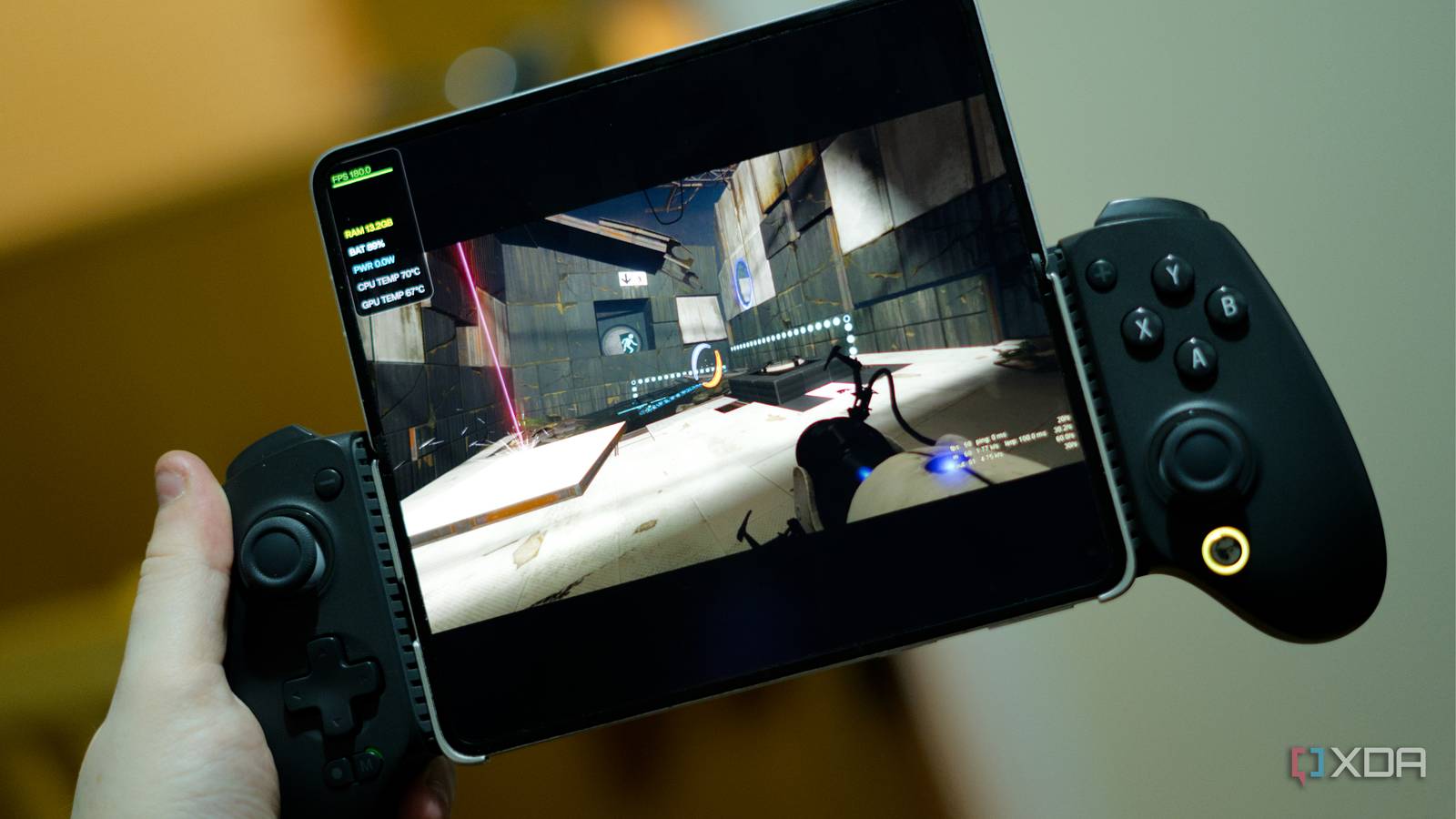
I went through all of this myself a few weeks ago. I spent nights trying to get Portal 2 running on an Oppo Find N5 with a Snapdragon 8 Elite, cycling through Winlator forks, driver versions, and environment variables. The furthest Portal 2 ever got was the Valve-guy logo and the main menu before closing. On some builds, the Steam client itself would launch to a black screen. The phone wasn’t inherently the problem, but the whole arrangement was fighting itself before the game even had a chance.
GameNative 1.0, which arrived at the start of June, adds an experimental path that stops doing that. When enabled, it ditches the desktop Steam client…