Why process manufacturing needs a molecular revolution
Why process manufacturing needs a molecular revolution
https://www.weforum.org/stories/2026/06/physical-ai-process-manufacturing-molecular-revolution/
Publish Date: 2026-06-22 01:00:00
Source Domain: www.weforum.org
- Advanced physical artificial intelligence is shifting from mechanical spatial awareness to real-time molecular chemistry management.
- Global manufacturers are using process-aware autonomy to simultaneously reduce operational costs and meet sustainability targets.
- How promising ideas become scalable impact is a key focus at the World Economic Forum’s Annual Meeting of the New Champions, also known as Summer Davos, in China from 23–25 June.
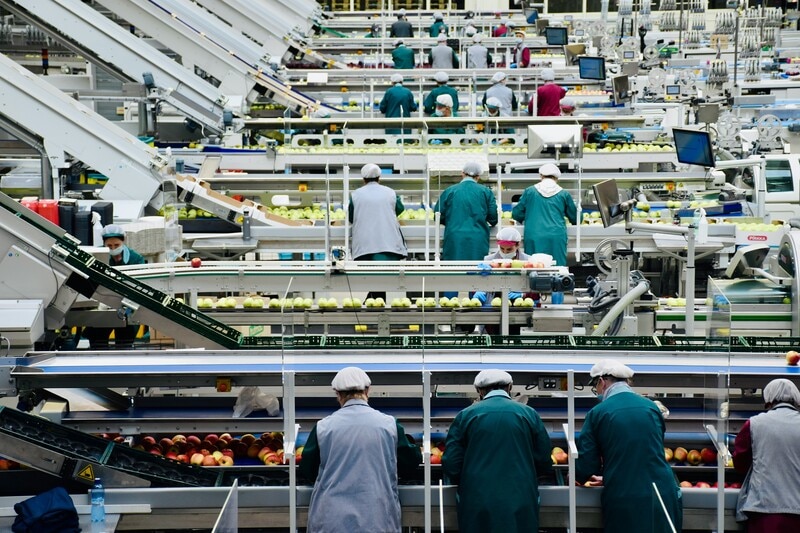
In discrete manufacturing – the assembly of distinct, physical items like cars or smartphones – the manifestations of physical AI show up on nearly every factory floor. Pick-and-place robotics, vision-guided inspection, autonomous logistics – each represents a real-world productivity challenge solved through spatial awareness. The results are remarkable, and they are reshaping car plants, electronics facilities and packaging operations all over the world.
The challenge is that spatial awareness cannot be adapted for process manufacturing, the sector of manufacturing that brews, blends, reacts, emulsifies and flows. This type of manufacturing requires an entirely new kind of physical AI that manages products at the molecular level, in real time, across environments that are never the same twice. Industries like household goods, food and beverage, health and beauty, pharmaceuticals – this is where the next frontier of physical AI offers its most consequential gains in sustainability and productivity. But to capture these gains, manufacturing and technology leaders will need to take a fundamentally new approach.
The core difference in manufacturing ecosystems
Discrete manufacturing deals in objects – components that can be seen, measured, picked up and placed. Boston Dynamics’ Atlas humanoid robot is perhaps the most well-known expression of this: spatial awareness, informed by cameras, laser sensors and force feedback, translating into precise physical action.
Process manufacturing deals in something else entirely:…