31 Otherworldly New Deep-Sea Species Photographed with Cutting-Edge Camera Technology
31 Otherworldly New Deep-Sea Species Photographed with Cutting-Edge Camera Technology
Publish Date: 2026-06-13 07:00:00
Source Domain: petapixel.com
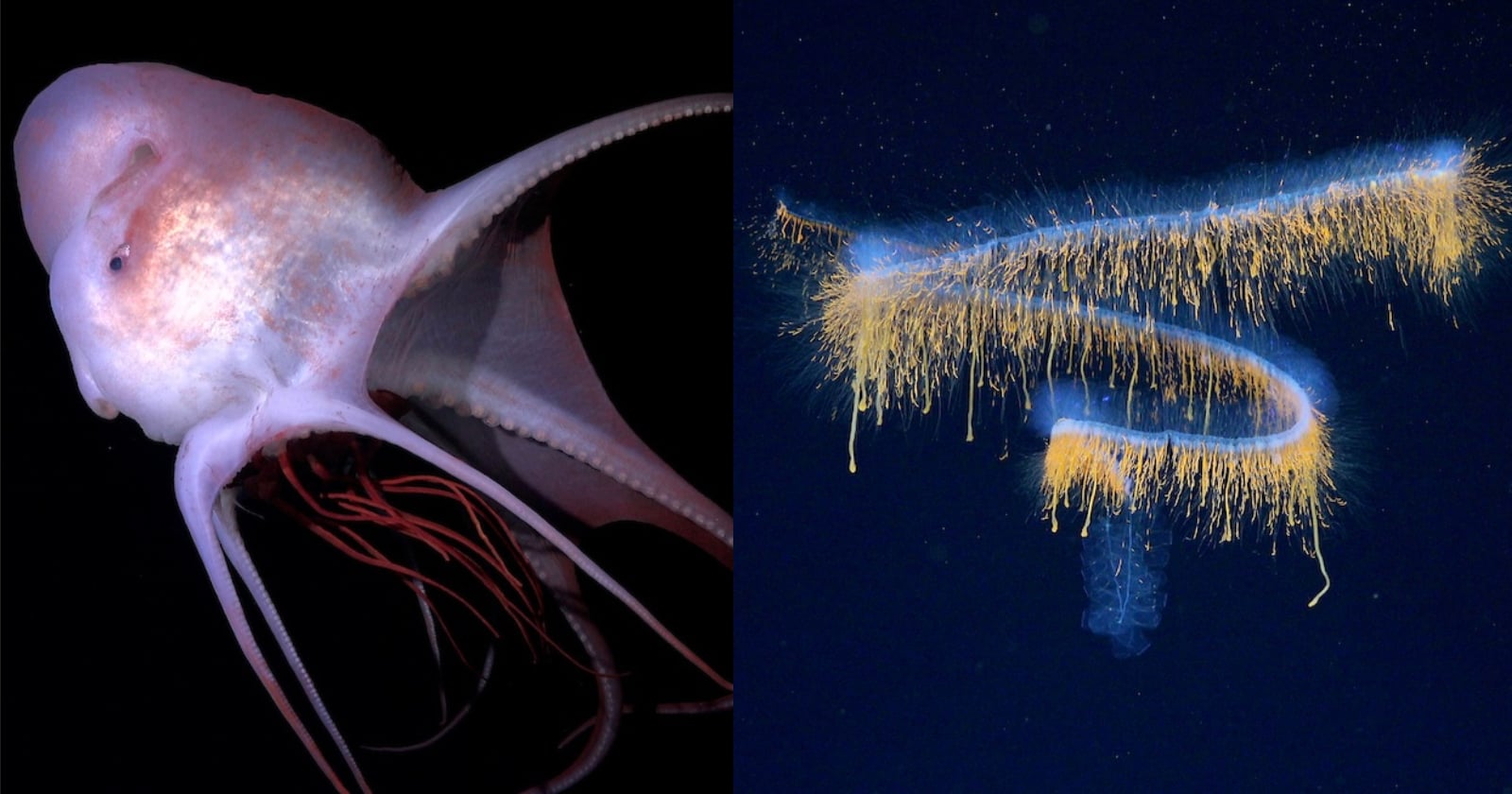
A female octopus (Haliphron atlanticus) consumes a jellyfish at 2624 meters depth. This species is rarely seen alive, and most of what is known about it has been determined from specimens caught in trawl nets.| Image credit: ROV SuBastian / Schmidt Ocean Institute
Scientists discovered and photographed 31 new deep-sea species — typically too delicate to document — in a matter of days using cutting-edge camera technology.
An international team of midwater specialists aboard the Schmidt Ocean Institute’s research vessel Falkor has identified more than two dozen previously unknown marine species during a two-week expedition in the tropical South Atlantic off the coast of Brazil.
The scientists used these advanced technologies to explore the Ocean’s midwater — the water between the sunlit layer and the seafloor — which is Earth’s largest and least explored habitable ecosystem.
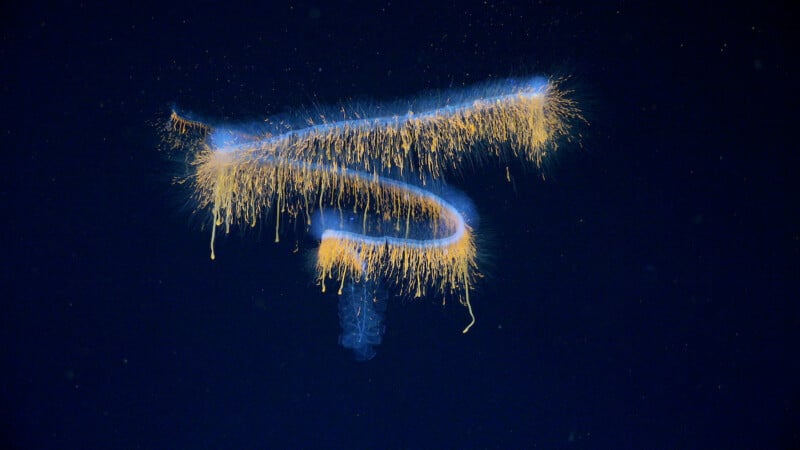 The team collected footage of this siphonophore at 552 meters depth. | Credit: ROV SuBastian / Schmidt Ocean Institute
The list of newly identified species includes an amphipod, a crustacean related to crabs and lobsters; a gossamer worm that moves faster than scientists expected given its body shape; nine jellyfish; seven siphonophores (colonial organisms related to jellyfish and corals); seven comb jellies, or ctenophores, known for the shimmering cilia they use to swim; four larvaceans, tadpole-like animals that live inside mucus “houses” and are more closely related to humans than to invertebrates; and two giant rhizarians, single-celled organisms that are visible to the naked eye.
The team also observed far greater diversity and abundance in midwater life than expected, including glass squid and a pelagic octopus feeding on a bright red jellyfish.
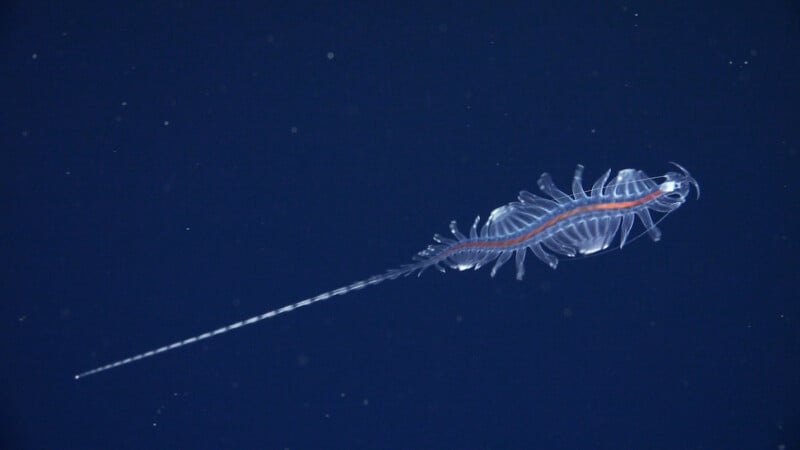 This is a new species from the genus Tomopteris, commonly known as gossamer worms. Little is known about their lives despite prior studies of their unusual, brilliant yellow bioluminescence. | Image credit: ROV…
Source
