Google’s ‘New Era for AI Search’ May Threaten Democracy
Google’s ‘New Era for AI Search’ May Threaten Democracy
https://www.techpolicy.press/googles-new-era-for-ai-search-may-threaten-democracy/
Publish Date: 2026-06-08 08:25:00
Source Domain: www.techpolicy.press
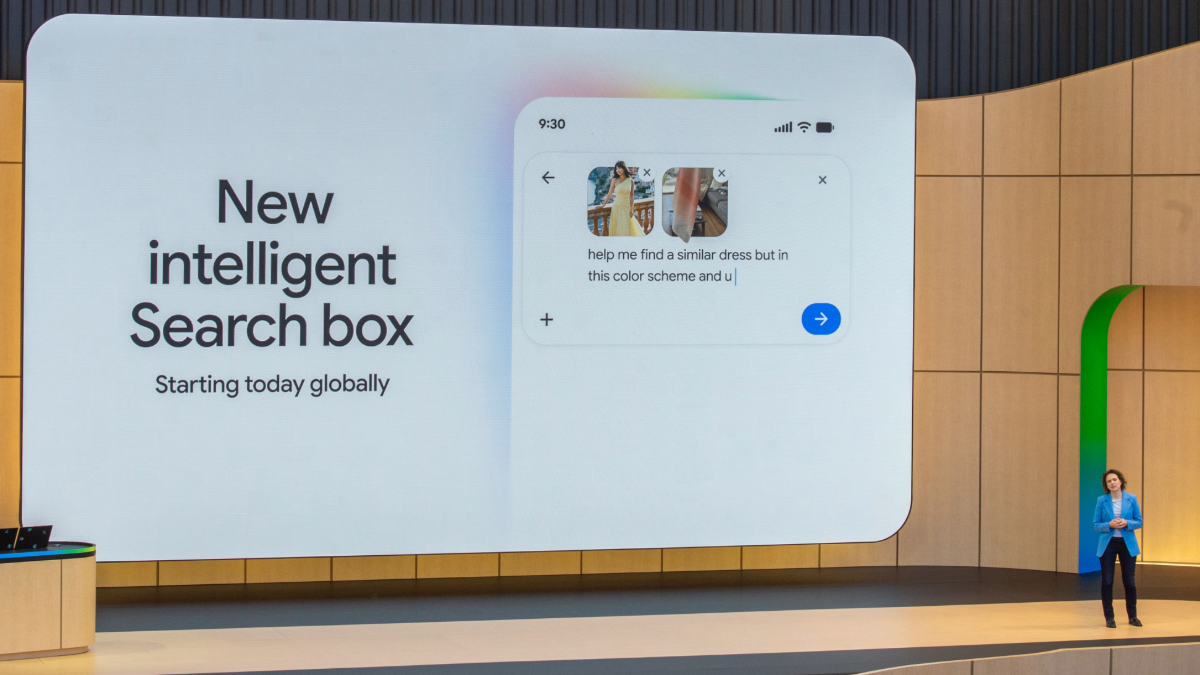
Mountain View, California: The Google manager responsible for the search engine, Liz Reid, presents a search field improved with artificial intelligence at the Google I/O developer conference on May 19, 2026. Photo by: Andrej Sokolow/picture-alliance/dpa/AP Images
At its I/O conference in May, Google announced what it called the biggest overhaul of Search in more than 25 years. Since 2024, Google Search has moved through several phases: from legacy search, which used some personal data to rank results; to AI Overviews, AI-synthesized summaries displayed above traditional results; and now to AI Mode, a fully conversational interface that can now draw on Gmail, Google Photos, and Calendar to personalize responses. While framed as improving convenience, these changes have deeply changed the over 5 trillion annual searches happening globally on Google’s search interface annually.
If you’ve opened Google in the past few weeks, you may have noticed something new embedded in the search box itself: an AI Mode button, sitting right next to the voice and image search options. You can type your question into the search bar and hit enter for a more traditional search experience, or click AI Mode for a conversational, AI-synthesized one. Google reports that AI Mode now has over one billion monthly users worldwide—though it’s worth noting that users are often defaulted into this new experience rather than actively selecting it.
Google maintains roughly 90% of the global search market. Design choices made by Google, therefore, shape how the majority of the world finds information. Much of the legal and policy attention on Google has focused on whether that dominance harms competing firms. But monopoly power doesn’t only harm competitors. It also shapes the experience of billions of individual users, and the collective information environment those individuals share. It’s worth understanding how that experience is changing and analyzing the implications of such for…