Binghamton student team scores high in cybersecurity competition
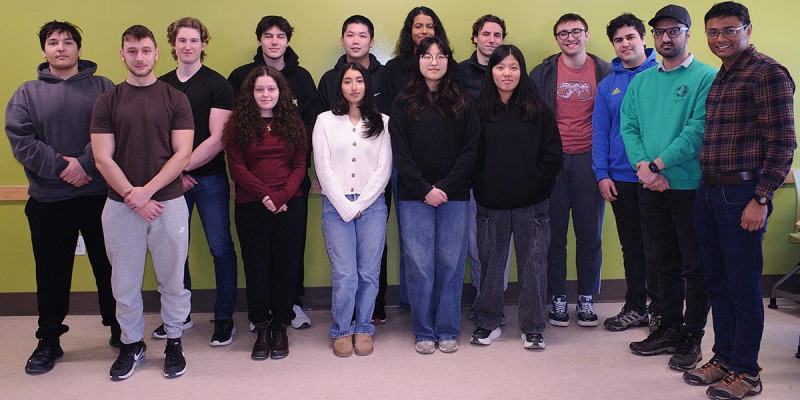
Binghamton student team scores high in cybersecurity competition
Publish Date: 2026-06-08 13:11:00
Source Domain: www.binghamton.edu
Learning about cybersecurity is a critical part of any computer science curriculum — but fighting off real-time cyber-attacks puts those skills to the test.
For the MITRE Embedded Capture the Flag Competition, students from around the world build what they hope is a secure software-and-hardware system, defend it against other teams, and then try to hack into those teams’ creations.
Last year, Binghamton University participated in the competition for the first time, finishing at #26 overall and #2 in New York — respectable for students doing the work on their own time.
This spring, the School of Computing at the Thomas J. Watson College of Engineering and Applied Science followed MITRE’s recommendation to make eCTF a formal part of the curriculum. A dozen students signed up and committed time outside of class, while two other students also participated without registering for the course.
This year’s challenge was to design and implement a secure storage solution for a chip foundry. The system needed to allow users with various roles to access the proper data without leaking sensitive chip designs to unauthorized parties.
“The students work very hard,” said Associate Professor Aravind Prakash, who serves as team advisor. “This is not like any other course, because we don’t have a set number of hours that you need to put in. There were weekends when they would come work in the lab to do their software development or attacks.”
The result? Binghamton ranked #13 among 114 competitors, and it was the only New York university in the top 20.
Team co-captain Samruddhi “Sammy” Deshpande, a computer science master’s student, also took part in the 2025 competition, and she thinks that made it easier to see weaknesses in other teams’ code base and design. They also tapped into new artificial intelligence tools.
“We knew what our previous mistakes were, and how not to repeat those mistakes,” she said. “AI helped us to come up with new…