How AI’s Growing Role in Nursing Raises Questions About Safety, Ethics, and Human Care
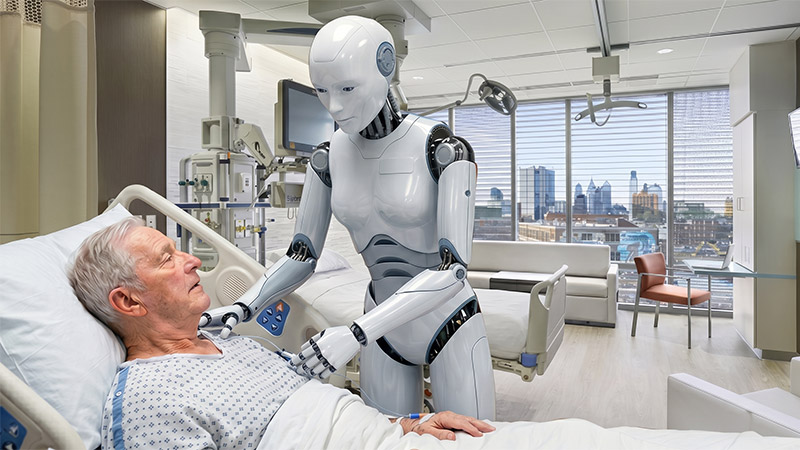
How AI’s Growing Role in Nursing Raises Questions About Safety, Ethics, and Human Care
Publish Date: 2026-05-27 05:43:00
Source Domain: ldi.upenn.edu
A new paper from the University of Pennsylvania School of Nursing explores the potential and challenges involved in the AI automation of the clinical nursing space. (Generated image: Hoag Levins)
As artificial intelligence systems spread through hospitals and clinics, a growing debate is emerging over whether the technology will ultimately strengthen nursing care — or gradually replace parts of it.
That tension is at the center of a new University of Pennsylvania School of Nursing report, “Artificial Intelligence and Nursing Science: Opportunities, Challenges, Implications, and Guidelines,” published in the May-June 2026 edition of Nursing Outlook. The paper warns that while AI could reduce paperwork and improve patient monitoring, it also raises concerns about bias, accountability, patient privacy, and whether hospitals may view some nursing functions as replaceable.
Biggest Barriers
“One of the biggest barriers hospitals face in safely adopting AI tools in nursing care is the lack of robust governance and evaluation frameworks,” said Penn Nursing Dean Antonia Villarruel, PhD, RN, a co-author of the paper. “Many organizations are eager to adopt AI quickly, but they may not yet have clear standards for validation, fairness assessment, implementation monitoring, or accountability. Another major challenge is integrating AI into real-world clinical workflows. A technically impressive system can still fail if it does not fit how nurses actually deliver care or if it increases burden instead of reducing it.”

Companion Article
Q&A Looks at Concerns Over Patient Trust, Workforce Pressures, Unreliable Outputs, and Hospitals Rushing AI Adoption
Penn Nursing is widely regarded as one of the world’s premier nursing schools, known for influential research in health policy, aging, chronic disease, health equity, maternal and child health, palliative care, and AI-driven patient care….