Controversial college voting study partnership dissolved over FERPA privacy concerns
Controversial college voting study partnership dissolved over FERPA privacy concerns
Publish Date: 2026-05-27 17:21:00
Source Domain: www.thecollegefix.com
College students’ personal data will no longer be handed over to a third-party vendor in what is being billed as a win for privacy rights and election integrity efforts.
The National Student Clearinghouse recently announced it is terminating its partnership with Tufts University’s National Study of Learning, Voting, and Engagement program, which is now the focus of an Education Department probe over concerns the study violates student privacy.
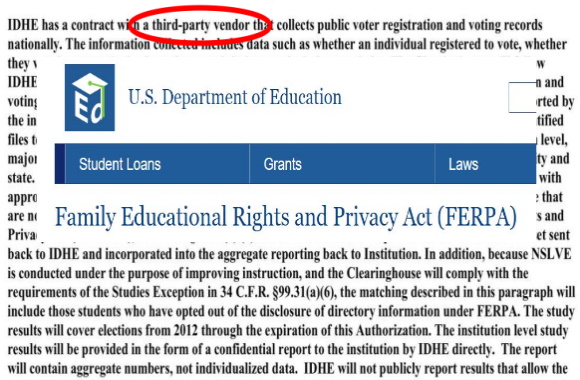
As extensive reporting by The College Fix previously pointed out, the voting study facilitated personal student data to be shared from the National Student Clearhousing to a third-party vendor, which would “de-identify” the data before providing it to Tuft’s for the voting study.
But not only was there no mechanism to determine if the third-party vendor deleted the data, the shared information also likely violated the Family Educational Rights and Privacy Act, or FERPA, College Fix reporting showed.
“The dissolution of the NSC and NSLVE partnership is in the best interest of universities, parents, and students. It represents an important step toward ensuring that sensitive student data is not exploited for political purposes,” America First Policy Institute stated in a March 5 news release.
“The purpose of higher education is to prepare students for the workforce, not to make them unwitting targets of political operations.”
As Tufts pointed out in a news release, the 1,000-plus institutions that participated in the study do so by “signing a Participation Authorization Form that authorizes limited use of student data already held by the Clearinghouse, to be matched to publicly available voting records by a third-party vendor.”
“After a comprehensive de-identification process conducted by the Clearinghouse, the data are returned to NSLVE for analysis and incorporated into its reports, which are then sent to authorized individuals at participating institutions.”
The…