Human Connection Cuts Through Technology at Focus Art Fair
Human Connection Cuts Through Technology at Focus Art Fair
https://hyperallergic.com/human-connection-cuts-through-technology-at-focus-art-fair/
Publish Date: 2026-05-22 18:01:00
Source Domain: hyperallergic.com
After a day of Googling why my back hurt (sedentary computer lifestyle, inflamed SI joint), it only made sense that the art fair I attended the same afternoon would contain some element of human-technology body horror.
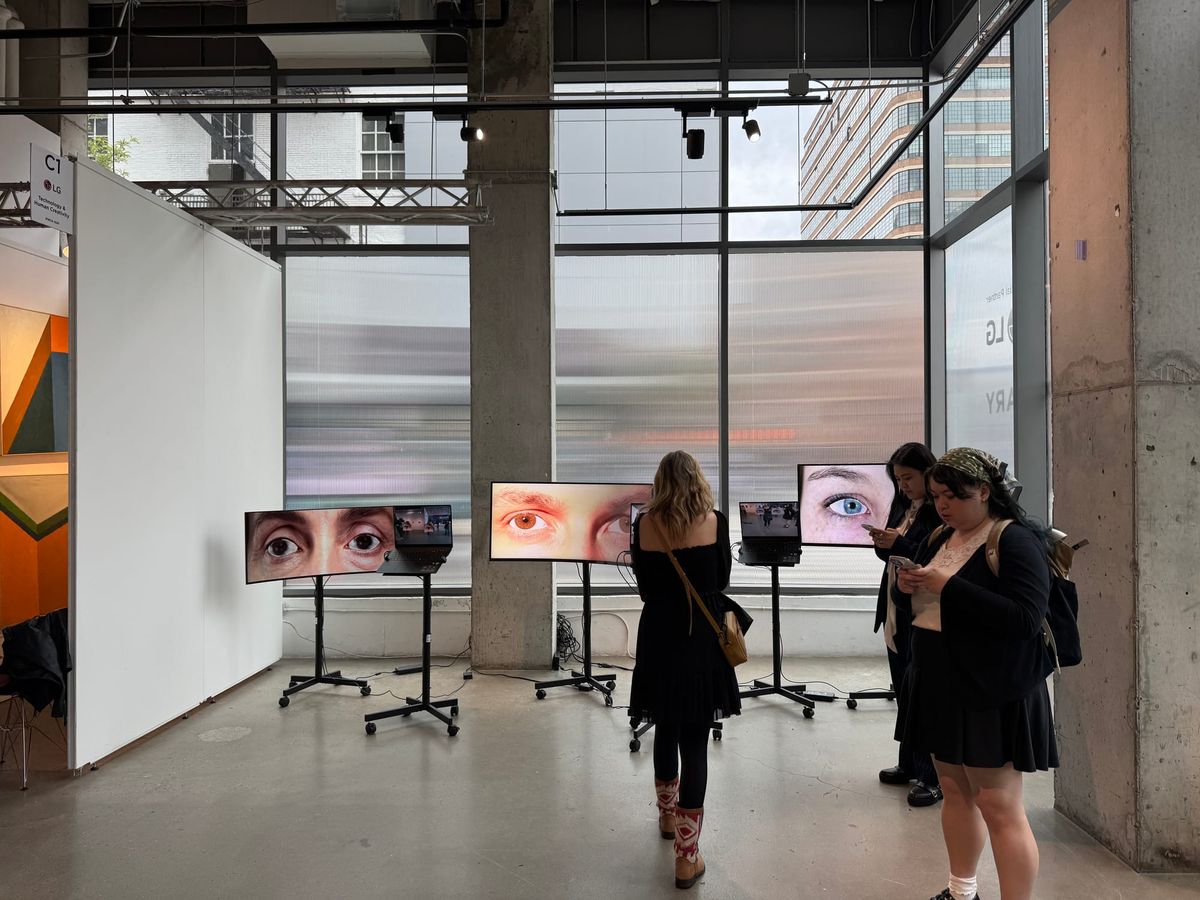
When I arrived at the Thursday press preview for Focus Art Fair, dedicated to Asian art and held at Chelsea Industrial through Sunday, May 24, it seemed fitting that I would walk into a lobby filled with digital elements. I immediately met a recording of myself on a computer screen, but this version of me had a giant eyeball superimposed on her.
The interactive installation, “What if two eyes don’t work together?” by South Korean artist Hwia Kim, is the first taste visitors get of the fair’s fourth edition theme, “human-technology coexistence.” This thematic anchor felt topical, and even corporate, given that one of the fair’s leading sponsors was the technology conglomerate LG Electronics.
Hwia Kim’s “What if two eyes don’t work together?”
This year, Focus features more than 40 galleries and presenters highlighting artists from Asia and its diaspora, though not all participants fit that description.
Right after watching my torso turn into a glitching eyeball, I was surprised to encounter the disarmingly warm Ukrainian-born F-Twins (Anna and Valeriia Lyshchenko). The identical twin sisters create together, speak together, and are the founders of the Primarealism art movement together in response to a perceived growing cultural desire to outsource critical thinking to AI.
The sharply intelligent artists talked me through their pieces displayed at the Opening Gallery’s entrance booth: “You Don’t Have To” (2026), a painting portraying a hand removing a blue nail from another in a statement of self-determination over difficult circumstances, and ”To save the first, you have to see the night sky of me” (2026), a black charcoal and gold-leaf on paper work. Their practice, they explained, extends the sense of interconnectedness they feel…