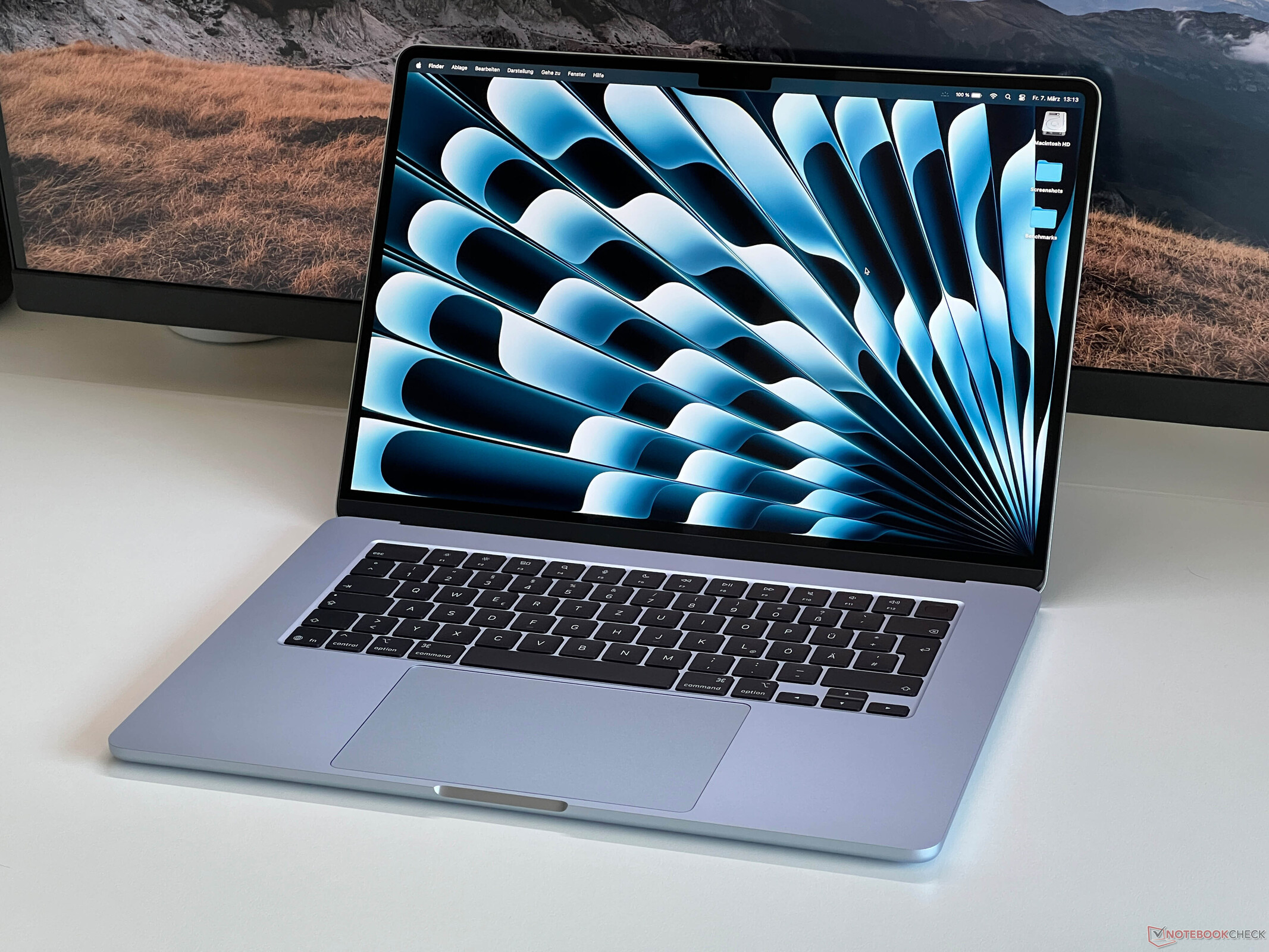
Apple’s Premium Laptop Competitors Are Now Compromising Build Quality And Thermals To Match The MacBook Pro’s Slim Profile, With Horrendous Drawbacks

https://wccftech.com/apple-macbook-pro-rivals-are-sacrificing-build-quality-and-thermals-to-compete/
Publish Date: 2026-05-20 03:05:00
Source Domain: wccftech.com
The highly efficient Apple Silicon is what allows these SoCs to be used in thinner MacBook Pro models, and although these chips do get incredibly hot, these thermals are still manageable, unlike what Apple’s competitors are up to. Razer, which is regarded as the only other company to provide Windows laptops that are of equivalent build quality to a MacBook Pro, is now headed in the opposite direction, with its Blade 16 being too thin to accommodate powerful components. If that wasn’t bad enough, the company has also compromised on the build quality, which isn’t acceptable on a high-end machine.
MacBook Pro still holds the golden standard for the best built laptop, while Razer’s oversight brings two major design flaws to the Blade 16
All gaming laptops are equipped with two or more fans spinning at insanely high RPMs to dissipate heat, and the Blade 16 is no exception. However, the YouTube channel ShortCircuit found that when the back panel is pressed with mild force, the fan begins to touch the cover, and if the same scenario persists when running an intensive workload, it can actually cause damage to the fan bearings, forcing a replacement much sooner than you’d want.
Another flaw on the Blade 16 is that it sacrifices temperatures by housing excessively powerful components like the RTX 5090 GPU. During testing, one area of the gaming laptop became way too hot to touch. Before commercial units of laptops enter mass production, they need to pass certain verifications, with one of them being that the surface temperature cannot exceed a level where it can potentially burn the user. Apparently, Razer managed to bypass those requirements without scrutiny.
The area where the finger is present is where the Razer Blade 16 gets too hot to touch / Image credits – ShortCircuit
Assuming we can ignore the aforementioned problems, we have yet to address the software-related concerns. During Hardware Canucks’ testing, it…