Millions of farmers in Africa’s Great Lakes region face rising temperatures. Study predicts how crop disease and pests could spread
Publish Date: 2026-05-12 09:57:00
Source Domain: theconversation.com
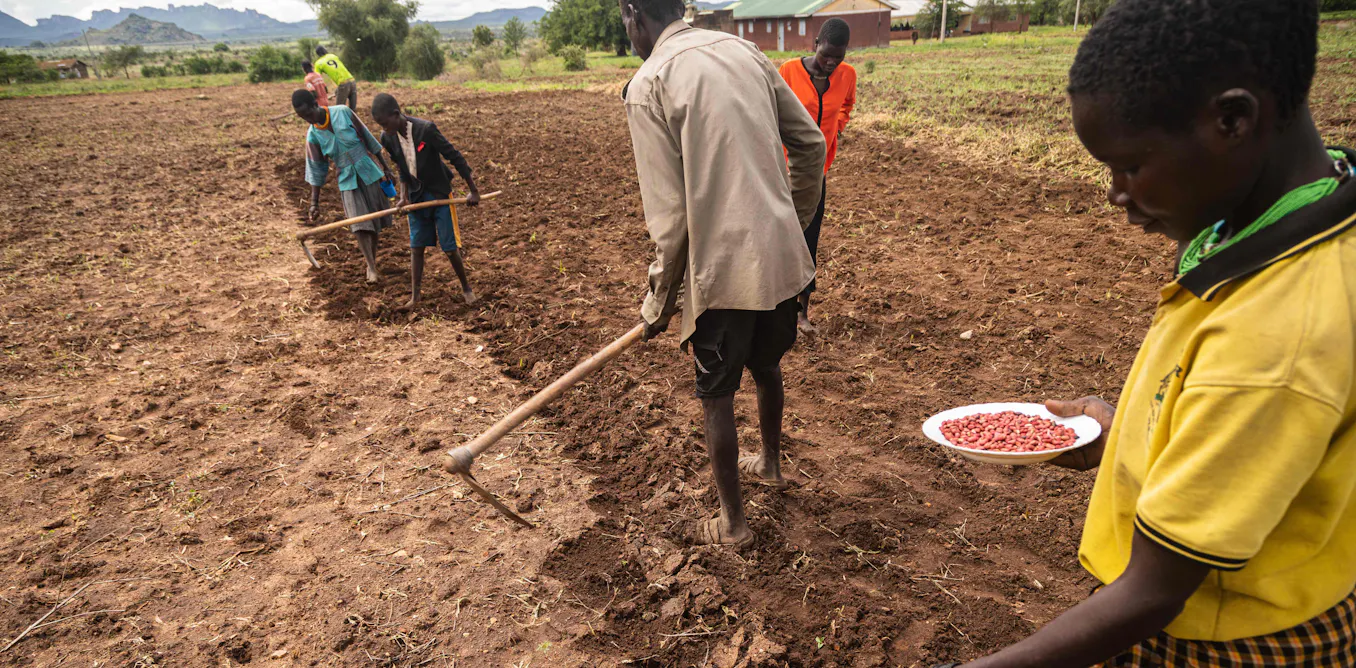
Farming in the Great Lakes region of Africa (which includes Uganda, Rwanda, Burundi, the Democratic Republic of Congo, Tanzania and Kenya) is challenging because of changing environments and ongoing social and political tensions. These tensions include conflict over resources. As a result, agricultural productivity is low and there’s a high rate of food insecurity there.
It’s difficult for farmers to manage their farms well when they don’t have enough high quality seed and then also experience extreme weather conditions like floods, drought and heat waves. Armed conflict and crop diseases and pests make the situation worse by damaging crops. Losses to disease and pests are often higher in low-input agricultural systems, where there is limited access to agricultural infrastructure and inputs like fertiliser and pesticides, as is common in sub-Saharan Africa.
Read more:
Climate change could pose a major risk to cassava in Africa: study sets out what can be done now
We are part of a team of plant pathologists who study crop diseases and pests and then come up with strategies to manage and prevent losses. In our latest research, our team sampled 27 crop pathogens and pests on banana, cassava, potato, and sweet potato crops across altitudes in Burundi and Rwanda.
We then used machine learning, a type of artificial intelligence, to see how these pests and diseases may spread when the climate warms more. We wanted to identify high-risk locations and potential shifts in particular pathogens and pests under climate change scenarios.
Read more:
Africa’s most notorious insects – the bugs that hit agriculture the hardest
In “climate matching” studies like this one, researchers evaluate a set of species – in our case, pathogens (disease-causing organisms like viruses or bacteria) and crop-damaging organisms like aphids and weevils – and consider how these species may change across…