What makes a good teacher? Ask a Republican and a Democrat, and they are likely to agree
What makes a good teacher? Ask a Republican and a Democrat, and they are likely to agree
Publish Date: 2026-05-11 08:43:00
Source Domain: theconversation.com
If you follow the headlines, it can seem like K-12 schools in the United States are a political battlefield.
Some conservative parents and advocacy groups are lobbying to remove certain books from classrooms and libraries, most often those that highlight LGBTQ+ issues or race and racism.
Some civil liberties groups, librarians and progressive parents, meanwhile, are pushing back against book bans, saying they are a form of unnecessary censorship.
Parents and school boards also are clashing over a range of other issues, ranging from how transgender and nonbinary students are treated and which bathrooms they can use, to whether teachers should use artificial intelligence in the classroom.
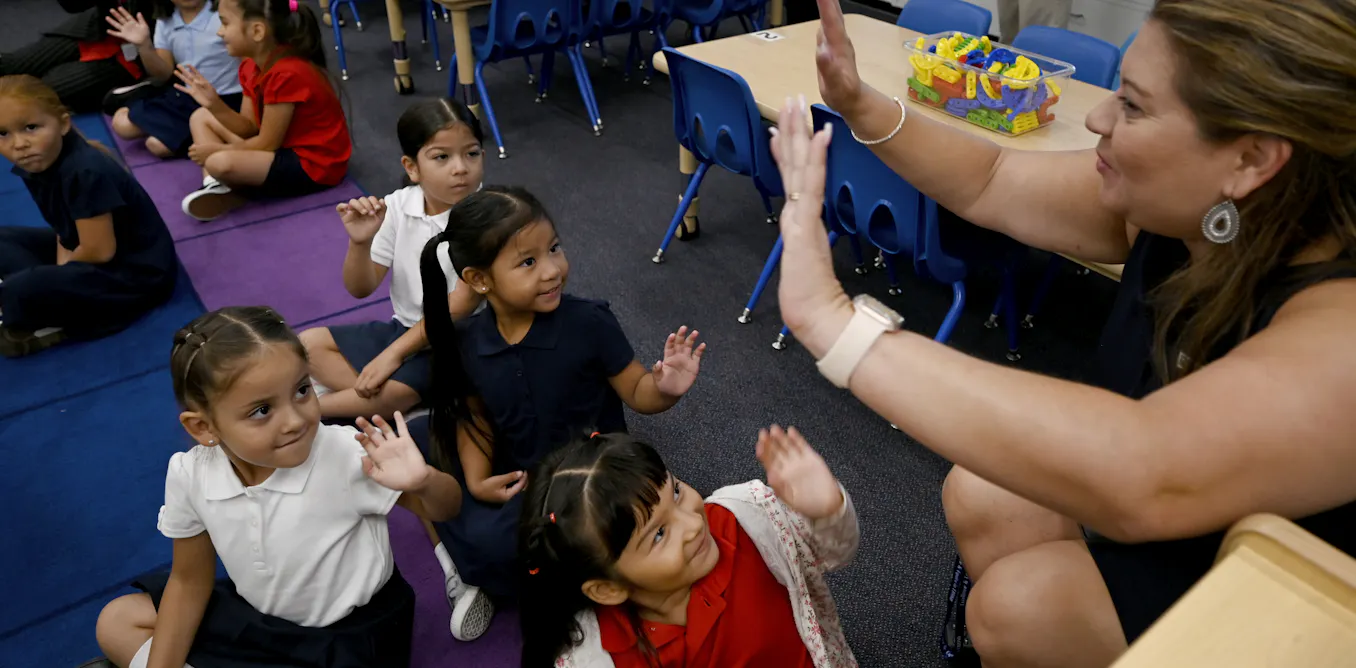
Beyond this evidence of political polarization, though, there’s another, less divisive reality. Ask people to name their best teacher, and regardless of their political affiliation, they will likely offer a similar answer. Most people will say that they learned a lot from a teacher who knew them, cared about them and made learning relevant to their lives.
Over five years, from 2020 through 2025, we asked more than 2,000 Americans, including Democrats, Republicans and independents, what makes a very good teacher. We expected deep partisan divides. Instead, we found something rare: genuine, cross-partisan agreement.
How we ran the study
We began in 2020 with a nationally representative survey of 334 adults, asking them to recall a teacher they learned a lot from. We then asked the survey participants to look at 10 statements that might describe a good teacher and rank them from most to least important.
Five of the statements we offered focused on relationships – like caring about students, making educational lessons relevant and giving students individualized support. The other five focused on whether teachers covered a lot of material, rewarded top performers with grades or prizes, and whether they applied rules consistently to all students.
Respondents…