Star Labs StarFighter Linux Laptop Finally Goes on Sale
Star Labs StarFighter Linux Laptop Finally Goes on Sale
https://linuxiac.com/star-labs-starfighter-linux-laptop-finally-goes-on-sale/
Publish Date: 2026-05-07 17:31:00
Source Domain: linuxiac.com
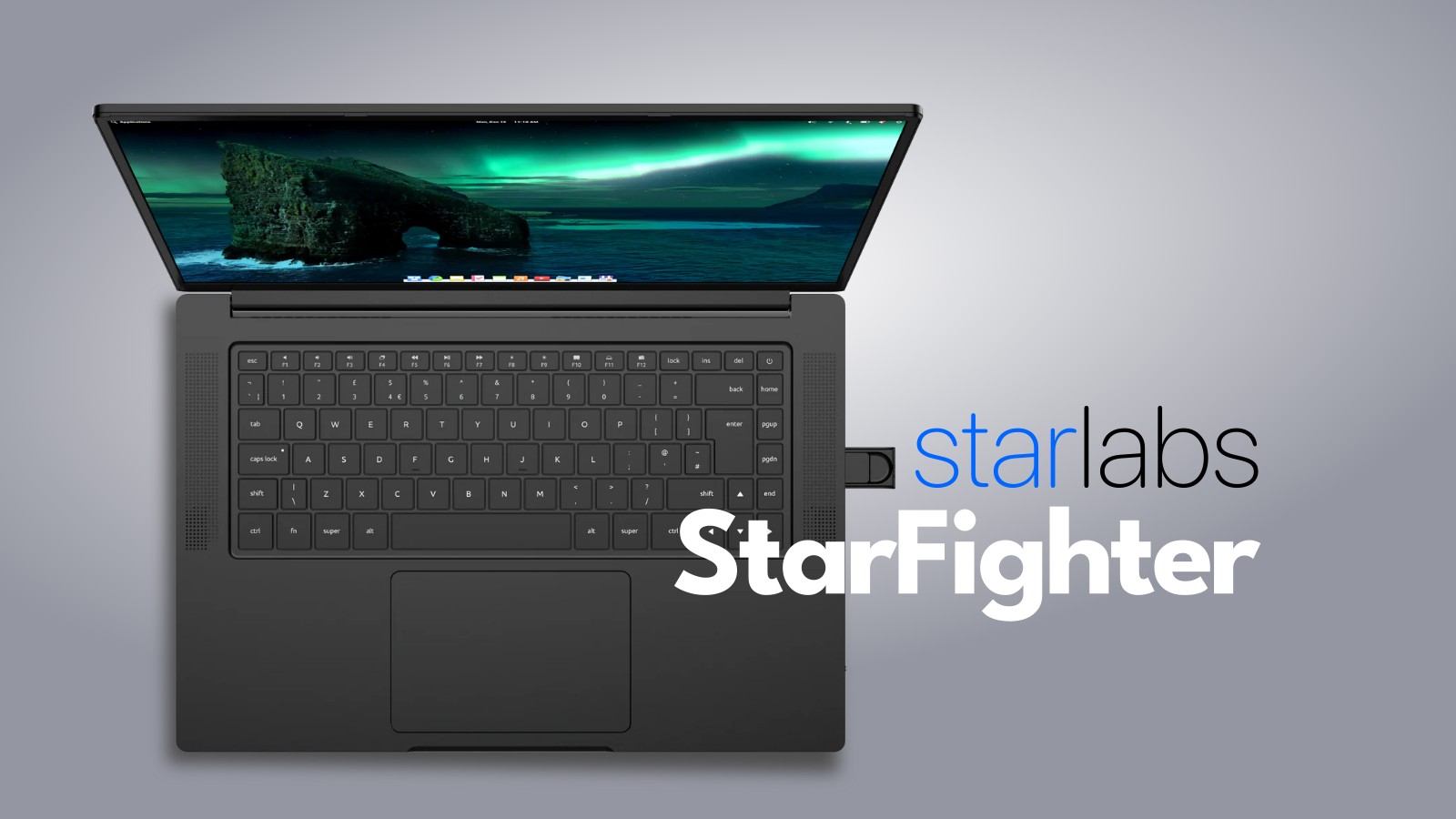
Star Labs has opened sales for the StarFighter, its most expensive Linux laptop line to date. The 16-inch system is positioned as a premium machine with open-source firmware, high-resolution matte display options, and several preinstalled Linux distributions.
The StarFighter is available in three main configurations. The Standard model starts at $1,878 before taxes and includes a QHD 165Hz matte display, an Intel Core Ultra 5 125H 14-core processor, and 32GB of LPDDR5X memory. The Ultra model upgrades to a 4K 120Hz matte display, an Intel Core Ultra 9 285H 16-core processor, and 64GB of LPDDR5X memory, starting at $2,843 before taxes.
The AMD model uses the same 4K 120Hz matte display and 64GB memory but switches to an AMD Ryzen 7 8845HS 8-core processor, with pricing starting at $3,573 before taxes.
Star Labs StarFighter Linux Laptop
That pricing places the StarFighter well above Star Labs’ smaller systems and makes it the company’s flagship laptop rather than an entry-level Linux notebook. For comparison, the StarLite starts at $1,042 before taxes, while the StarFighter starts at $1,878 and rises to $3,573 for the AMD configuration.
Strange, the AMD configuration is notably more expensive than the Intel Ultra model, despite both sharing the same display and memory class. Star Labs does not explain the difference on the product page, so the gap should be treated as a configuration and pricing detail rather than a performance claim.
The laptop features a 16-inch 16:10 IPS display. Star Labs lists the higher-end panel with a 3840×2400 resolution, 120Hz refresh rate, 625 cd/m² brightness, 178-degree viewing angles, and a true matte coating. The Standard model uses a QHD 165Hz matte panel.
The laptop uses open-source firmware powered by coreboot and edk II, with updates delivered through the Linux Vendor Firmware Service. LVFS updates cover the BIOS, Embedded Controller, and SSD, while the firmware supports measured boot and advanced…