The Robot at the Front Desk: Trust, Risk, and Privacy
The Robot at the Front Desk: Trust, Risk, and Privacy
https://www.ucf.edu/artificial-intelligence/robots-at-the-reception/
Publish Date: 2026-04-30 17:37:00
Source Domain: www.ucf.edu
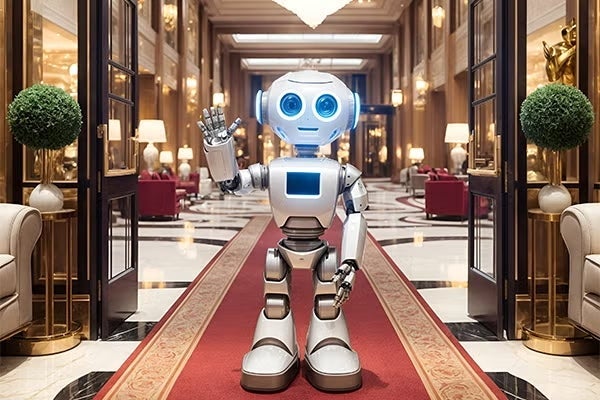
Imagine a future where you enter a hotel lobby, and instead of a smile and a warm greeting from a human concierge, a robot with a polished chrome surface and a touchscreen interface welcomes you. This scene is rapidly transitioning from science fiction to reality, and the hospitality industry stands on the brink of a robotic revolution. The allure of service robots promises a future of enhanced efficiency and novel guest experiences. However, their integration into such a profoundly personalized industry raises significant questions about guests’ perceived risks and security concerns. Pioneering this exploration into uncharted territories are UCF Rosen College of Hospitality Management’s Professor Abraham Pizam, Dr. Ahmet Ozturk and their co-authors. Their extensive study seeks to decode the complexities surrounding the deployment of robotic technologies in hotels.
Service robots have worked their way into widespread locales within the broader hospitality industry, including hotels, cruise ships, restaurants, and senior living facilities. Currently, their roles are limited, but their future looks bright. With the remarkable development, spread, and acceptance of AI over recent years, robots, in general, are likely to become more prevalent and expansive in their roles. However, what sets hospitality—the service of welcoming, receiving, hosting, or entertaining guests—apart from many other industries is its reliance on the human touch. That doesn’t necessarily mean hospitality robots will be relegated to non-guest-facing roles. The roles of service robots in hospitality will be determined by how guests feel about reaching out to them.
Understanding the Unknowns
The hesitation to accept robots in service roles is not merely a reluctance towards new technology but a multifaceted concern deeply rooted in perceived risks. New technology comes with sparkle and promise, but its novelty harbors deep unknowns. Understanding and addressing those unknowns is…