Scientists Develop New Technology to Continuously Monitor Geothermal Energy Operations – Berkeley Lab News Center
Publish Date: 2026-04-06 12:09:00
Source Domain: newscenter.lbl.gov
Advancing reliable tools for next-generation geothermal
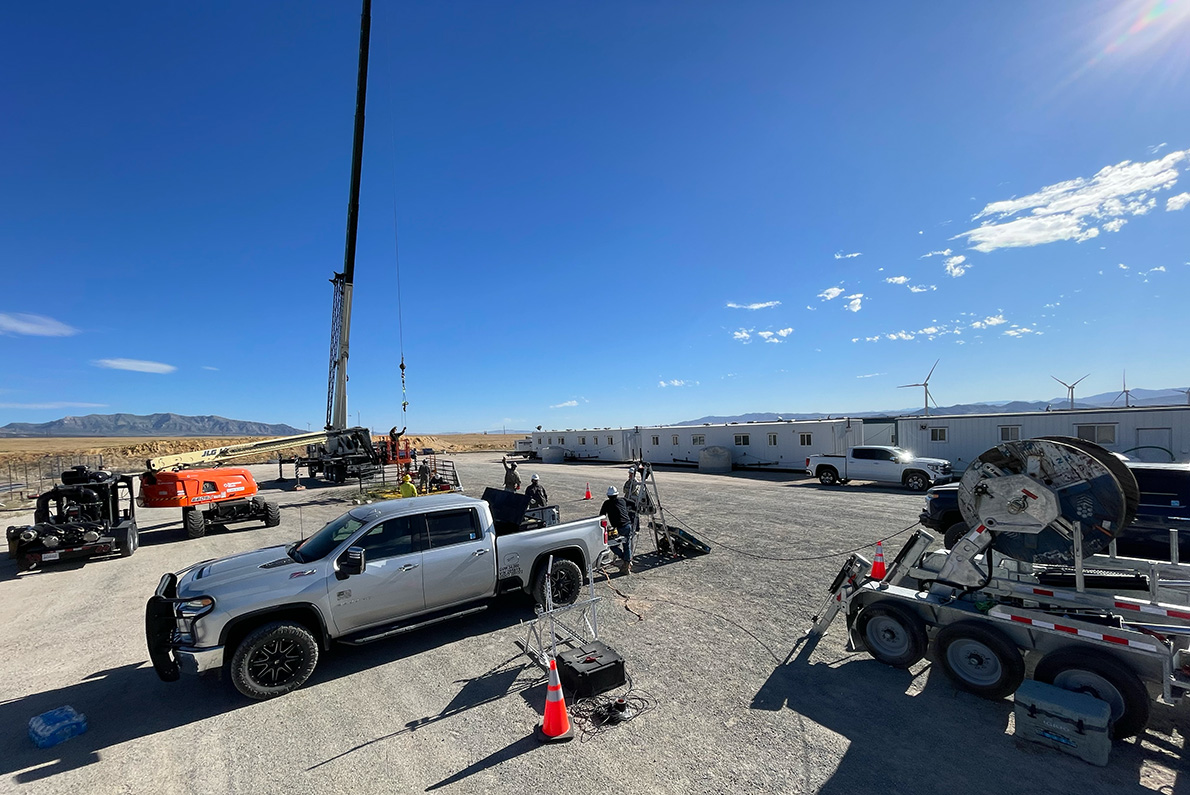
Measuring just under 10 feet long, the seismometer developed at Berkeley Lab’s GMF was deployed 6,995 feet underground on July 27, 2025, through a borehole at Cape Station. Situated beside the U.S. Department of Energy’s Frontier Observatory for Research in Geothermal Energy (FORGE), this site offers Fervo valuable data on reservoir characteristics to better manage and reduce the risk of induced seismic activity. Utah, meanwhile, is among eight states producing geothermal energy, with its first plant dating back to 1984. Fervo continues to carry out regular seismic monitoring to evaluate potential seismic risks.
“Developing sensors that can reliably operate at high temperatures is a game-changer for geothermal energy,” says Sireesh Dadi, Manager of Data Acquisition and Advanced Analytics at Fervo Energy. “We’re advancing tools for microseismic monitoring, pressure sensing, and strain sensing that help us better understand reservoir behavior in real time.”
Berkeley Lab’s GMF develops and deploys customized geoscience instruments designed to operate in harsh, remote environments for extended periods — such as this seismometer, which is sealed to prevent water seepage and designed without extra components that could fail under intense heat.
Geophysicists in Berkeley Lab’s Energy Geosciences Division began studying geothermal energy at The Geysers Field nearly 50 years ago. Since then, they have led collaborations to develop, sustain, and monitor EGS, and to align research with technology and materials advances that have transformed the geothermal landscape. Recently, the team has contributed its expertise to field-scale demonstrations at sites such as Cape Station and Utah FORGE. In other projects funded by DOE, Berkeley Lab researchers are also supporting EGS tests in superhot conditions that exceed 700°F.
The team has also developed widely used software to simulate reservoir…