AI in Cardiology: From Promise to Practice
AI in Cardiology: From Promise to Practice
https://www.acc.org/Latest-in-Cardiology/Articles/2026/03/26/18/09/Combo-AI-Keynote-Article
Publish Date: 2026-03-28 08:37:00
Source Domain: www.acc.org
The memory is seared into the mind of Mintu Turakhia, MD, MS. It was the summer after his freshman year at the University of California, Berkeley, and his family had returned to the small village in India where his mother grew up. There, his grandfather, a London-trained cardiac surgeon, left a successful practice in Mumbai to return to the village to take care of his family. He put down the scalpel and instead became the village general
practitioner.
“My grandfather’s only tools were his own knowledge, textbooks, a reflex hammer, a stethoscope and an old suction-bulb 12-lead electrocardiogram (ECG),” Turakhia says. “While I was fascinated with how much he could do with his brain and just a limited set of tools, this was clearly not the way health care delivery could be scaled in India or anywhere.”
Given his majors in computer science and biology, Turakhia integrated computer science and digital technology with medicine. Thirty years later, he is on the forefront of developing those practice-changing tools by bringing artificial intelligence (AI) to cardiovascular medicine.
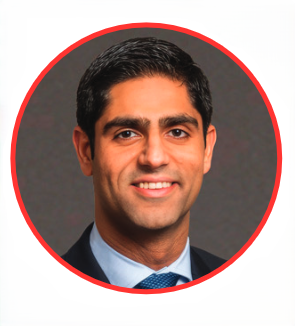
At ACC.26, Turakhia, a professor at Stanford University, founding director of Stanford’s Center for Digital Health, and chief medical and scientific officer of iRhyhtm Technologies, and Rohan Khera, MD, MS, FACC, who directs the Cardiovascular Data Science Lab at Yale University, will bring their deep knowledge of the field to ACC attendees as Keynote speakers.
Their message is clear. The conversation is no longer about whether AI has potential. It is about how to translate that potential into safe, equitable and clinically useful tools.
“Cardiology is uniquely positioned to lead medicine into the AI era,” says Turakhia. “We already run well ahead of everyone else around the first lap.” He attributes that advantage to the nature of the specialty itself, “a data-rich field of physiologic signals.” AI adds the ability to extract deeper layers of information from…