How Penn Engineering is working to safely scale AI agents to the physical world
How Penn Engineering is working to safely scale AI agents to the physical world
https://www.thedp.com/article/2026/03/penn-engineering-swarm-artificial-intelligence-safety-research
Publish Date: 2026-03-26 23:10:00
Source Domain: www.thedp.com
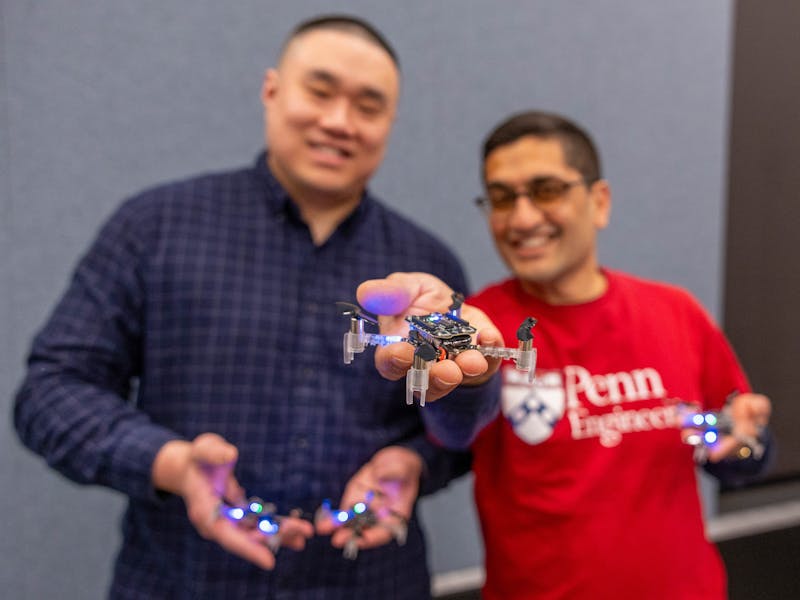
Researchers at Penn Engineering recently launched a project designed to safely bring artificial intelligence agents into the physical world.
The new research, based in Penn Engineering’s xLab, is led by Electrical and Systems Engineering professor Rahul Mangharam. The lab explores how large groups of AI agents — systems that act on behalf of users — can operate together without causing harm in a high-stakes environment.
The team’s current goal is to design algorithms that integrate AI and machine learning into “life-critical systems,” Mangharam told The Daily Pennsylvanian. The research, he added, is especially important as the field transitions towards “embodied intelligence,” or physical AI systems.
While virtual agents can be scaled relatively easily, physical agents require engineers to consider spatial and reactive safety to ensure they avoid collisions — limiting ability to scale beyond small groups of agents.
According to Mangharam, most algorithms “don’t scale beyond a single digit number of agents.”
Get the DP delivered straight to your inbox.
Sign Up
Haimin Hu, a postdoctoral researcher in the xLab, said that their team is working with a scale far beyond that, from hundreds to thousands of agents.
He told the DP that the scaling process also introduces real-world constraints such as communication delays and challenges with “human-AI interactions.”
Researchers must also ensure their designs allow thousands of independent agents to make decisions simultaneously without conflict.
“We are interested in understanding how to scale these systems up and how to have them develop their own skills and form teams,” Mangharam said. “Rather than assigning teams, [agents] can observe others and…