Zeeve Introduces Privacy Layer for Institutional Blockchain Confidentiality | Currency News | Financial and Business News

Publish Date: 2026-03-24 14:54:00
Source Domain: markets.businessinsider.com
Irvine, CA, USA, March 24th, 2026, Chainwire
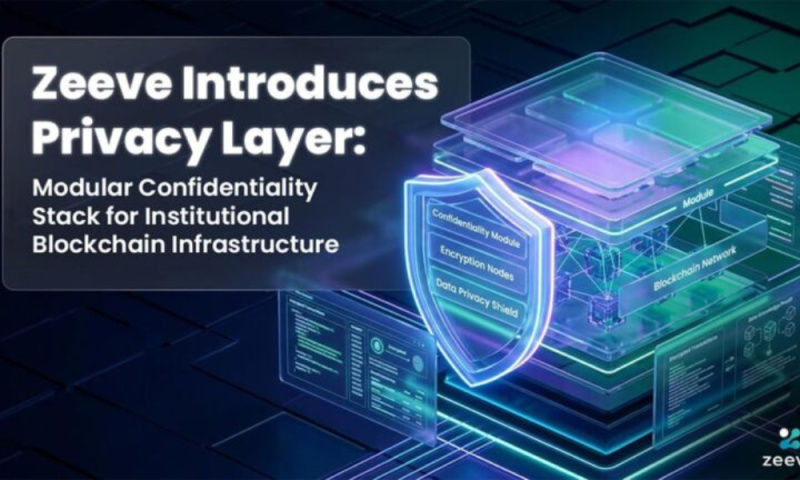
Zeeve has launched the Zeeve Privacy Layer, a modular EVM-compatible privacy stack designed to enable cryptographic confidentiality and regulator-ready transparency across enterprise and public blockchain networks.
 Financial institutions are shifting from simple blockchain pilots to production-grade tokenization and settlement use cases. However, there remains a lack of systematic, enforceable confidentiality across on-chain operations.
Permissioned networks guard the network perimeter but do not protect the data layer. Details such as transaction values and identity metadata can remain visible.
The Zeeve Privacy Layer is designed to address this limitation by providing a modular privacy stack that introduces confidentiality controls across multiple layers of blockchain infrastructure.
“Institutions operating on shared ledger infrastructure face a structural confidentiality problem that permissioning alone does not resolve,” said Dr. Ravi Chamria, CEO of Zeeve. “Zeeve Privacy Layer provides a composable architecture that enables institutions to enforce bank-grade confidentiality without compromising on governance, auditability, or regulatory compliance.”
Zeeve Privacy Layer Covers Six Layers of Security
Institutional confidentiality cannot be addressed at a single point in the stack. It must be built across every surface where data is generated, stored, or queried.
The Zeeve Privacy Layer addresses six specific surfaces:
- Confidential Asset Transfers: This layer is a shielded model. It uses cryptographic commitments, nullifiers, and zero-knowledge validation. This technique stops transaction graph analysis.
- Private Smart Contract Execution: This feature extends privacy to the workflow state. It hides RFQ terms, netting rules, and settlement instructions. It also protects collateral logic. Only authorized participants have access to private payloads. The public ledger records only a…