Minnesota lawmakers seek to regulate artificial intelligence
Minnesota lawmakers seek to regulate artificial intelligence
https://www.kvrr.com/2026/03/10/minnesota-lawmakers-seek-to-regulate-artificial-intelligence/
Publish Date: 2026-03-10 14:42:00
Source Domain: www.kvrr.com
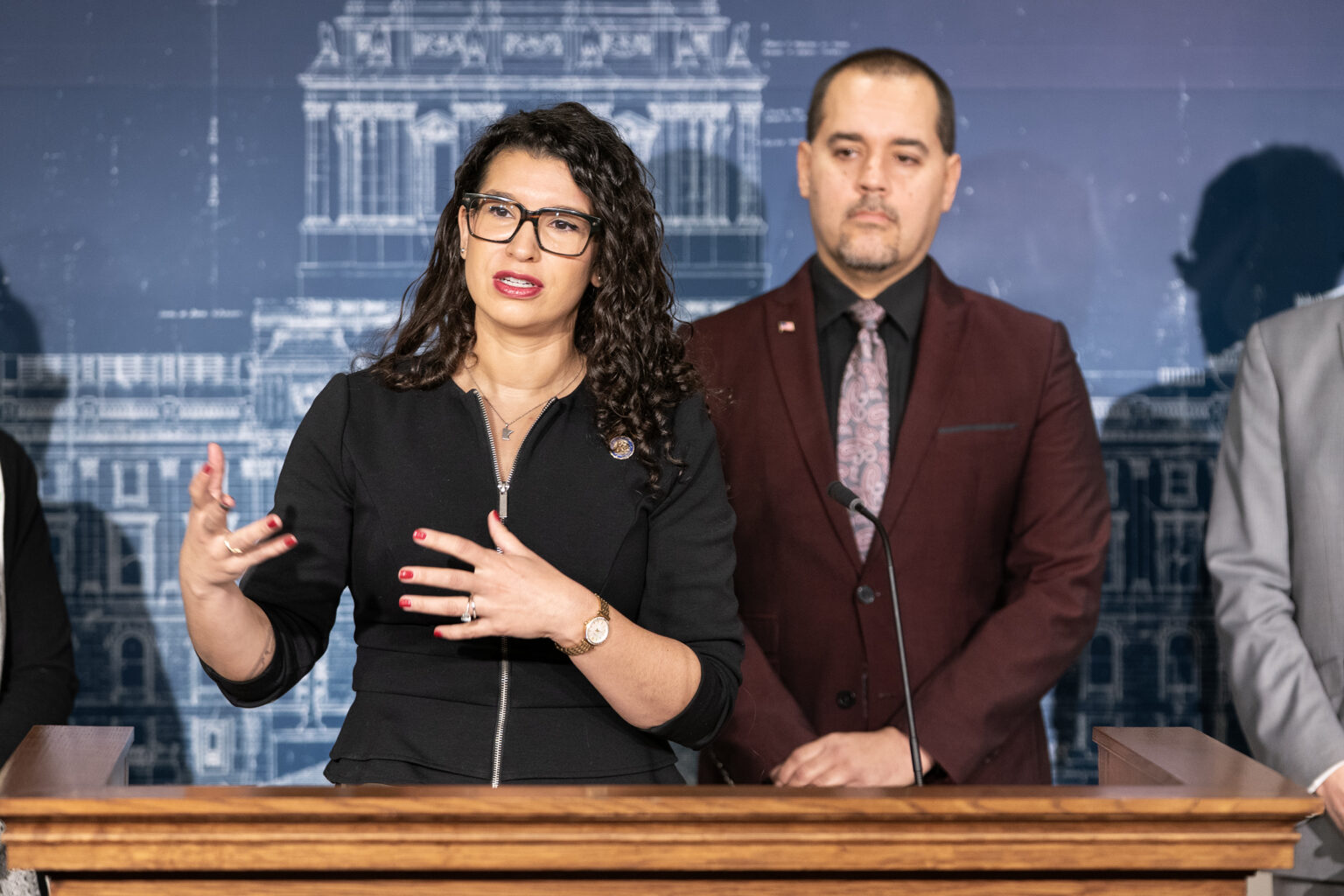
Sens. Erin Maye Quade, DFL-Apple Valley, and Eric Lucero, R-St. Michael, are leading the bipartisan effort to regulate artificial intelligence in Minnesota. (Photo by Senate Media Services)
ST. PAUL, Minn. (Minnesota Reformer) — A bipartisan group of Minnesota lawmakers are hoping to limit how the artificial intelligence industry operates in the state, arguing that it’s evolving in ways that are harmful and unconstitutional.
Minnesota senators on Monday considered five measures to regulate AI, including a bill (SF 1857) stating that companies that create AI chatbots — like ChatGPT — ensure minors do not access them, and a bill (SF 1886) requiring that companies disclose when a person is communicating with AI.
Sens. Erin Maye Quade, DFL-Apple Valley, and Eric Lucero, R-St. Michael, are leading the bipartisan effort to regulate AI. The duo — who are on opposite sides of the political spectrum — said they aren’t opposed to the technology but urged lawmakers to protect Minnesotans. Maye Quade and Lucero were co-authors of a bill regulating deepfakes — digitally altered photos or videos depicting events that didn’t actually happen — which became law in 2023.
“There’s a recognition that we need to do something to bring controls in place, to uphold the Constitution, to protect privacy and to empower individuals against these multi-billion dollar industries,” said Lucero, who works in cybersecurity, on Monday.
One of Maye Quade and Lucero’s bills (SF 1120) would prohibit the government from requesting reverse-location data, which many law enforcement agencies use when they do not know who specifically committed a crime.
Law enforcement can obtain a warrant that mandates a technology company give them data about which cell phones were in a certain location at a specific time or who has searched for a specific word or phrase on their phones or on an AI chatbot.
Civil liberties advocates argue warrants are supposed to be…