Cindy Cohn’s “Privacy’s Defender” Describes a 30-Year Career Fighting for a Better Internet
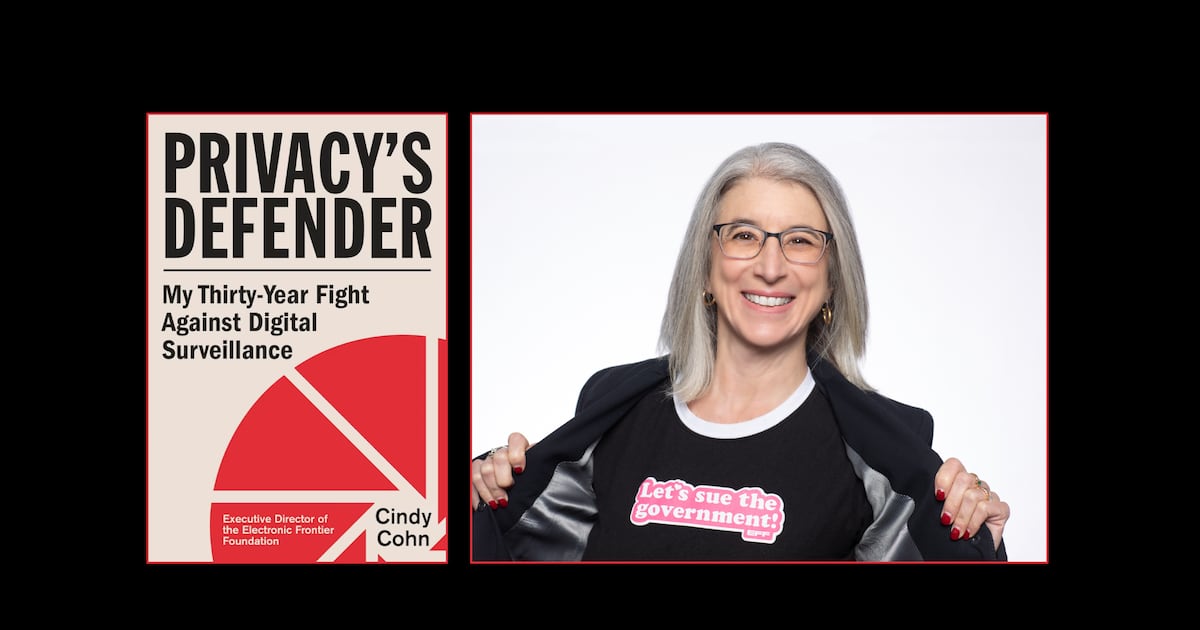
Cindy Cohn’s “Privacy’s Defender” Describes a 30-Year Career Fighting for a Better Internet
Publish Date: 2026-03-10 22:45:00
Source Domain: www.wweek.com
Cindy Cohn isn’t done suing the government.
Cohn, the author of Privacy’s Defender (MIT Press, 248 pages, $29.95), which came out March 10, is retiring later this year after a 30-year career with the Electronic Frontier Foundation, the San Francisco-based digital rights group founded in 1990. For the first half of her time with EFF, Cohn served as legal director and general counsel, fighting for internet users’ rights to digital encryption and against telecom companies’ tapping and mining of users’ data.
As Cohn writes, she got involved in EFF not because she was interested in tech, but because she became friendly with some of the organization’s founders while working as a young lawyer in San Francisco. They included John Barlow, one of EFF’s founders, who was also a published poet and a lyricist for the Grateful Dead, a band Cohn loved.
During a video call with WW, Cohn said she wants to return to the “fightier” part of her advocacy work; she hasn’t decided quite where she’ll end up, though privacy, the rule of law and the separation of powers remain major concerns. She also talked to WW about EFF’s wins and losses and how citizens are fighting against surveillance tech like Flock’s AI license plate reading cameras (which were discontinued in Eugene and Springfield in December after public outcry). This interview has been edited for space and clarity.
WW: When it comes to issues that EFF has advocated on, what are the things that most concern you or that you see as continuing to be big fights in the future?
Cindy Cohn: The way that surveillance has overtaken our lives is just the issue of the moment right now. We really do have to build real privacy back into our systems—both privacy vis-à-vis the government and privacy vis-à-vis companies. A lot of the fights that I talk about in the book are situations in which the government doesn’t come to you to get information about you. They go to your service provider—whether that’s…