Linux couldn’t save my old netbook, so I tried Haiku OS
Linux couldn’t save my old netbook, so I tried Haiku OS
https://www.howtogeek.com/linux-couldnt-save-my-old-netbook-so-i-tried-haiku-os/
Publish Date: 2026-03-05 10:45:00
Source Domain: www.howtogeek.com
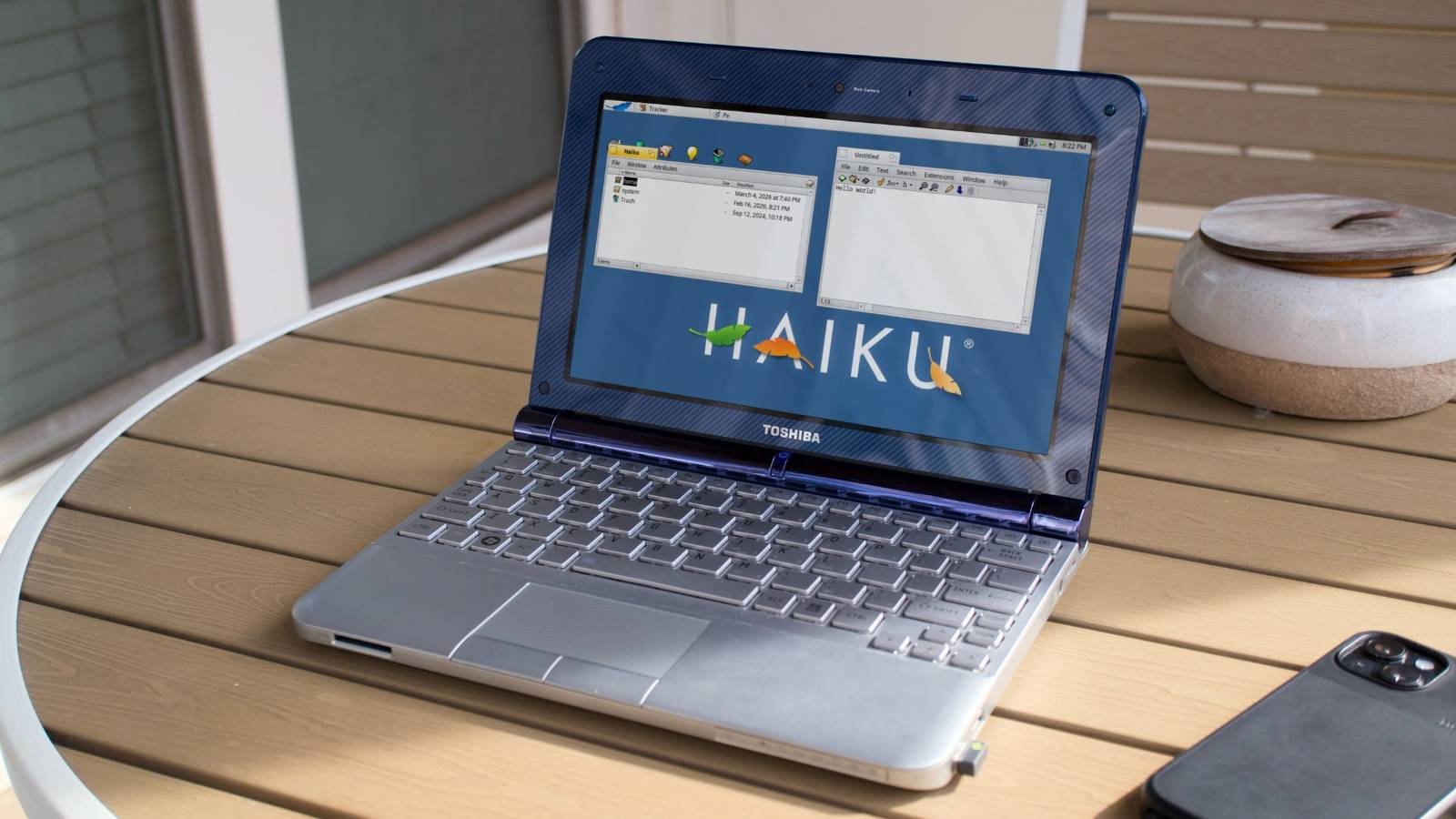
Desktop Linux can often be a great choice for revitalizing old hardware, but some hardware is still too old. Not even Debian with a lightweight desktop environment could make my 2009 netbook a usable computer, so I tried again with a completely different operating system: Haiku OS.
Haiku is a free and open-source continuation of BeOS, a desktop operating system developed in the 1990s. It’s designed to be “a fast, efficient, simple to use, easy to learn, and yet very powerful system for computer users of all levels.” This isn’t a Linux distribution—even though it can run some software ported from Linux, and it borrows some hardware drivers from FreeBSD, it’s not a Unix-like environment.
My last attempt with this netbook was installing Debian 12, the last version that supported 32-bit x86 processors, with the LXQt desktop environment. It was borderline usable for text editing, file management, and terminal applications, but performance was poor and web browsing was mostly unusable. Following that experiment, a few people suggested I try Haiku OS with its lower system requirements, and that sounded like a great idea.
Meet the Netbook (again)
I’m returning to my Toshiba Mini NB205 netbook, which was released sometime around 2009. The hardware includes a 10.1-inch screen with a resolution of 1024 x 700, an Ethernet LAN port, 802.11G Wi-Fi (predating Wi-Fi 4), some USB Type-A ports, VGA display output, an SD card slot, and audio jacks for headphones and microphones.
This netbook’s processor is an Intel Atom N280, which only has one core and two threads, clocked at 1.6 GHz. The slow performance is a problem, but its 32-bit architecture is a bigger issue in 2026. Most Linux distributions, Windows, and FreeBSD have all stopped supporting 32-bit x86 processors. However, Haiku still fully works on that architecture, and it’s even the recommended experience for stability and running legacy apps built for BeOS.
I…