Autonomous AI acceleration requires hardware design to evolve
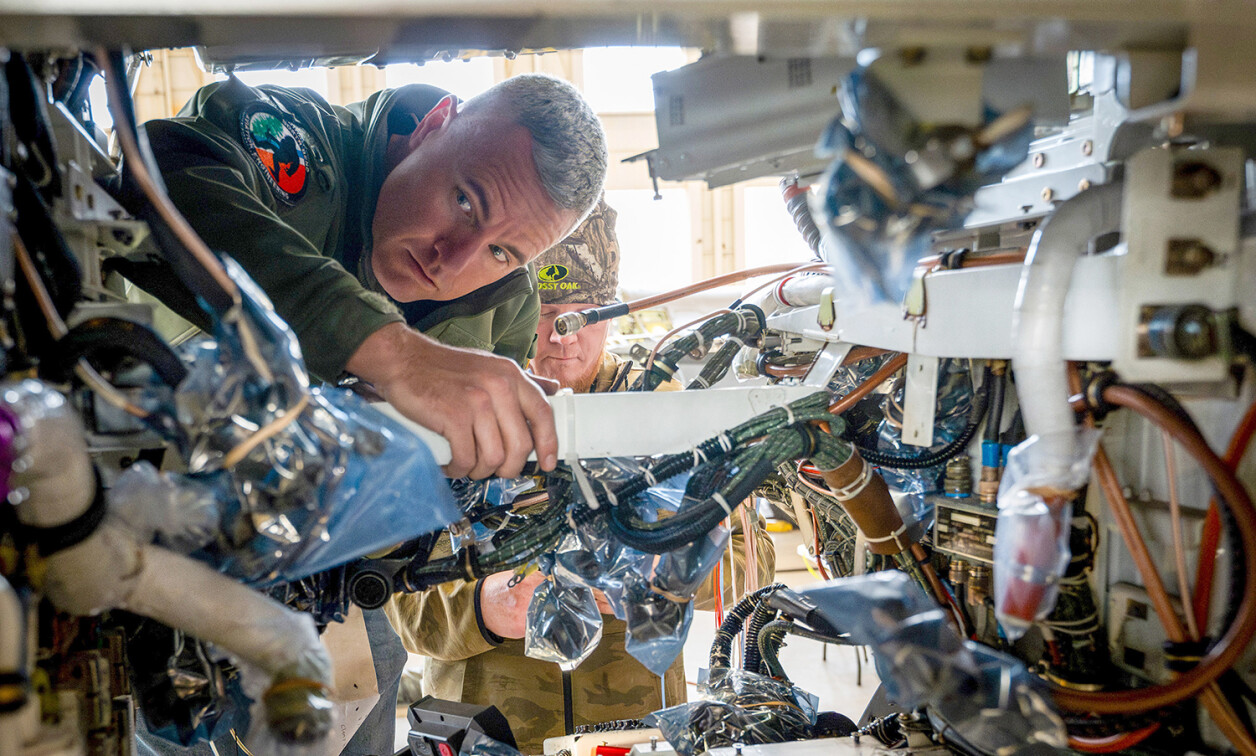
Autonomous AI acceleration requires hardware design to evolve
Publish Date: 2026-03-03 13:57:00
Source Domain: militaryembedded.com
Story
March 03, 2026
Courtesy of U.S. Air Force.
Across defense programs, autonomous artificial intelligence (AI) systems frequently stall between successful prototyping and field deployment. The limiting factor is rarely the software itself. Instead, progress slows when the underlying hardware platform was not engineered to evolve alongside rapidly changing AI workloads, sensors, and operational requirements. As the U.S. Department of Defense (DoD) accelerates its adoption of AI, platform-level engineering decisions are increasingly determining whether autonomous AI platforms can transition from experiment to operational reality.
Over the past several years, the deployment of autonomous artificial intelligence (AI) systems has become a strategic priority for the U.S. Department of Defense (DoD). Autonomous platforms are expected to sense, decide, and act independently, often in contested environments. While advances in AI algorithms and software models receive much of the attention, the practical challenge facing many programs is not whether autonomy can be achieved, but rather if it can be deployed, sustained, and iterated at operational speed.
Evolution of U.S. DoD AI policy
While the DoD and other U.S. entities have used AI on an ad hoc basis over the past 60 years, in 2018 there was a shift towards more formalized processes with the release of the “2018 DoD…