Someone is Bringing Fedora Linux to Phones (And It’s Not Red Hat)

Someone is Bringing Fedora Linux to Phones (And It’s Not Red Hat)
https://itsfoss.com/news/fedora-pocketblue-remix-overview/
Publish Date: 2026-02-25 09:52:00
Source Domain: itsfoss.com
The mobile Linux space is more active than most people realize. Projects like postmarketOS, Ubuntu Touch, and KDE Plasma Mobile have been chipping away at the idea that your phone or tablet has to run something made by Google or Apple.
And while none of them are household names yet, they are picking up real interest from power users who want more control over their hardware. Of course, most people stick with Android or iOS, and that is fine.
Both platforms are mature, well-supported, and not going anywhere. But for the ones who want something genuinely open and free of platform lock-in, things are getting better.
One such offering is Fedora Pocketblue Remix, which is a community-powered project that offers Fedora Atomic images for mobile devices.
🚧
This piece of software is a work-in-progress, don’t risk your daily driver mobile device with this, use a spare!
Fedora Pocketblue Remix: What’s in Store?
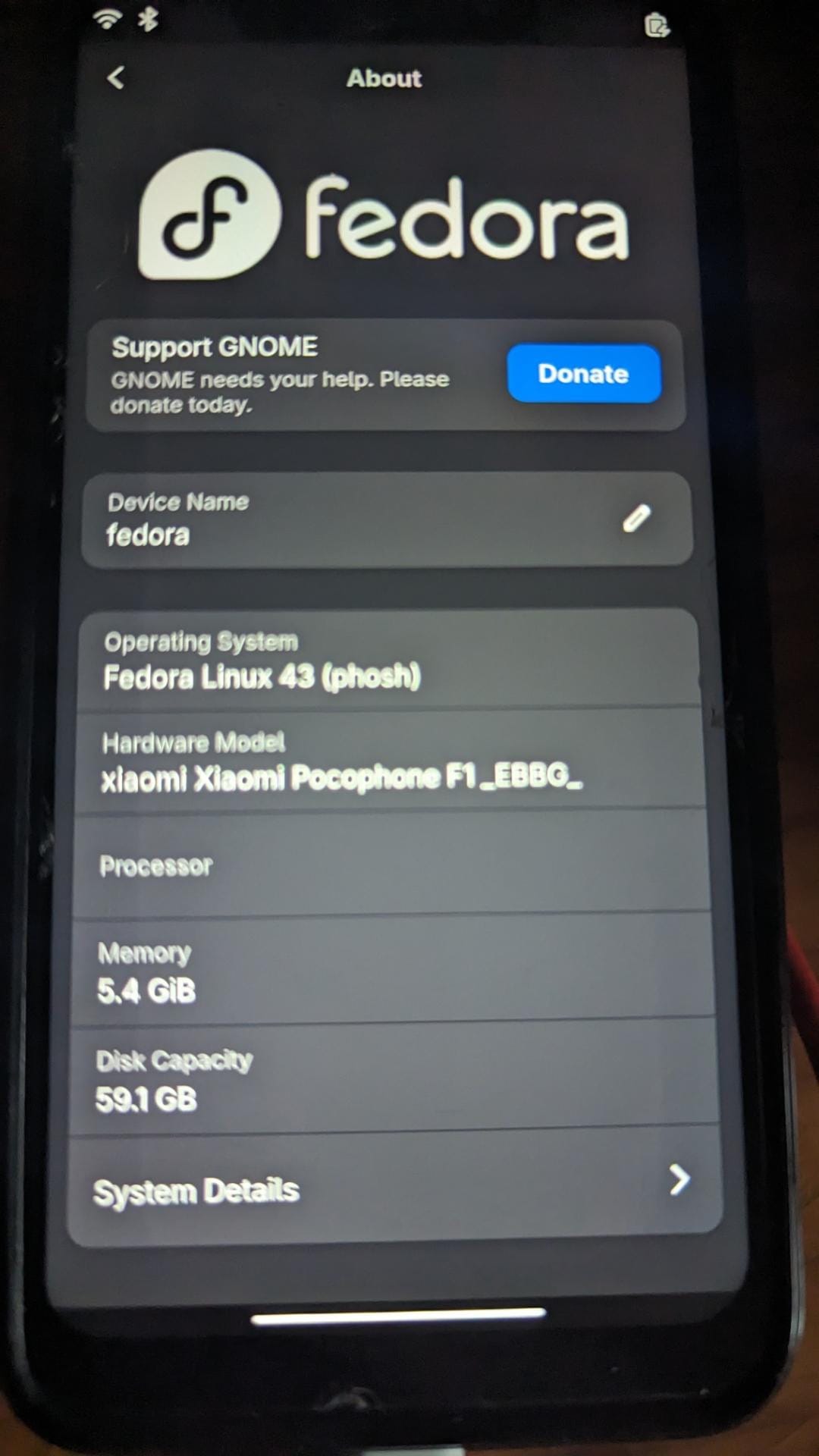 A Poco F1 device running Fedora Pocketblue Remix. Pic courtesy of Fish 🐟️ (the lead dev).
Before getting into the project, first let’s talk about what Fedora Atomic actually is and why it matters here.
Traditional Linux installations are what you might call “mutable.” You install packages, tweak configs, and over time the system drifts from its original state. That is fine for general use, but it can lead to breakage and makes it harder to reliably recover a broken system.
With Fedora Atomic, the base system is read-only and stays that way. Updates are applied as complete image swaps rather than individual package changes, similar in concept to how SteamOS handles updates on the Steam Deck. If something goes wrong, you can roll back to the previous image.
Pocketblue takes this foundation and adapts it for mobile hardware. Under the hood, it uses OCI containers, OSTree, and Bootc to build and distribute system images. These are built on top of upstream Fedora Atomic images Silverblue and Kinoite, so this is not a from-scratch…