What is eSIM technology? Why more Americans are switching to digital sim cards
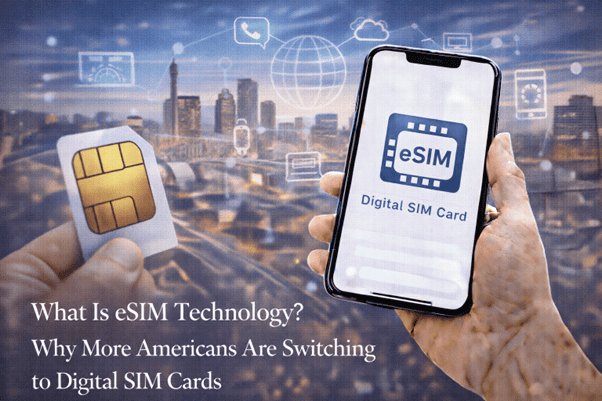
What is eSIM technology? Why more Americans are switching to digital sim cards
Publish Date: 2026-02-21 14:22:00
Source Domain: arizonadigitalfreepress.com
 (Submitted Photo/DigitalFreePress)
Sponsored Content | Digital Free Press
For decades, mobile phones have relied on one small but essential piece of hardware: the SIM card. This tiny chip connects your device to a carrier’s network, allowing you to make calls, send messages, and access mobile data. But as smartphones have evolved, so has the technology behind them. Increasingly, Americans are hearing about a new alternative — the eSIM.
Short for “embedded SIM,” eSIM technology represents a shift toward digital-first connectivity. Instead of inserting a physical card into your phone, users can activate a mobile plan digitally. As more devices support this innovation, eSIM is quickly becoming part of mainstream mobile infrastructure.
The Evolution of Mobile Connectivity
Traditional SIM cards were designed at a time when switching carriers meant physically swapping hardware. While this system worked for years, it also created limitations. Travelers needed to buy local SIM cards when going abroad. Consumers changing carriers had to wait for a physical card to arrive. Managing multiple phone numbers often required carrying multiple devices.
As smartphones became thinner and more powerful, manufacturers began exploring ways to simplify connectivity. The result was eSIM technology — a built-in, programmable SIM chip that eliminates the need for a removable card.
The shift mirrors a broader trend in technology: moving from physical components to software-based solutions.
What Exactly Is an eSIM?
An eSIM is a small chip embedded directly into a smartphone, tablet, smartwatch, or laptop. Unlike a traditional SIM card, it cannot be removed. Instead, it stores digital carrier profiles that can be downloaded and activated remotely.
In practical terms, this means users can:
- Activate a mobile plan without visiting a store
- Switch carriers digitally
- Store multiple plans on a single device
- Avoid handling or replacing…