Students raise privacy concerns around FlockOS technology, WMPD explains surveillance limitations
Students raise privacy concerns around FlockOS technology, WMPD explains surveillance limitations
Publish Date: 2026-02-17 18:00:00
Source Domain: flathatnews.com
Tuesday, Feb. 10, students from the College of William and Mary gathered in Washington Hall to discuss how to organize against Flock surveillance cameras in Williamsburg, Va.
Charlie Goodman ’27 led the meeting, outlining the group’s effort to persuade the Williamsburg City Council to cancel its Flock contract over privacy concerns. In doing so, the students hoped that the College would follow suit and end its own agreement.
“Appealing to Williamsburg City is a lot simpler than the path toward appealing to the William and Mary administration,” he said.
Ella Forlin ’27 helped Goodman organize the student meeting.
“We know that as students, they might not listen to us,” Forlin said. “If we get a coalition of people involved, they’re much more likely to hear our concerns.”
Goodman explained how automatic license plate readers, such as Flock, operate.
“ALPRs are automatic license plate readers, and they record every license plate that passes by them, no matter what,” he said.
Flock uses artificial intelligence to record additional vehicle characteristics, such as type, color, unique alterations and whether a car frequently passes by any of its cameras. This information is stored on the FlockOS software system, allowing law enforcement to search for vehicle details.
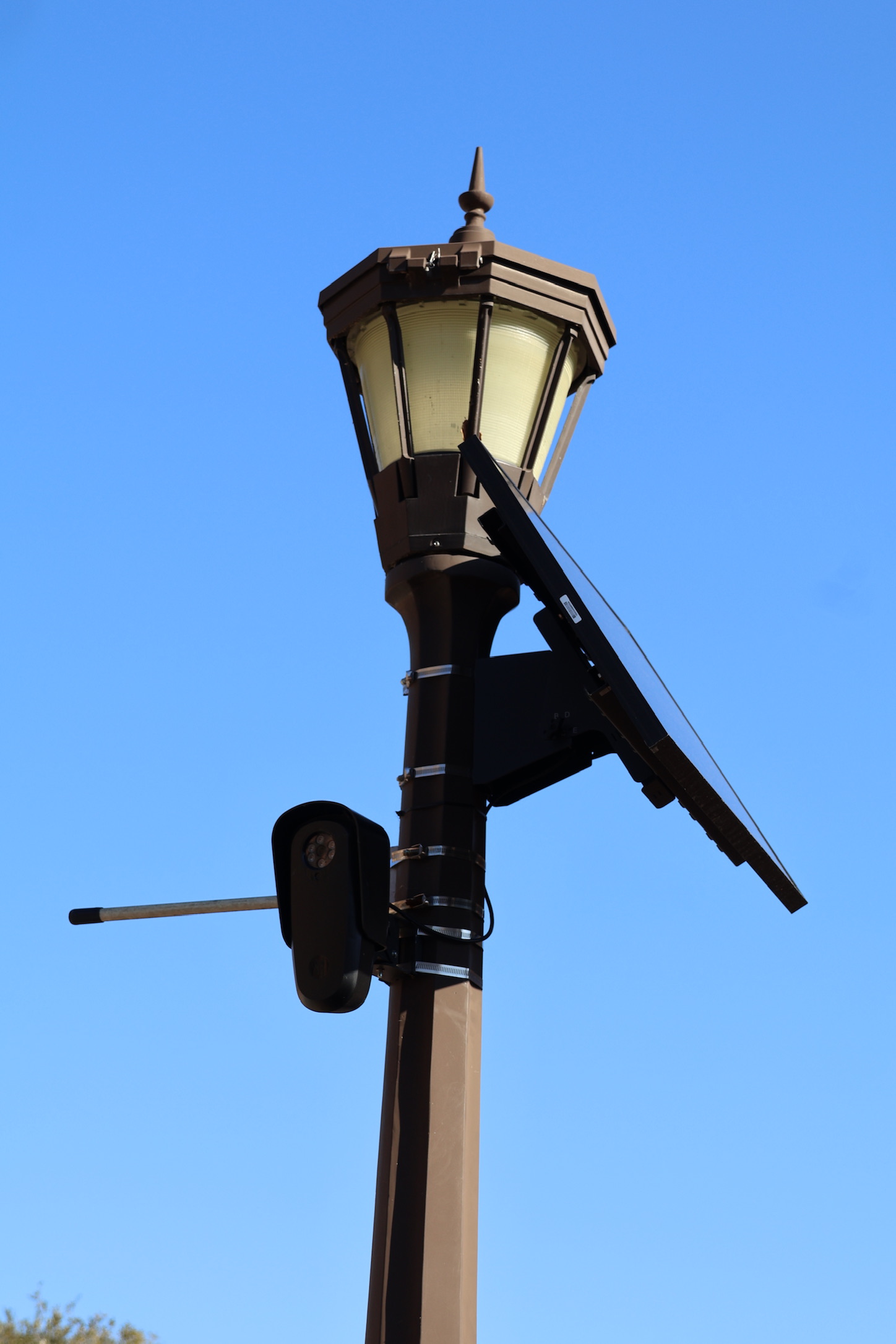
William and Mary Flock cameras that operate around campus. This does not account for Williamsburg PD Flock cameras. ANDREW HENRICKSON / THE FLAT HAT
FlockOS allows police to put license plates onto hotlists, where Flock sends a notification each time a particular vehicle drives by a camera in its network.
According to state laws, all data gathered from these cameras must be automatically purged from the Flock system after 21 days. Police can extend the retention period for this information only if they have probable cause to believe that the data would be necessary for law enforcement purposes.
FlockOS also lets its customers enroll in its state…