AI isn’t likely to wipe out all farming jobs – but it is changing who bears the risks
AI isn’t likely to wipe out all farming jobs – but it is changing who bears the risks
Publish Date: 2026-02-09 14:06:00
Source Domain: theconversation.com
The global economy is bracing for major job disruption as artificial intelligence (AI) advances and spreads across industries. Experts have been warning about this shift for years, and fiercely debating whether the benefits of an AI revolution will outweigh the cost of mass displacement in the workforce.
Few sectors expose this tension as clearly as agriculture. Pressure on farming is intensifying. Global food demand is projected to rise by 35–56% by 2050, driven by population growth, urbanisation and changing diets.
This helps explain why AI is increasingly promoted as a productivity solution to produce more food with fewer inputs, under more volatile conditions.
Yet on farms, enthusiasm for AI is often tempered by caution. And that caution is not simply about whether jobs will disappear. A deeper concern is risk, and who bears responsibility if the technology fails.
Technological change
Agriculture is not a controlled environment. Farming is biological, dynamic and deeply context-dependent, shaped by weather, soils, ecosystems and animal behaviour. Because of this complexity, AI is (and will continue to be) rarely used to replace people outright. Instead, it automates specific tasks.
Automation has been a big part of the farming story for decades, long before AI arrived on the scene. From mechanised harvesting and GPS-guided tractors to automated milking systems and variable-rate fertiliser application, technology has gradually changed how farms operate.
But AI is different. Rather than replacing farmers, AI is mainly being used to support decision-making in environments that are too complex, variable and context-dependent to be fully automated.
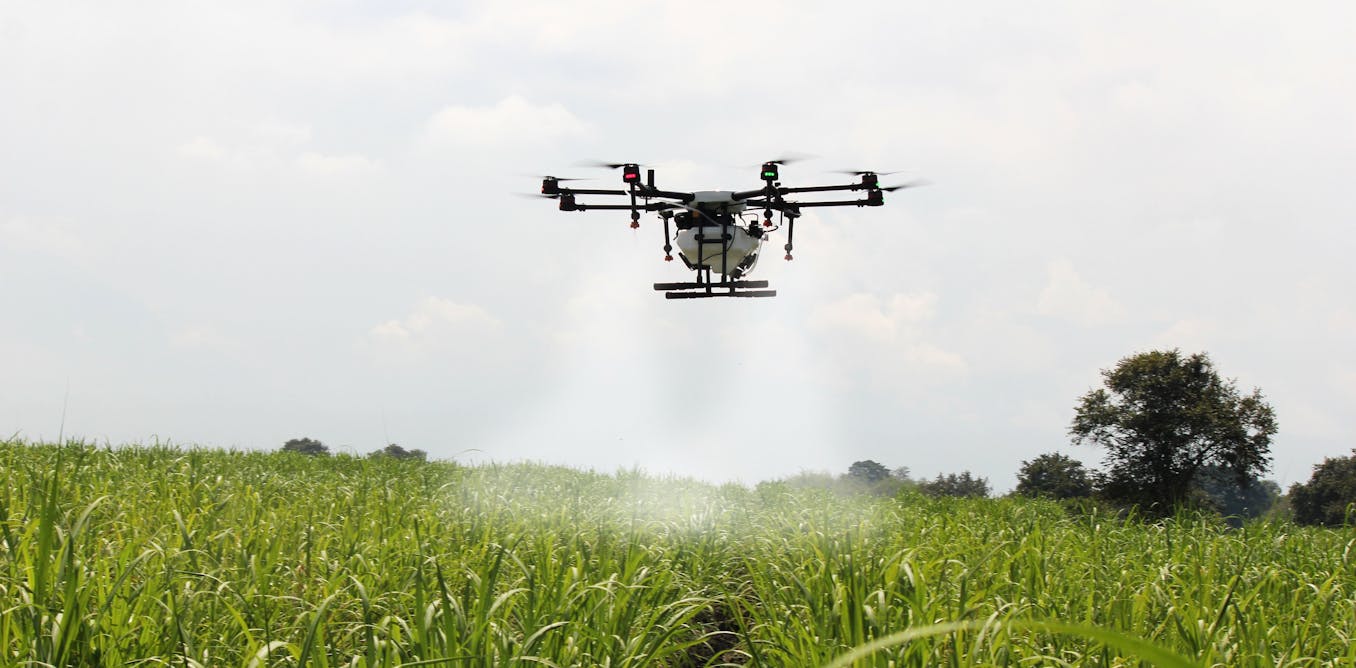
Most current uses of AI support monitoring and optimisation: detecting crop stress from satellite imagery, predicting irrigation needs, tracking livestock behaviour or flagging disease and weed risks. Farmers and farm workers still interpret the information and decide how to respond.
…