Lossless Scaling benchmarked in Linux on a GeForce RTX 5070 Ti and Radeon RX 6600 in 4K
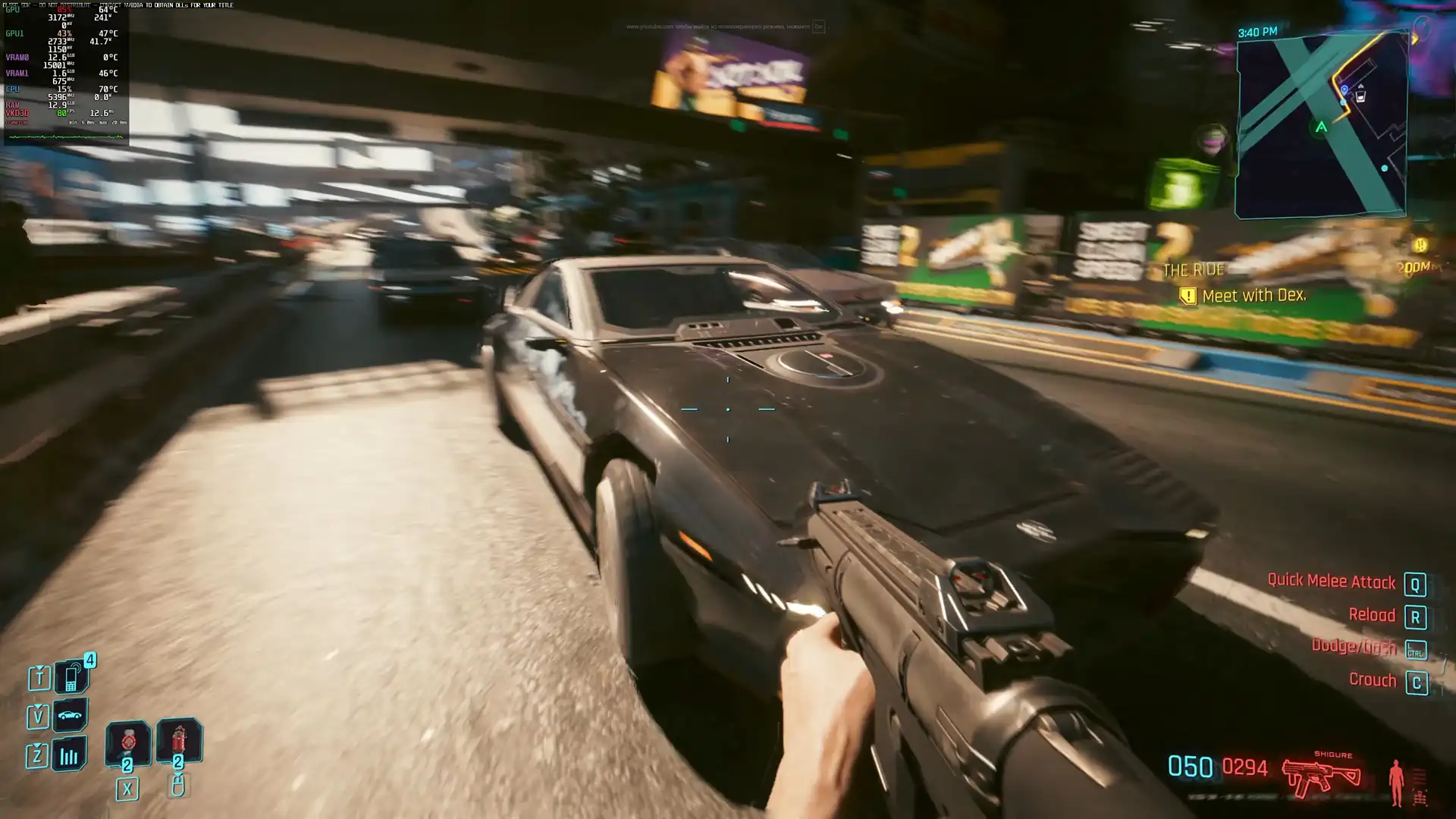
Lossless Scaling benchmarked in Linux on a GeForce RTX 5070 Ti and Radeon RX 6600 in 4K
Publish Date: 2026-07-14 02:36:00
Source Domain: en.gamegpu.com
Maxim Boldson
HARDWARE
July 14 2026
Views: 228
An enthusiast tested the Lossless Scaling frame generation technology on a hybrid setup of two graphics cards from different manufacturers running the Linux CachyOS operating system with the KDE Plasma desktop environment over the Wayland protocol. A twelve-core AMD Ryzen 9 9900X served as the CPU. The primary graphics card for rendering the game was Cyberpunk 2077 The NVIDIA GeForce RTX 5070 Ti model served as the graphics card, and an AMD card was used as a secondary graphics accelerator for image output and running the Lossless Scaling utility. Radeon RX 6600.
Benchmarking revealed that severe screen flickering may occur under peak load and when the GPU utilization reaches 100% on Linux. For stable operation of the LSFG frame generator, a stable baseline performance of at least 40 frames per second is required; otherwise, the utility deactivates, and the secondary GPU utilization drops to 10%. Using quadruple frame generation mode helps compensate for these drops, but achieving 60 baseline frames per second by reducing graphics settings remains optimal.
The issue of input lag when displaying images from the second GPU on Linux turned out to be not as critical as on WindowsDuring fast-paced scenes, lag is virtually unnoticeable and doesn’t interfere with gameplay. Serious issues with control responsiveness only arise under extreme loads, such as running demanding games at native 4K resolution with maximum graphics settings and DLSS image scaling completely disabled.