New satellite technology could protect water quality around the world
New satellite technology could protect water quality around the world
Publish Date: 2026-06-19 16:07:00
Source Domain: www.thebrighterside.news
Rivers do not sit still for easy measurement. Some shift across floodplains, some hide under tree cover, and some disappear for months before flowing again. That makes them surprisingly hard to define, even as they remain central to drinking water, fisheries, flood risk, and the health of the seas they feed.
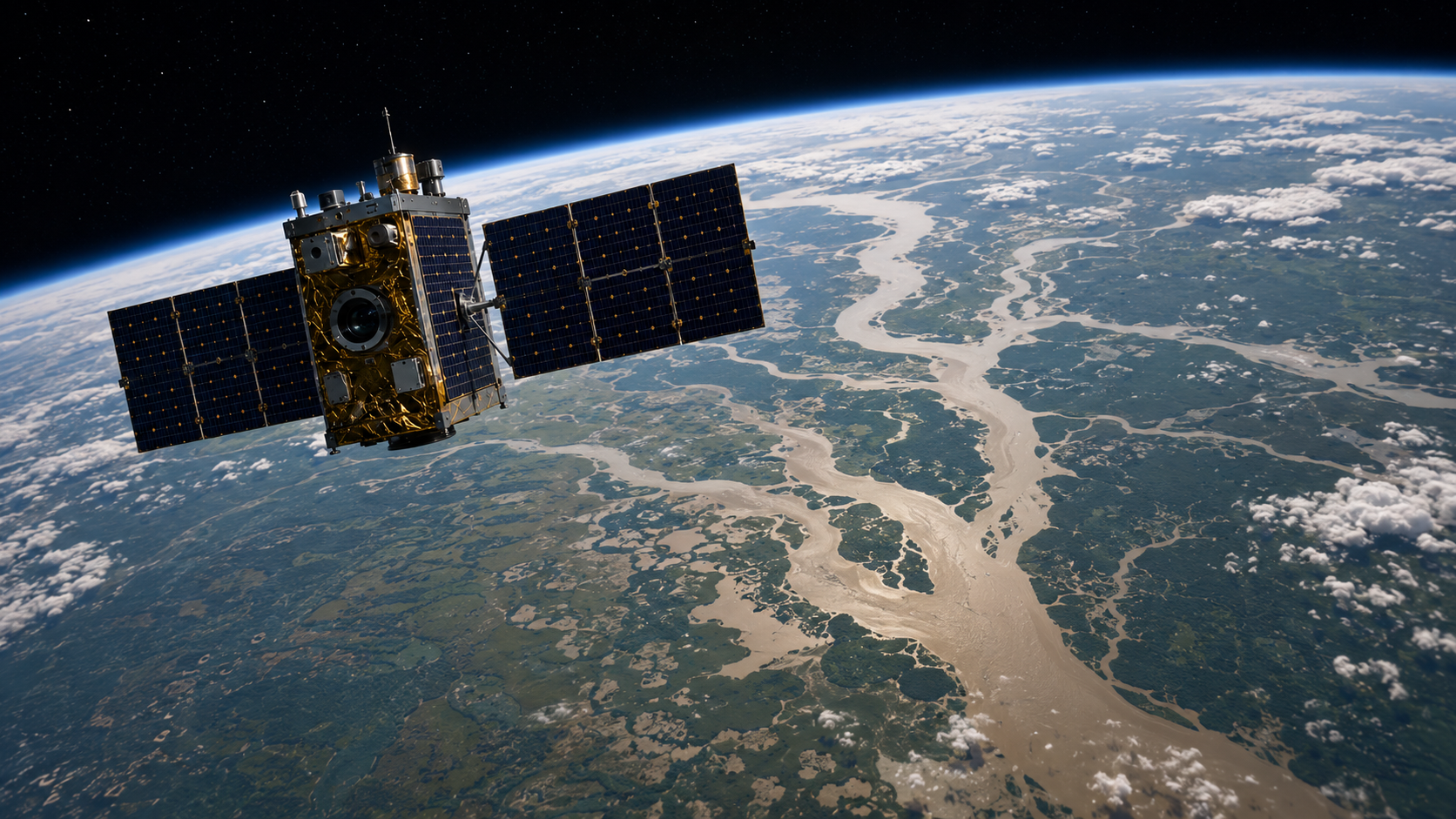
A new review in Nature Water argues that satellites are finally giving scientists a way to study rivers as both local systems and part of a single planetary network. The promise is not just better maps, but better warnings about pollution, drought, harmful algal blooms, and the growing human pressures reshaping waterways worldwide.
“Rivers, especially small streams, are very hard to define. They are variable and can be intermittent,” said Dongmei Feng, a professor of environmental engineering at the University of Cincinnati.
Feng and other hydrology experts say that challenge has long limited river science. Many rivers are inaccessible, and many of the smallest waterways, which make up much of the network, are the hardest to see clearly from the ground.
University of Cincinnati Professor Dongmei Feng, pictured on the banks of the Ohio River, is studying ways to protect drinking water derived from rivers from periodic harmful algal blooms. (CREDIT: Andrew Higley)
A clearer picture from orbit
The review traces how river remote sensing has changed since the launch of Landsat 1 in 1972. Early satellite work focused on major floods and some measurements of sediment. Global river studies did not begin in earnest until the early 2000s, when computing power, open satellite archives, and better elevation data made it possible to process huge amounts of imagery.
Since then, the field has widened fast. Researchers now use satellite observations to map river networks, track changing channels, estimate water extent, measure sediment, study ice cover, and detect human-made barriers such as dams and levees.
The review says newer systems can improve familiar measurements like…