‘Molecular movie’ technology reveals a better way to thwart environmental pollutant | Newsroom
‘Molecular movie’ technology reveals a better way to thwart environmental pollutant | Newsroom
Publish Date: 2026-05-31 15:41:00
Source Domain: news.oregonstate.edu
CORVALLIS, Ore. – The latest production from the “molecular movie” imaging technology developed at Oregon State University is a new, inexpensive way of dealing with a common environmental pollutant.
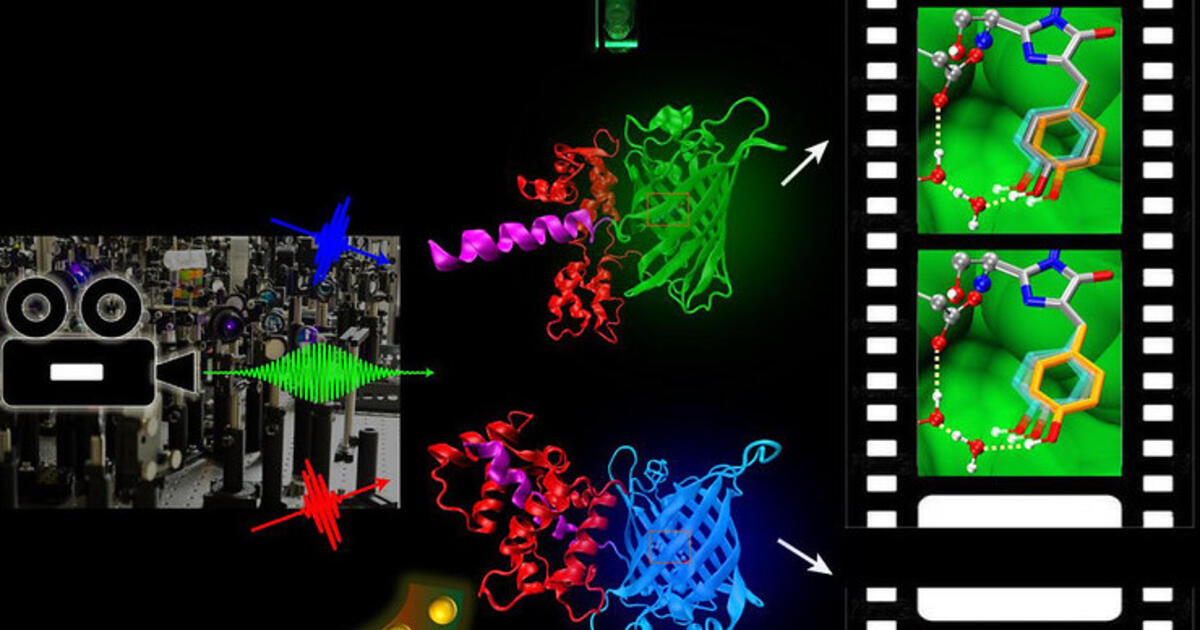
Based on short-pulse lasers, the imaging technology allows chemical and biological actions to be measured as they are occurring, one high-speed frame at a time. The measurements occur on the level of the femtosecond – one-millionth of one-billionth of a second.
A femtosecond is to a second roughly as a second is to 32 million years.
“We’re able to slow down the observation of chemical processes and understand the exact sequences of biochemical reactions,” said Chong Fang, professor of chemistry at OSU, who unveiled the technology in 2014. “It’s a really powerful tool to study, understand and tune biological processes. Now we have extended the tool set to delineate a wide array of chemical processes.”
In a paper selected for the cover of the journal Electron, Fang and collaborators in the College of Science show how ultraviolet light and zinc, a cheap, plentiful metal, join forces in the breakdown of nitrophenols in water.
Nitrophenols are long-lasting, toxic compounds that get into surface water, as well as the air, from vehicle emissions, pesticides, wildfires and industrial waste. They’re problematic because they don’t degrade easily on their own they act as a precursor to other pollutants such as nitrous acid (which can affect air quality); they’re harmful to aquatic life; and they irritate and damage human tissue, resulting in headaches, nausea, breathing problems, and eye and skin issues.
In drinking water, nitrophenols usually appear at low levels, though they trend higher in water systems near chemical plants and high-traffic roads, and in systems with older treatment facilities.
Fang, postdoctoral researcher Taylor Krueger, graduate students Seth Johnson, Chieh-Hsi Kuan and research associate Cheng Chen used the molecular movie…