The Amish are known for their old-fashioned lifestyle. Here’s the real reason they reject technology.
Publish Date: 2026-05-31 12:26:00
Source Domain: www.upworthy.com
Many people are fascinated by the Amish community. A big part of the fascination comes from the people who look and live as if they’ve been frozen in time. It turns out, the reason it appears that Amish people are stuck in the past is not that complicated.
People travel from all over the country to visit “Amish Country,” to get a glimpse into the Amish way of life. The community is located in south-central Pennsylvania, in Lancaster County, where they keep to themselves. In 2026, the religious sect still gets around on horse and buggy.
White wooden building
Photo Credit: Canva
They don’t take part in any modernization, including zippers on their clothing. People today associate the Amish with being isolated from the outside world, but that wasn’t always the case. PBS reveals in a recent documentary that the Amish used to live in town with other communities until the early 1900s.
Sociologist, Donald B. Kraybill, tells PBS, “I think for the first hundred years from the mid-18th to the mid-19th century, the Amish felt more at home here.”
“Amish people shared a lot of lifestyle similarities with people who are not Amish. And so they were living in a largely Pennsylvania German culture where people spoke Pennsylvania German or Pennsylvania Dutch,” an unidentified voice is heard saying in the short clip.
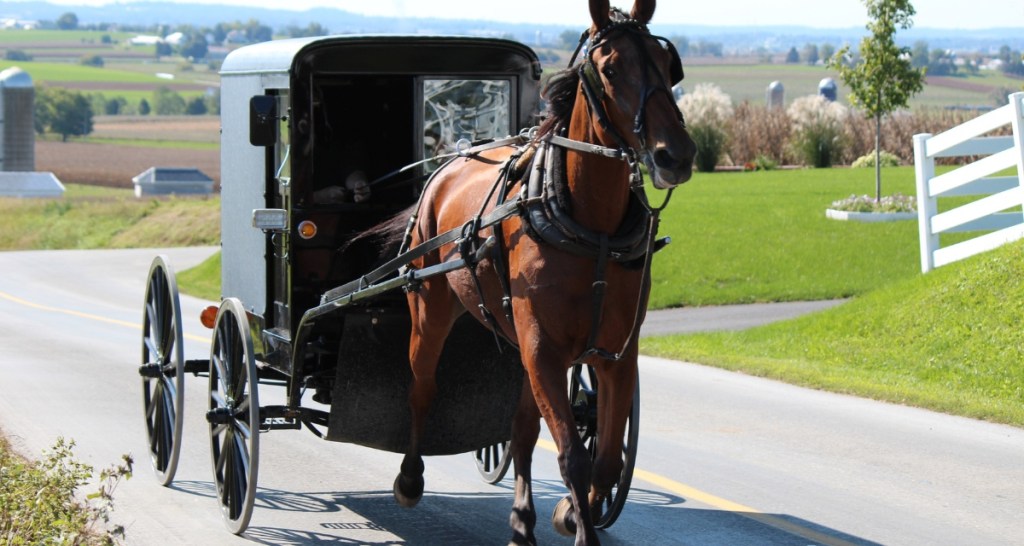 Black carriage pulled by brown horse
Photo Credit: Canva
Fleeing persecution
When the Amish came to the colonies, they were already accustomed to existing in isolation. The group practices a religion called Anabaptist, a form of the Protestant religion that was considered “radical” in the late 1600s. Their belief in adult baptism and the rejection of infant baptism made them targets during the 16th century.
“Baptism, adult baptism was a capital offense, and they got the medieval equivalent of the electric chair,” Kraybill recounts. “2,000 to 3,000 died as martyrs. The government appointed Anabaptist hunters…