Google is preparing Android 17 to protect you from the upcoming security apocalypse

Google is preparing Android 17 to protect you from the upcoming security apocalypse
Publish Date: 2026-03-25 16:58:00
Source Domain: www.phonearena.com
Technological advancement may solve various issues, but it also creates brand new ones. That’s true with quantum computing, which are still far from having practical applications, but may soon make modern encryption meaningless. As a leader in this nascent field, Google is already taking steps to improve Android security for this new age.
Google is implementing Post-Quantum Cryptography in Android 17 beta
Google will start implementing government Post-Quantum Cryptography (PQC) standards with Android 17. In a blog post, the company announced that the process will start with the next Android 17 beta, followed by a widespread general availability with the final production release of the upcoming operating system.
Among the areas where Google plans to improve the security of Android 17 is the bootloader, which will get upgraded quantum-resistant digital signatures. That would prevent attackers from making unauthorized modifications to the software loaded during the boot sequence. Other upgrades include the Android Keystore and a new PQC-compliant architecture for remote attestation that would make the software resilient against future quantum threats.
Easier for users and developers
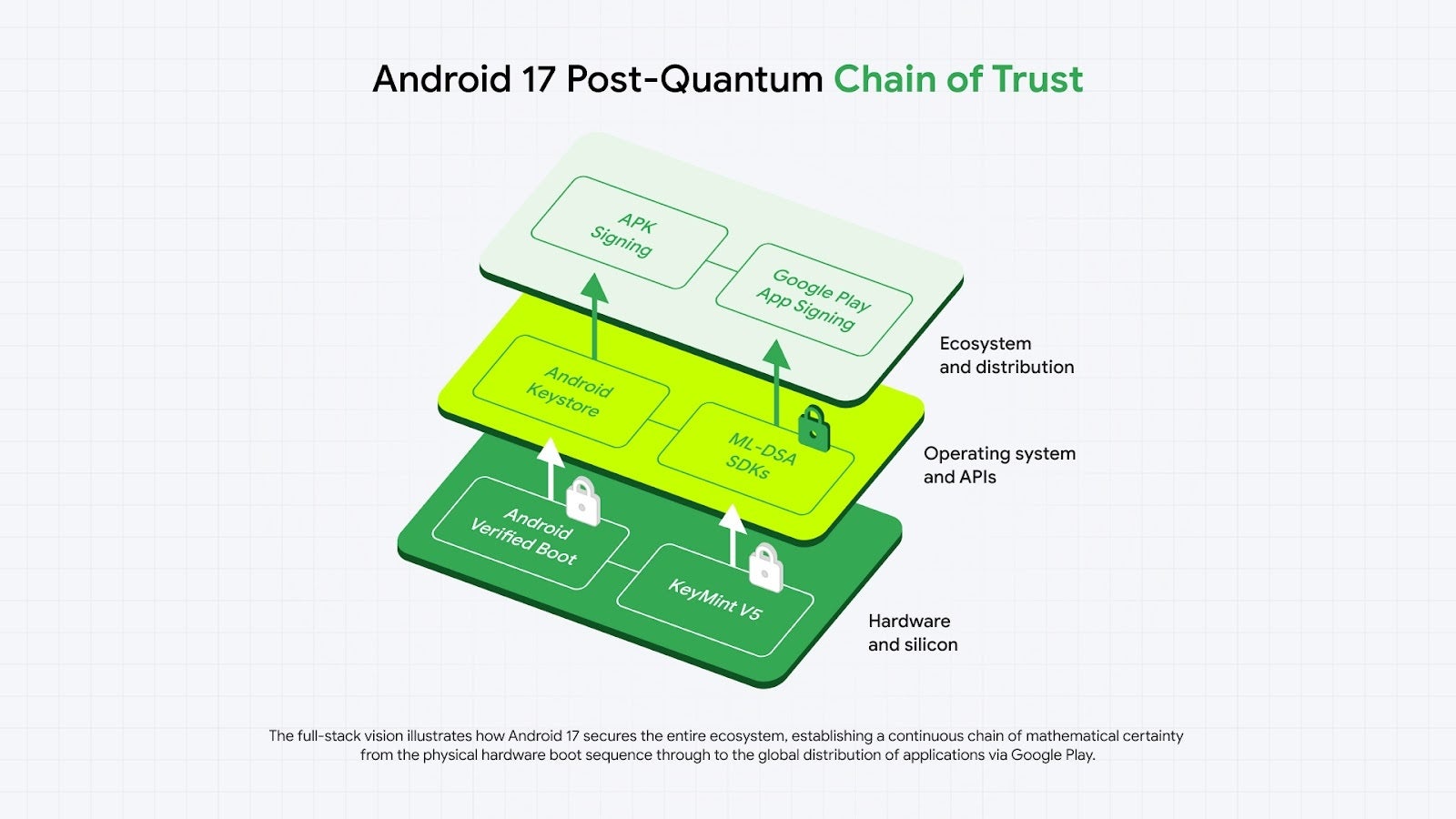
The post-quantum chain of trust on Android 17. | Image by Google
Part of Google’s idea is to make the shift to PQC standards as easy as possible for users and developers alike. The measures also extend to apps, which will utilize quantum-safe signature to attest to the integrity of the software. The company will soon communicate what steps developers will have to take to future proof their app signature.
Google’s preoccupation with quantum threats may seem premature, considering that the technology is still at an experimental stage. However, quantum computers have the potential to make current cryptography obsolete.
…