How generative AI and physics can help design new antibiotics
How generative AI and physics can help design new antibiotics
https://theconversation.com/how-generative-ai-and-physics-can-help-design-new-antibiotics-285051
Publish Date: 2026-07-02 12:56:00
Source Domain: theconversation.com
By 2050, scientists estimate that antibiotic-resistant infections will be associated with more than eight million deaths around the world every year.
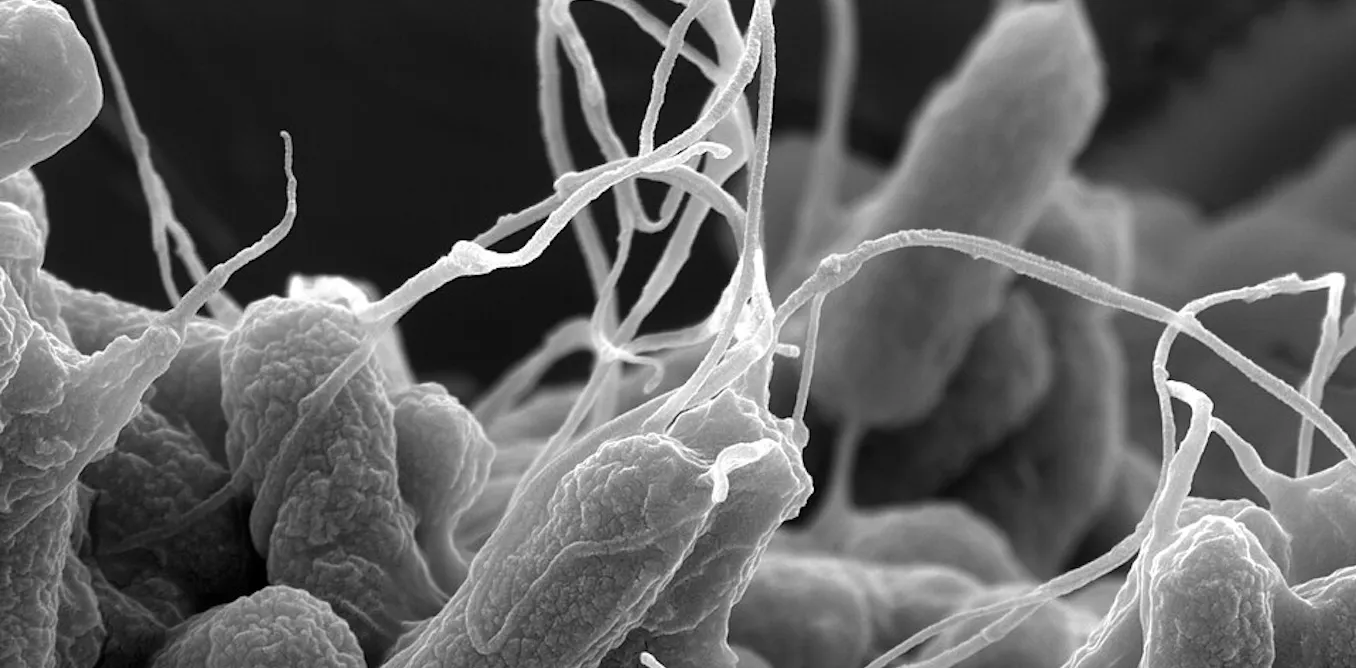
These are bacterial infections that resist traditional antibiotics like penicillin. They can develop when you eat contaminated food, have an open wound or undergo surgery. E. coli is a good example, as several strains have become highly resistant to conventional antibiotics. They can also arrive as secondary infections, like pneumonia after a virus.
Professor Alexander Fleming, who first discovered penicillin, in his laboratory at St Mary’s, Paddington, London (1943).
(Wikimedia Commons), CC BY
We need new antibiotics and designing them is difficult.
It can take 10 years and more than one billion dollars to bring just one new drug to market. And 10 out of 13 new antibiotics developed since 2017 are already ineffective against at least one type of bacteria.
A potential solution is to use generative AI models, guided by trained scientists, to come up with designs for never-before-seen molecules.
Physics-based simulations, where a computer mimics the laws of reality, can then help us figure out whether they would make good drugs in a fast and cost-efficient way.
The peptide haystack
All methods need a starting point. “Develop a new drug” isn’t a specific enough prompt. If we were looking for a needle in a haystack, we would at least need to know which haystack to look in. One good haystack for drugs, especially antibiotics, is peptides.
Peptides are short proteins that can perform many different functions in our bodies. For example, insulin, which is widely used to treat diabetes, is a naturally occurring peptide in the body. Vancomyin is another peptide and an important antibiotic that is created in nature as a defence mechanism by bacteria that live in the soil. Both occupy a place of honour on the WHO Model…