The Hacker’s 2026 Playbook: Dark Web Tactics Targeting You
The Hacker’s 2026 Playbook: Dark Web Tactics Targeting You
https://www.huntress.com/blog/hacker-tactics-2026-dark-web-playbook
Publish Date: 2026-06-29 10:02:00
Source Domain: www.huntress.com
Sometimes it starts with something as simple as dragging a link into your browser. Three seconds later, a cybercriminal has the tokens they need to hijack your Microsoft 365 account. You didn’t do anything that security awareness training teaches you to avoid. You just followed instructions that looked normal. That is what modern cybercrime looks like right now.
That is also what makes this tradecraft so effective. The attack doesn’t force its way in. It slips into the middle of an ordinary workflow and turns a routine action into an unwanted interruption that gives an attacker exactly what they need.
You’ve probably seen the setup before
The setup feels familiar because we’ve all been trained to click through little prompts online: click the CAPTCHA, accept the cookie prompt, or press the key combo. Keep moving without thinking. That muscle memory is exactly what attackers are counting on.
That’s the idea behind ClickFix. Attackers show a fake prompt that tells you to press keyboard shortcuts like Windows key + R, then Ctrl+V, then Enter. On the surface, it feels harmless. In reality, you’re pasting and running attacker-supplied commands on your own machine.
What makes ClickFix so nasty is how little technical friction it needs. There isn’t a vulnerability to exploit or a firewall showdown. The attacker just needs a simple, believable lie that fits into your workflow.
ClickFix exploded in 2025, and while it is still very much alive, attackers have already started morphing the same idea into something even slicker.
ConsentFix takes the same trick into Microsoft 365
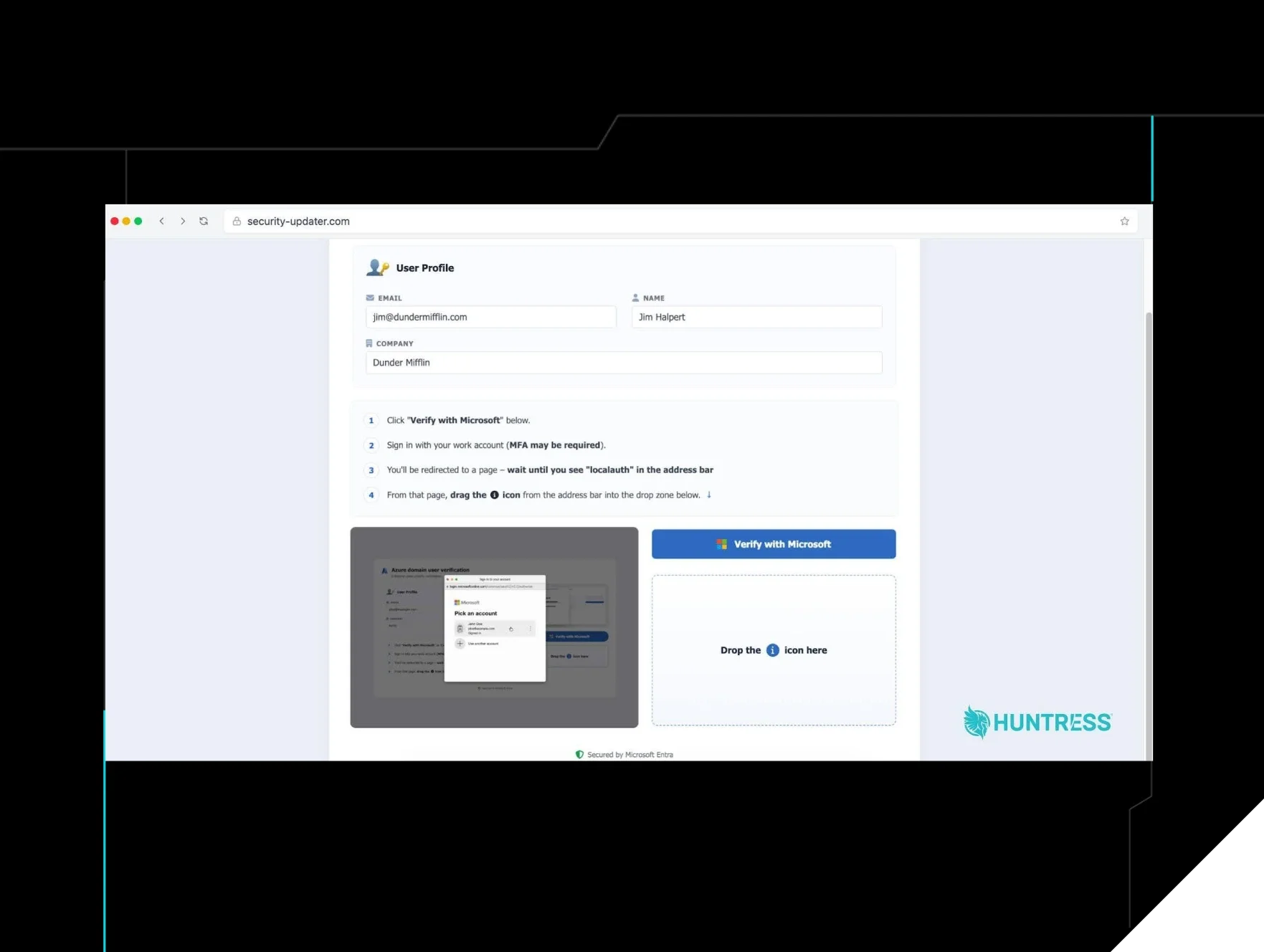
That newer variation is called ConsentFix. Instead of nudging you into pasting a command, it abuses something Microsoft 365 users see all the time: OAuth consent flows and sign-in prompts that look familiar enough to breeze past without much thought.
The flow is deceptively simple. The attacker sends a phishing lure, often using trusted platforms…