The Iran War: A War with or against the AI Sector?
The Iran War: A War with or against the AI Sector?
https://irregularwarfare.org/the-iran-war-a-war-with-or-against-the-ai-sector/
Publish Date: 2026-06-12 01:07:00
Source Domain: irregularwarfare.org
Editor’s Note: this article is being republished with the permission of Small Wars Journal as part of a republishing arrangement between IWI and SWJ. The original article was published on 04.10.2026 and is available here.
On the very first day of the Iran War, February 28, 2026, more than 1,000 Iranian targets were struck by US airstrikes. This is almost double the number of strikes carried out on the first day of the Iraq War, launched in 2003. The intensity and precision of these strikes are inextricably linked to the massive use of artificial intelligence (AI)by the American and Israeli militaries.
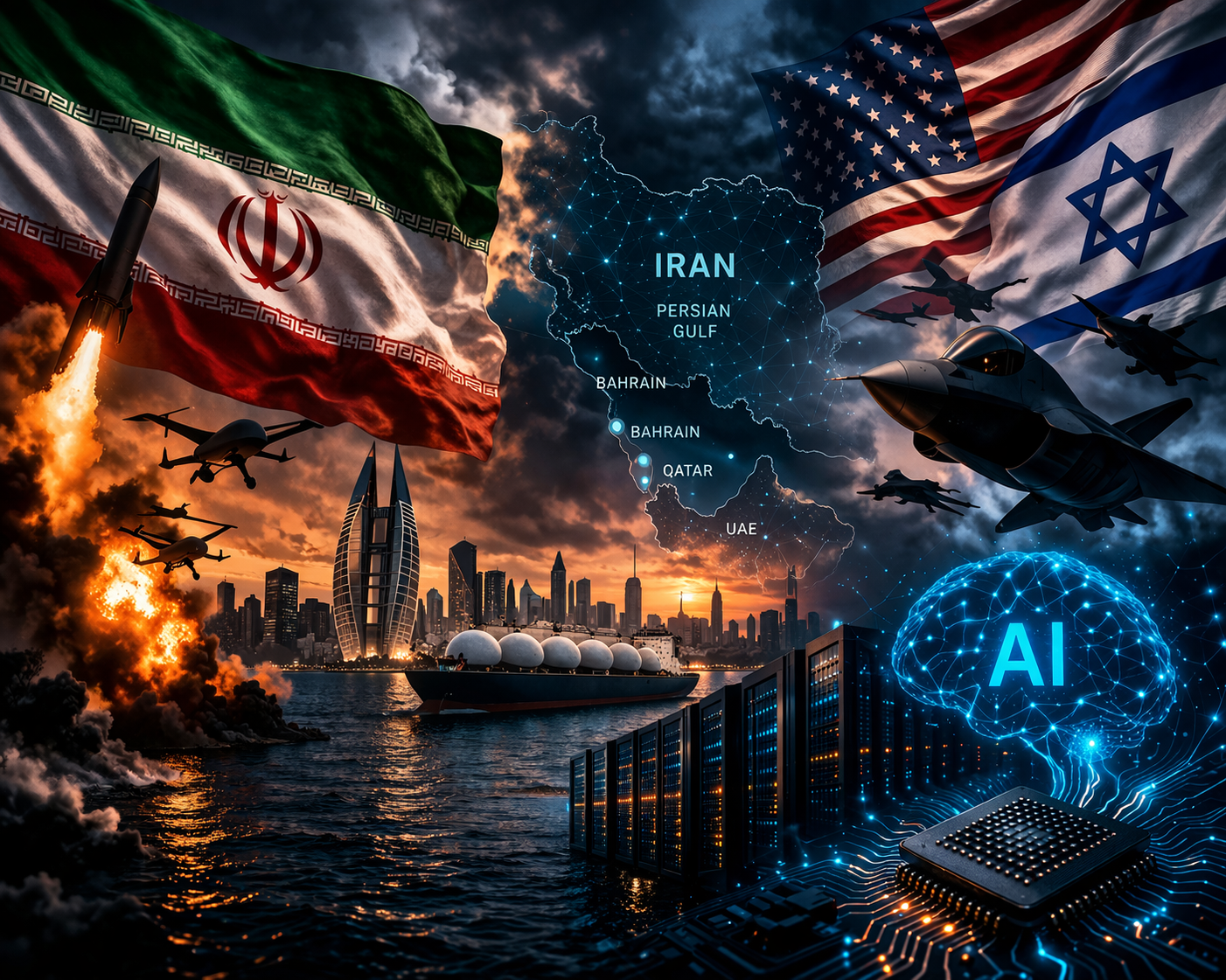
However, Iran is also involved in the militarization of AI, conducting drone and missile strikes in the air, while also investing heavily in cognitive warfare through the production of deepfakes on social media to destabilize public opinion among its adversaries.
But the interplay between the Iranian war and AI deepens further with Iranian strikes and Qatar’s inability to export liquid helium. Liquid helium is a chemical component essential for cooling the machines and photolithography plants that print the semiconductors needed for the computers and data centers of artificial intelligence companies. And Qatar accounts for more than 38% of global helium production.
Finally, the kinetic strikes on data centers in Bahrain and the United Arab Emirates also reveal the physical vulnerability of artificial intelligence infrastructure. (This potentially includes submarine fiber optic cables, which ensure the flow of data and information between data centers in the Persian Gulf and Africa, the Middle East, and Asia).
In other words, the Iran War is evolving into a global hyperwar system, accelerating the militarization of AI while simultaneously plunging both the American and Chinese AI sectors into overlapping systems of pressure. These systems directly exploit the financial and physical vulnerabilities of AI, which has become the new engine of power.
We argue…