It Took 40 Years for Technology To Catch Up to This Revolutionary Zipper Design
It Took 40 Years for Technology To Catch Up to This Revolutionary Zipper Design
Publish Date: 2026-05-25 07:45:00
Source Domain: scitechdaily.com
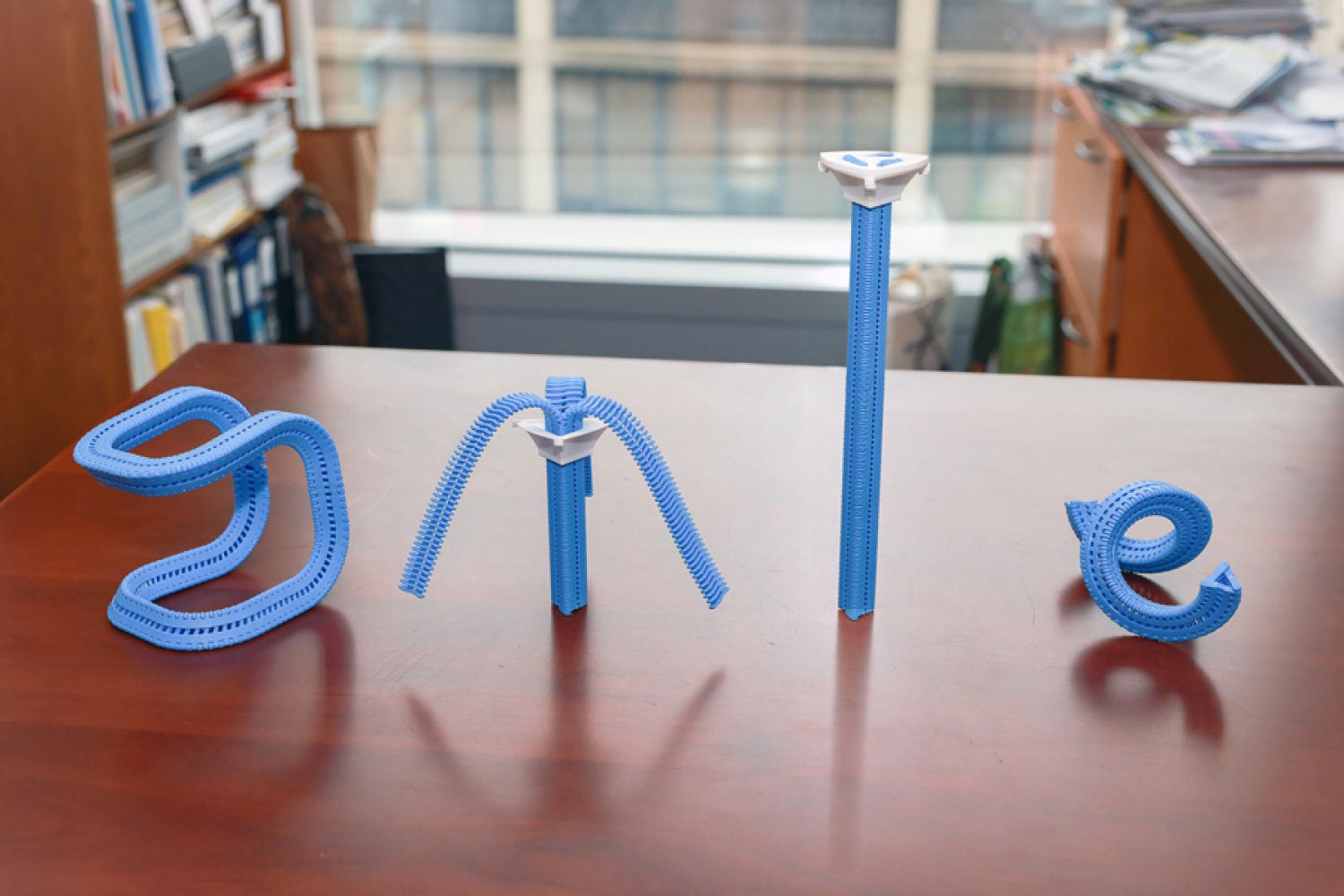
The Y-zipper a user creates will appear to “shape-shift” in the real world. When unzipped, it can look like a squid with three sprawling tentacles, and when closed up, it becomes a more compact structure. Credit: Tim Malieckal/MIT CSAIL
A decades-old patent from MIT Professor Bill Freeman inspired the new “Y-zipper,” a three-sided fastener that can snap gear, robots, and art into shape with the push of a button.
Long before shape-shifting robots and self-assembling structures became engineering goals, one MIT professor had already imagined a zipper that could transform floppy materials into rigid forms on demand. The problem? In 1985, the technology needed to build it simply didn’t exist.
That year, the Innovative Design Fund placed an ad in Scientific American offering up to $10,000 for inventive ideas in clothing, textiles, and home design. William Freeman PhD ’92 — then an electrical engineer at Polaroid and now an MIT professor — responded with an unusual concept: a three-sided zipper that could make objects instantly switch between soft and stiff states. Instead of fastening jackets or pants, Freeman envisioned it helping items like tents, chairs, and bags collapse flat for transport and then lock themselves into sturdy 3D structures when zipped together.
His prototype looked like a triangular version of a conventional zipper. Three flexible strips lined with narrow wooden “teeth” could be drawn together by a sliding mechanism, forming a rigid triangular tube. The idea was rejected, but Freeman patented the invention and stored the prototype in his garage, convinced it might someday find a purpose.
Nearly four decades later, researchers at MIT’s Computer Science and Artificial Intelligence Laboratory (CSAIL) returned to the idea as they looked for ways to create objects with “tunable stiffness.” Earlier methods for changing stiffness were either difficult to reverse or required assembly by hand. CSAIL responded by creating both an…