MeshToad V3 turns Linux systems into Meshtastic nodes
MeshToad V3 turns Linux systems into Meshtastic nodes
https://linuxgizmos.com/meshtoad-v3-turns-linux-systems-into-meshtastic-nodes/
Publish Date: 2026-05-21 09:21:00
Source Domain: linuxgizmos.com
May 21, 2026 — by Giorgio Mendoza
80 views
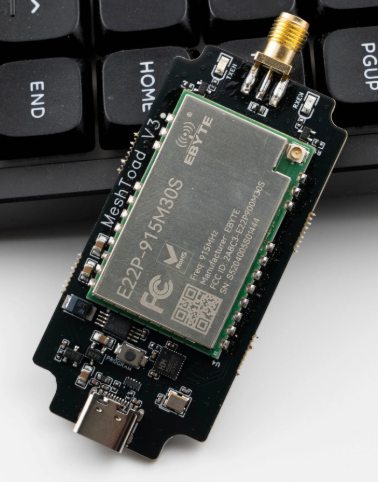
The NULLHOP MeshToad V3 is a Meshtastic-compatible LoRa radio module for Linux systems that allows computers to operate as Meshtastic nodes using meshtasticd. The device connects over USB and supports platforms ranging from Raspberry Pi boards to mini PCs and other Linux hosts.
The radio subsystem is based on the EBYTE E22P-915M30S module integrating the Semtech SX1262 LoRa transceiver. The module operates in the 902–928 MHz band and provides up to 1 W (30 dBm) transmit power together with an RF front end including an LNA and 915 MHz SAW filters intended to improve receive sensitivity.

MeshToad V3 antenna connector(click image to enlarge)
For connectivity, the module uses a USB Type-C interface and provides both U.FL and SMA antenna connector options for external LoRa antennas, although antennas are not included. The board also integrates onboard EEPROM support used for automatic configuration with supported software versions.

MeshToad V3 bottom view(click image to enlarge)
Software support includes compatibility with meshtasticd, where the onboard EEPROM enables automatic configuration beginning with version 2.6.5. According to the documentation, plug-and-play operation relies on setting the EEPROM product string to MESHTOAD, enabling automatic detection for both MeshToad and MeshTadpole devices.
The MeshToad V3 can also be used with pyMC_Repeater, allowing Linux systems to operate as Mechcore repeaters.

MeshToad V3 USB-C port(click image to enlarge)
The documentation also provides flashing instructions for Ubuntu and Raspberry Pi OS systems using the ch341eeprom and ch341eeprom-factory utilities. The procedure requires temporarily bridging two pads near the USB Type-C connector to place the device into flashing mode, after which operation can be verified using dmesg.

NULLHOP MeshToad V3(click image to enlarge)
Further…