Artificial Intelligence-as-a-Service Market Trends: Enterprise AI, Automation Tools & Forecast to 2034
Publish Date: 2026-04-28 00:49:00
Source Domain: vocal.media
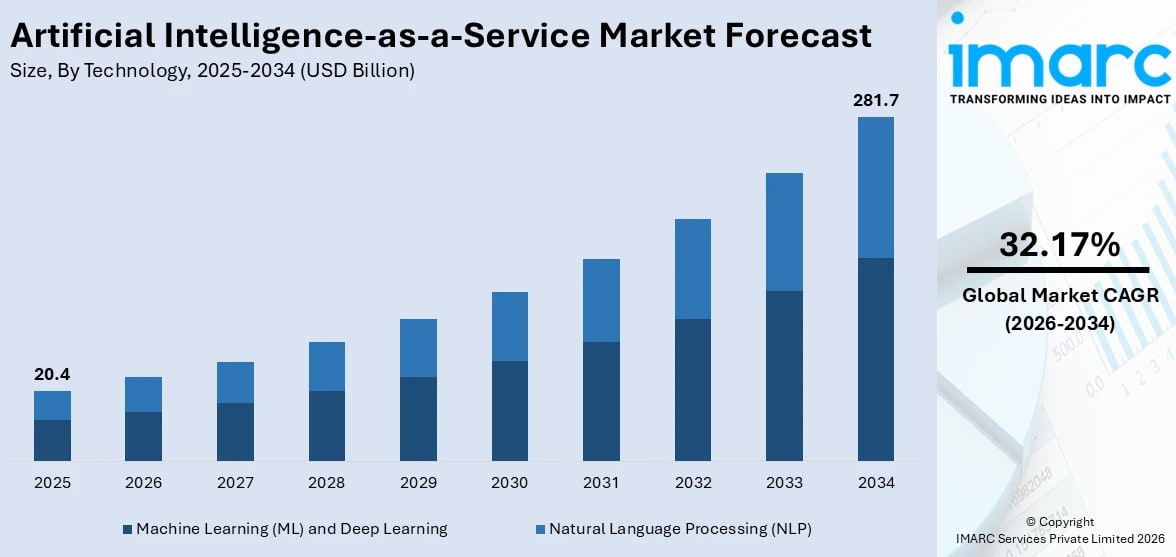
Rapidly evolving business environments and the push for digital transformation are fueling the demand for Artificial Intelligence-as-a-Service (AIaaS), supported by the expansion of cloud-native ecosystems, the rise of agentic AI, and the pressing need for scalable, cost-efficient intelligence. According to IMARC Group’s latest data, the global artificial intelligence-as-a-service market size was valued at USD 20.4 Billion in 2025. Looking forward, IMARC Group estimates the market to reach USD 281.7 Billion by 2034, exhibiting a CAGR of 32.17% from 2026-2034.
AIaaS has transitioned from an experimental luxury to a fundamental enterprise utility, now representing a multi-billion-dollar pillar of the global tech economy. Demand is largely propelled by the “democratization of AI,” allowing organizations to bypass the massive capital expenditure of building proprietary hardware stacks and specialized data science teams. Companies are leveraging ready-to-use machine learning models, natural language processing (NLP) APIs, and automated decision-making tools via the cloud.
Artificial Intelligence-as-a-Service Market Growth Drivers:
- Democratization via Cloud-Based Infrastructure
The primary catalyst for AIaaS is the shift from high-barrier “build” models to accessible “subscription” models. By utilizing cloud providers, businesses eliminate the need for expensive AI-optimized servers and specialized talent. Currently, the software segment accounts for roughly 77.6% of market revenue, as companies prioritize flexible AI tools for data analytics and process automation. This accessibility allows mid-sized firms to deploy sophisticated machine learning frameworks previously out of reach.
- Urgent Demand for Operational Efficiency and Automation
Organizations are increasingly turning to AIaaS to solve the “productivity puzzle.” Recent data indicates that 66% of organizations have achieved significant efficiency gains through AI, with many reporting that AI is now…