Non-Clinical Information Systems Market Size to Surge to USD
Non-Clinical Information Systems Market Size to Surge to USD
https://www.openpr.com/news/4487016/non-clinical-information-systems-market-size-to-surge-to-usd
Publish Date: 2026-04-24 04:46:00
Source Domain: www.openpr.com
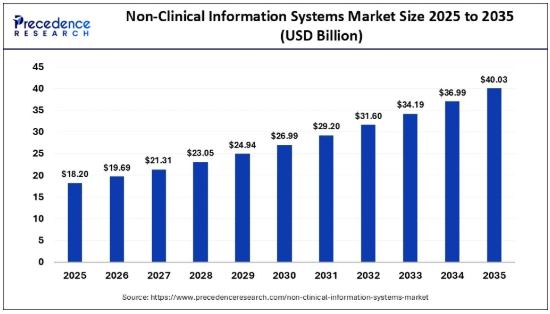
According to Precedence Research, the global non-clinical information systems market size is projected to increase from USD 18.20 billion in 2025 to nearly USD 40.03 billion by 2035, expanding at a CAGR of 8.20% from 2026 to 2035. The market’s growth is propelled by the widespread adoption of digital healthcare solutions aimed at improving operational efficiency, reducing administrative burdens, and enhancing data-driven decision-making across healthcare organizations worldwide.
Non-clinical information systems are rapidly becoming essential components of healthcare infrastructure as organizations focus on streamlining administrative workflows and improving operational efficiency. These systems manage essential functions such as patient scheduling, billing, resource management, and data analytics. With an emphasis on cloud-based solutions and digital transformation, the non-clinical systems market is advancing at a pace that promises robust long-term growth.
The Full Study is Readily Available 📥 Download Sample Pages of the Report 👉 https://www.precedenceresearch.com/sample/8336
Non-Clinical Information Systems Market Size and Forecasts:
• Market size in 2025: USD 18.20 Billion
• Market size in 2026: USD 19.69 Billion
• Market size by 2035: USD 40.03 Billion
• CAGR: 8.20% (2026-2035)
• Forecast period: 2026-2035
• Base year: 2025
The Role of AI in Non-Clinical Information Systems
Artificial Intelligence (AI) is significantly altering the landscape of non-clinical information systems. AI technologies are automating key administrative tasks, such as billing, claims processing, and scheduling, thereby improving efficiency and minimizing human error.
AI-driven tools are enhancing data analytics, providing healthcare organizations with predictive insights that allow for more strategic decision-making and better resource management. AI’s influence is expected to escalate in the coming years, driving further…